Every September, the United Nations General Assembly turns New York into a high-priced theater of the absurd. Foreign ministers fly in, shake hands for the cameras, deliver speeches designed exclusively for domestic news cycles back home, and pretend they are steering global events.
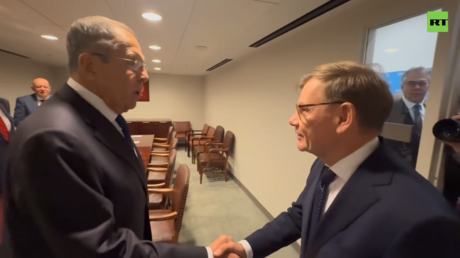
When reports surface that Sergei Lavrov remained completely unfazed by some last-minute diplomatic overture from the German Foreign Minister in the hallways of the UN, the media acts shocked. Commentators scramble to analyze body language, parsing micro-expressions as if reading tea leaves. They treat these fleeting interactions like chess moves in a high-stakes grandmaster match.
It is complete theater.
Lavrov is not ignoring Berlin out of personal spite or tactical brilliance alone. He is ignoring them because German diplomacy at the UN has become an exercise in performative moralizing divorced from actual leverage. When a foreign ministry relies on theatrical last-minute corridor ambushes rather than structural reality, veteran negotiators do not negotiate. They check their watches.
I have spent years watching institutional diplomats mistake microphone time for geopolitical power. They confuse issuing a press release with shifting a military line or securing an energy supply. The lazy consensus in international relations reporting assumes that if two high-ranking officials occupy the same zip code, real diplomacy is happening.
That assumption is lazy, dangerous, and wrong.
The Illusion Of The Corridor Grabbing
Let us dismantle the core myth of high-level multilateral summits. The public imagines that behind closed doors in glass-walled conference rooms, brilliant minds hash out compromises that save the world from catastrophe.
In reality, the UN General Assembly is a megaphone, not a switchboard.
When a Western foreign minister approaches a counterpart from a heavily sanctioned, nuclear-armed state in the final hours of a summit, what is the actual objective? Is it a breakthrough? Of course not. It is a photo opportunity for domestic consumption. It signals to constituents back home that the government is trying everything, remaining active, and holding the moral high ground.
Lavrov’s unimpressed reaction is simply the logical response to an unserious format. You cannot solve structural security architecture over a stale pastry in a UN basement while your respective governments are fighting a proxy economic and military war. Treating this as a diplomatic failure by Germany misses the point. It was never diplomacy. It was public relations.
To understand why these overtures fall flat, we have to look at how leverage actually operates in modern statecraft.
Power Dynamics Dictate Attention
Diplomacy is not a classroom debate where the most persuasive argument wins. It is a transaction backed by power.
If you want a seasoned minister to engage with your proposal, you need two things: something they desperately need, or something they deeply fear losing. If you bring neither, your charm offensive is just noise.
Germany, like much of the European Union, finds itself structurally constrained in its foreign policy. Bound by consensus within broader alliances, Berlin often lacks the independent maneuverability required to strike grand bargains on major security dossiers. When a minister from a constrained coalition government tries to force a handshake with a hardened career diplomat representing a state that has already factored in western sanctions, the power dynamic is non-existent.
Lavrov has been at the table since 2004. He has seen administrations come and go, ministers rise and fade, and policy fashions shift like New York weather. He knows the difference between a real channel backed by intelligence agencies and backroom power brokers, and a public relations stunt orchestrated for domestic optics.
When you offer a gesture without leverage, you are asking the other side to do your domestic political heavy lifting for free. Why would they?
The Dangerous Addiction To Performative Multilateralism
The addiction to summit theater has corroded modern statecraft. Western capitals spend millions on delegations, security details, and media teams to project influence at events where the actual decisions were already made months prior in capitals like Moscow, Beijing, Washington, or regional hubs.
This creates a severe cognitive dissonance among foreign service bureaucrats. They measure success by the number of meetings held, statements issued, and hands shaken. They treat process as outcome.
Meanwhile, actual adversaries laugh off the grandstanding. They watch Western leaders prioritize the optics of resistance over the brutal mechanics of supply chains, energy markets, and military sustainability.
Imagine a scenario where a foreign ministry stops chasing photo ops at the UN General Assembly and spends those resources quietly rebuilding backchannel intelligence architecture that can actually prevent escalation. Unthinkable in an era where politicians need a daily TikTok clip or a glowing headline in the morning paper.
The media feeds this delusion. Every time a minister makes a dramatic dash across a convention hall, headline writers treat it as a pivotal moment. It is not pivotal. It is background noise.
How To Read Geopolitics Without Getting Fooled
If you want to cut through the noise of international summits, stop watching the podiums and start tracking the balance sheets.
Look at who controls the commodities, who is funding the alternative payment rails, and whose military-industrial base is actually humming. When you view state behavior through the lens of structural reality rather than diplomatic PR, the entire narrative shifts.
Lavrov was unimpressed because he lives in the world of material facts, not diplomatic aspiration. Until Western foreign ministries realize that a compelling speech in Turtle Bay cannot replace missing strategic leverage, they will keep running into closed doors.
And the cameras will keep filming them pretending it matters.


