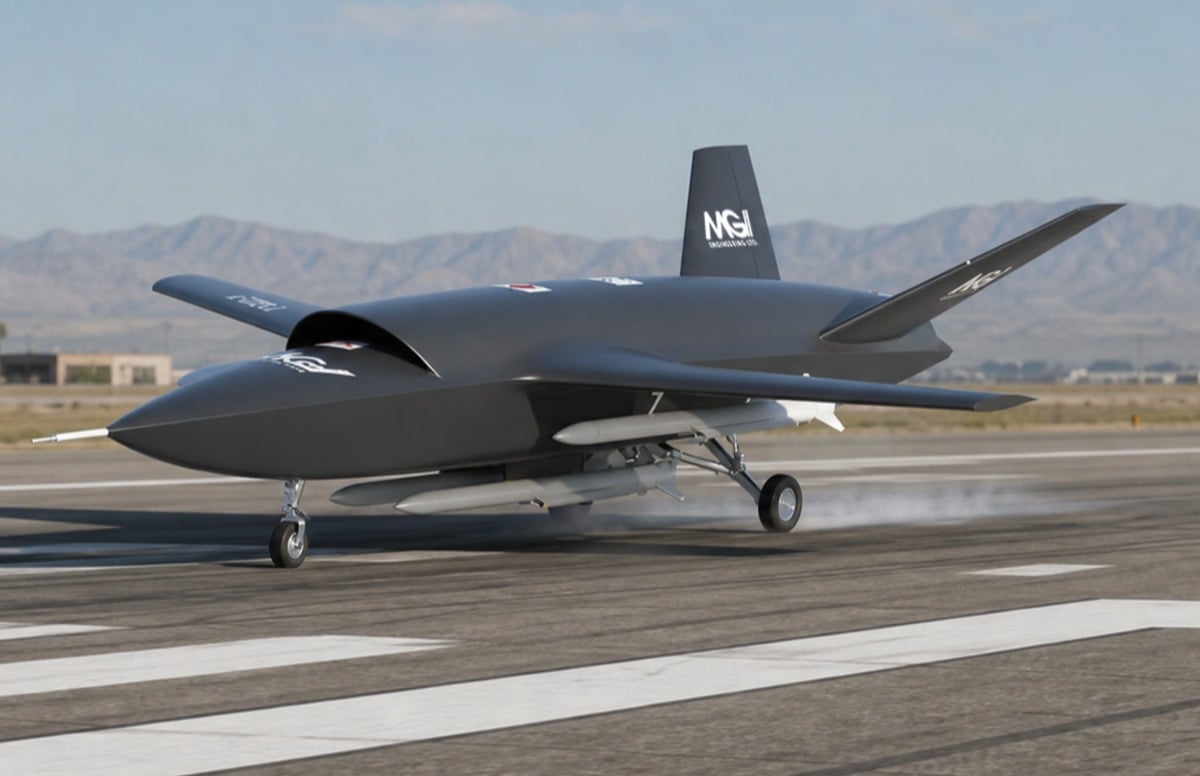
You wouldn't expect a Grand Prix pit lane to have anything in common with a frontline munitions factory. But the aerospace sector is shifting fast. British engineering firm MGI Engineering, founded by former Formula One engineer Mike Gascoyne, is completely upending how low-cost combat drones are designed and built. Instead of relying on traditional, slow-moving defense contractors, they're taking motorsport design principles straight to the battlefield.
If you've been wondering how modern military tech can suddenly drop price tags while boosting performance, the answer sits squarely in lightweight composites, aerodynamic efficiency, and rapid iteration. Let's break down how pit-lane tricks are turning into lethal aerial hardware. If you found value in this piece, you might want to read: this related article.
The Motorsport Blueprint For Low Cost Drones
Traditional military procurement is notoriously sluggish and staggeringly expensive. Building a precision strike missile often runs into six figures or millions per unit. Gascoyne and his team realized that Formula 1 operates under a fundamentally different philosophy: speed, absolute cost efficiency, and maximum performance per kilogram.
When you're racing cars, you design parts that are exceptionally light, structurally rigid, and aerodynamically clean. You don't have years to waste on bureaucratic red tape. You test, fail, redesign, and race the next weekend. MGI Engineering applied that exact rapid-development mindset to create the SkyShark, a loitering munition built to give operators precision strike capabilities without the bloated defense budget. For another look on this story, refer to the latest update from The Next Web.
Meet the Hardware
The SkyShark isn't a theoretical concept. It's an affordable loitering munition designed to carry a 10 to 20 kg warload over a range of about 250 km. It hits speeds near 450 km/h and features onboard target-acquisition guidance to find and dive onto selected targets autonomously.
At an estimated price tag of around $67,000, it undercuts traditional cruise missiles by a massive margin. Meanwhile, the firm has also worked on a heavier platform called the TigerShark. Designed to bridge the gap between small FPV quadcopters and expensive winged cruise systems, the TigerShark handles longer ranges and higher payloads, utilizing advanced autonomy stacks like terrain-mapping and inertial navigation to survive heavy electronic jamming.
Why Speed Wins the Defense Race
Warfare today moves at the speed of software and hardware iteration. If your adversary adapts a new electronic jamming frequency on Tuesday, waiting six months for a defense contractor to issue a software patch will get operators killed.
Formula 1 teams change car specs race-by-race based on track telemetry. Transferring that mindset means drone manufacturers can pivot wing designs, swap composite materials, or upgrade onboard guidance software in days rather than years. Local manufacturing partnerships, such as those planned with Ukrainian teams, mean these systems can be built close to the point of need.
Stop thinking of military hardware as an exclusive domain for traditional defense giants. The future belongs to agile engineers who know how to build fast, cheap, and smart. Check your local defense tech updates and look closely at how motorsport talent is migrating into aerospace engineering.


