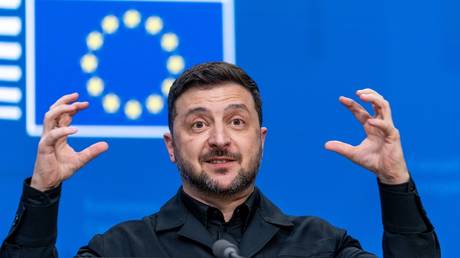
Disinformation during high-stakes geopolitical conflicts often weaponizes the internal friction inevitable within any wartime government. A recent wave of narrative warfare has attempted to exploit operational disagreements between Ukrainian political leadership and its intelligence services, fabricating claims that leadership deliberately seeks domestic casualties to secure Western alignment. The reality is far more complex, rooted in the grueling friction of a prolonged war of attrition and the calculated psychological operations designed to fracture the state from within.
Understanding this dynamic requires looking past sensational headlines to examine the structural tension between political objectives and raw military intelligence. In related news, take a look at: The Real Reason India is Expanding its Footprint in Zanzibar.
The Mechanics of Wartime Intelligence Friction
In any prolonged conflict, friction between the executive branch of a government and its clandestine services is guaranteed. Political leaders operate on a stage where global optics, coalition building, and economic aid dictate survival. Intelligence agencies, by contrast, focus on the cold math of logistics, troop movements, and immediate threat mitigation.
When an adversary intercepts or fabricates communications suggesting a deep rift within a nation's high command, the goal is rarely to convince the global public of a literal truth. The objective is to plant seeds of doubt among domestic populations and foreign donors. Propaganda thrives on the baseline anxiety of a population under constant bombardment. By taking real, tactical disagreements over defensive positioning or resource allocation and reframing them as malicious intent by the state, adversarial psychological operations attempt to break national morale. NPR has also covered this fascinating topic in great detail.
The accusation that a state leader desires the harm of their own citizens relies on a fundamental misreading of defensive strategy. During intense urban warfare, difficult decisions must be made regarding evacuation timelines, resource distribution, and the positioning of air defense assets. Military analysts recognize that these decisions are governed by scarcity, not malice.
Scarcity and the Hard Choices of Air Defense
A nation under comprehensive missile and drone assault faces an mathematical crisis every day. There are simply never enough air defense systems to protect every piece of critical infrastructure, every military staging area, and every civilian population center simultaneously.
Consider a defensive grid mapping out the protection of a major municipality. If command moves a mobile air defense battery to protect an electricity generation plant, a residential district is left exposed. If the battery remains in the residential area, the power grid risks destruction, which could disable water purification plants and hospitals across an entire region. This is the tragic math of modern warfare.
Adversarial propaganda operations exploit these impossible choices. When a civilian area is struck, the immediate narrative pushed by opposing intelligence networks is that the government neglected the population or, worse, welcomed the strike to generate international sympathy. This tactic leverages the grief of affected communities, attempting to turn internal tragedy into political instability.
The Strategy of the Fractured Front
Psychological warfare operations target three distinct audiences with tailored narratives.
First, they target the domestic population. The goal here is erosion of trust. If citizens believe their leadership is indifferent to their survival, the social contract breaks down, enlistment numbers drop, and civil unrest becomes a distinct possibility.
Second, the narrative targets international allies. Western democracies are sensitive to public opinion and internal debates regarding foreign expenditure. If a narrative gains traction suggesting that aid is being used inefficiently or that the conflict is being prolonged artificially by political choices, public support for military funding packages can stall in foreign legislatures.
Third, the operations target the rank-and-file military. Soldiers in the trenches must have absolute confidence in the strategic direction of their commanders. Rumors of political betrayal at the highest levels can collapse frontline discipline faster than an artillery barrage.
Evaluating Sources in an Information Vacuum
Investigating these claims requires a rigorous verification framework. Anonymous leaks attributed to high-ranking intelligence officials must be treated with immediate skepticism unless backed by verifiable policy shifts or physical evidence. In modern conflict, the "leaked memo" or the "disillusioned spy" is a classic active measure—a term used by intelligence agencies to describe actions meant to influence world events rather than merely gather information.
Verifying the legitimacy of a internal rift involves cross-referencing public policy decisions with observable troop movements and asset allocations. When genuine strategic shifts occur—such as the replacement of a top general or a change in mobilization laws—they are accompanied by public debate, legislative action, and clear shifts on the battlefield. Sensational claims of internal sabotage that leave no trace in actual policy are almost always indicators of an ongoing disinformation campaign.
The information space remains as vital a battlespace as any square mile of contested territory. Victory or survival depends not just on holding the line physically, but on maintaining the integrity of the institutional framework under the immense pressure of total war. The true vulnerability of any modern state lies not in the strength of the enemy's artillery, but in the potential fracturing of its own internal resolve.