Wood is patient. Paper remembers everything. When a creator spends decades coaxing ink into resistance—pressing bamboo fibers against blocks carved with the precision of a surgeon—they are not merely making an object. They are banking time. They are storing moments of breath, shifts in light across a Kyoto garden, and the quiet grief of a winter morning inside a sheet so thin you can read the grain of a table through it.
Then comes the tarmac.
The roar of a jet turbine does not care about centuries of craft. It only cares about payload, turnaround times, and the relentless geometry of a cargo hold.
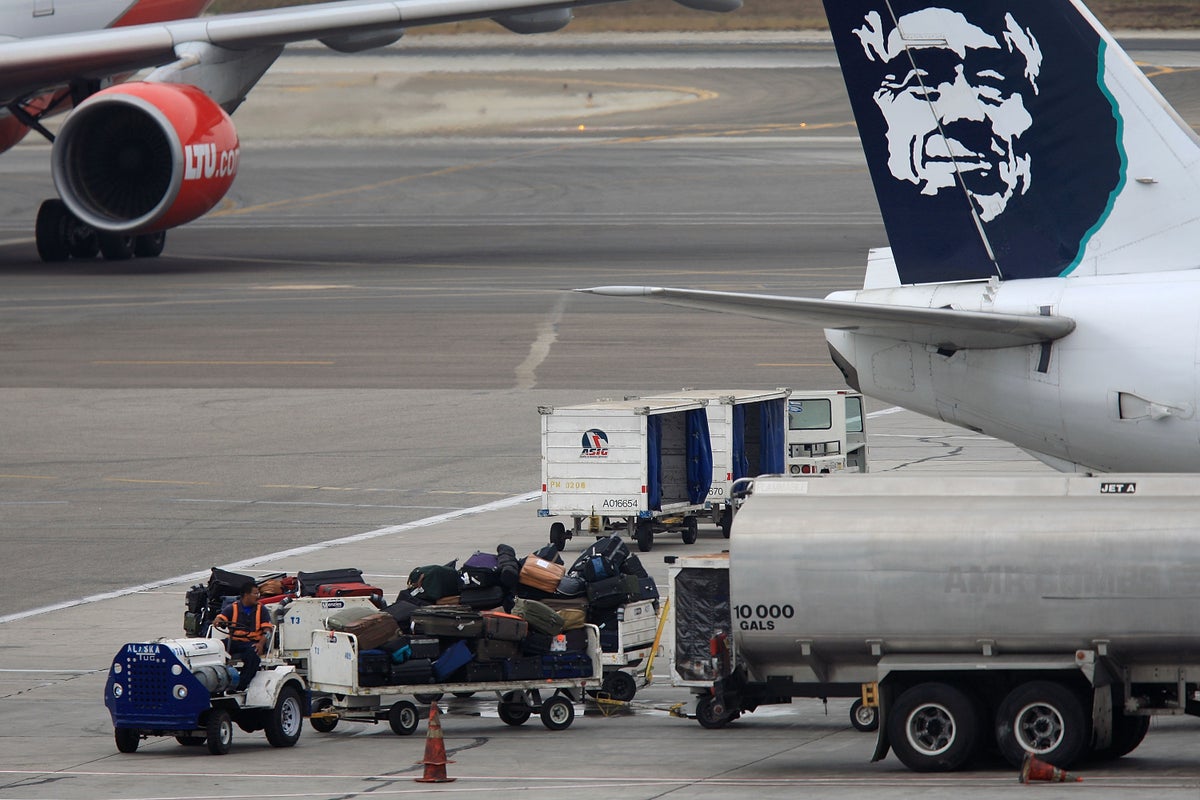
In a lawsuit filed in a New York court, the heavy machinery of modern commerce collided with fragile history. A Manhattan gallery, bearing the quiet weight of curation, entrusted a collection of Japanese artwork valued at half a million dollars to Alaska Airlines. They expected steel containers, careful hands, and the dull, predictable rhythm of transit. Instead, they received a catastrophe. According to the legal complaint, the works—irreplaceable pieces of cultural heritage—were returned ruined. Water-damaged, crushed, structurally compromised. Half a million dollars on paper. But what do you do with a ledger that tries to price the unrepeatable?
Consider what happens inside an air cargo hold thirty thousand feet above the Pacific. The air is dry, then it isn't. The pressure drops, then it stabilizes. It is a violent, invisible architecture of stress. For most cargo—pallets of electronics, boxes of machine parts, frozen seafood—this environment is an inconvenience. For delicate works on paper, woodblock prints whose pigments have settled into organic fibers over generations, it is an assault.
The gallery owners, whose names and faces blur into the gray architecture of civil litigation, found themselves staring at boxes that should have contained windows into another world. Instead, they held damp ruin.
We talk about shipping failures in terms of insurance payouts and liability caps. The Montreal Convention sits in the background of cases like this like a cold referee, limiting airline liability by weight rather than worth. It is a brutal arithmetic. If you ship a ton of gold, its value travels with it. If you ship a pound of history, the law often treats it like spare auto parts. This is the quiet terror of moving fine art across the globe. You are handing fragile human expression over to logistics networks designed for maximum velocity and minimum empathy.
Think of the artist who carved the blocks. Let us imagine, for a moment, a hypothetical printmaker named Kenji, working in a workshop outside Kyoto in the late twentieth century. Kenji is gone now, but his hands live on in the precision of a line where a crow’s wing meets a grey sky. He spent three weeks just selecting the paper—kozo, harvested from the paper mulberry plant, boiled in lye made from wood ash, beaten by hand until the fibers tangled into a sheet of stubborn resilience. He applied sumi ink, layer upon transparent layer, until the black had depth, until it looked less like pigment and more like a shadow cast by an object that wasn't there.
When that print is slid into an archival folder, sealed in glassine, and packed into a crate lined with closed-cell foam, it is beginning a journey. It is trusting a chain of strangers.
The handler in Tokyo sees a barcode. The forklift operator on the tarmac sees a weight distribution metric. The customs agent sees a commodity code. At no point in that journey does the object retain its identity as a repository of human vulnerability. It becomes a package.
And packages fail.
The lawsuit against Alaska Airlines is not merely about money, though the half-million-dollar price tag is the lever required to make society pay attention. It is about the friction between two entirely different ways of valuing the world. On one side stands the corporate machine—optimized for scale, bound by strict contractual limitations, protected by legal doctrines drafted in the middle of the twentieth century. On the other side stands the curator, the historian, the artist—people who understand that certain objects cannot be replaced because the conditions that created them have vanished from the earth.
You cannot simply print another nineteenth-century woodblock. You cannot ask the dead to carve again.
When water breaches a crate of fine art, it does not just stain the paper. It dissolves the binders. It causes pigments to bleed into one another, turning a deliberate, razor-sharp horizon line into a muddy smear. It introduces mold spores that begin to digest the organic sizing of the paper within hours. The damage is a slow-motion detonation.
The gallery’s legal filing details the specifics: moisture intrusion, crushing, negligence in handling. But the legal prose cannot capture the silence in the room when the crates were finally opened in New York. The moment the pry bar lifted the lid. The smell of damp cardboard and ruined sizing. The sickening realization that something irreplaceable had been turned into garbage by someone who was simply doing their shift, loading container 42B before the Tokyo-to-Seattle red-eye pushed back from the gate.
We live in an era that worships frictionless movement. We want our packages tracked to the second, delivered to our porches before we have finished our morning coffee. We have built global supply chains that treat the entire planet as a single warehouse floor. But art resists this flattening. Art insists on its own fragility. It demands that we slow down, that we acknowledge the sheer improbability of an object surviving across oceans and centuries to speak to us in a quiet room.
When we fail to protect that fragility, we are not just losing money. We are losing our anchors.
The case will wind its way through the federal courts. Motions will be filed. Depositions will be taken from ramp agents and cargo managers who likely never saw the label marked Fine Art – Fragile pasted to the side of the crate. Settlement offers will be calculated. A number will be agreed upon, paid out from an insurance pool, and logged as a line item in a corporate risk assessment report.
And somewhere in a dark drawer in Kyoto, a copper plate grows a tiny bloom of green oxidation, completely unaware that half a world away, the world it helped create just got a little bit smaller.