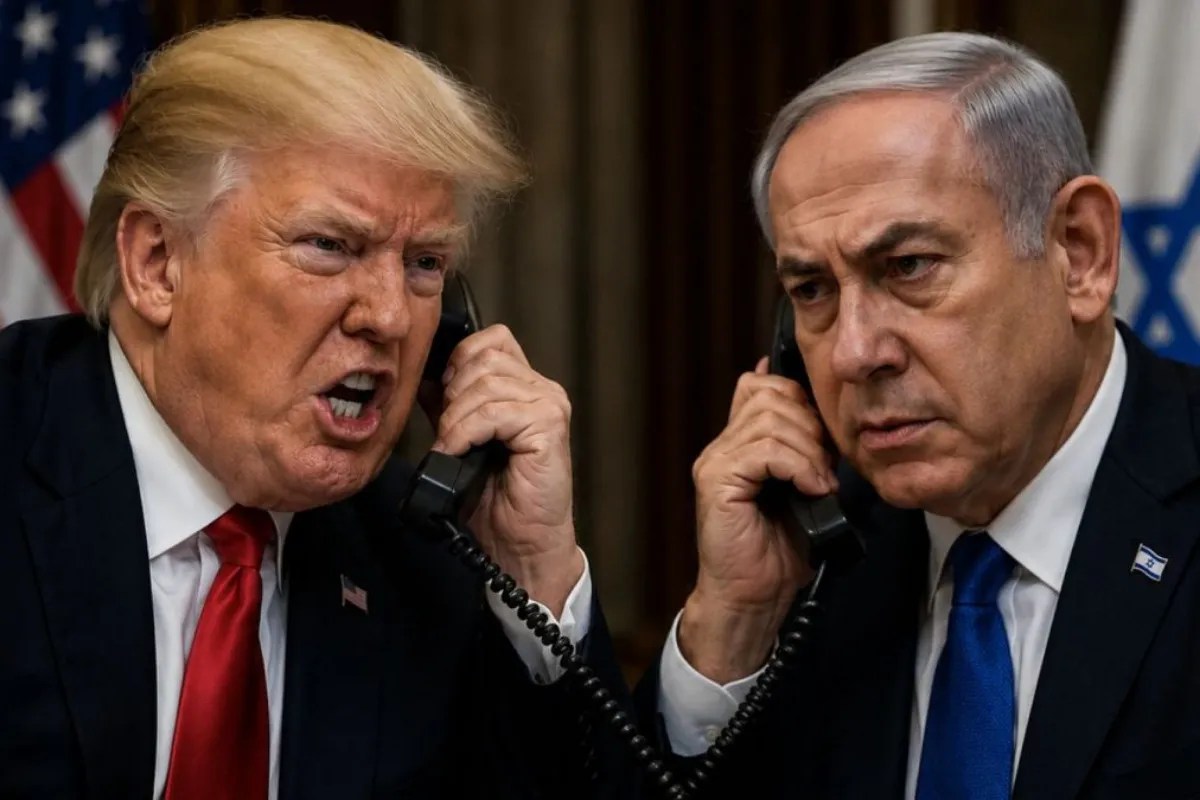
The core assumption driving contemporary Middle Eastern geopolitics—that the strategic objectives of the United States and Israel are inherently synchronized—is structurally flawed. This misalignment has transformed from a theoretical policy debate into an active operational bottleneck. The flashpoint is not the broader containment of Iran, but rather the localized theater of southern Lebanon. As Washington aggressively pursues a sweeping regional settlement with Tehran to secure global maritime trade routes and freeze nuclear enrichment, Jerusalem views the complete neutralisation of Hezbollah as a non-negotiable existential requirement. This dynamic has forced a profound diplomatic shift: the United States is no longer merely advising restraint; it is actively imposing conditions on Israeli military maneuvers to protect its own grand strategy.
To understand the mechanics of this rift, the situation must be broken down into its core geopolitical, economic, and military components.
The Three Pillars of the US-Iran Macro Deal
The current American pressure on Israel is not a product of shifting ideological sympathies, but rather a calculated effort to preserve a fragile, multi-layered diplomatic initiative with Iran. Washington’s regional strategy relies on three main pillars:
- Maritime Stabilization: The primary economic driver is the reopening of the Strait of Hormuz, which has suffered severe traffic disruptions. The restoration of unhindered transit through this chokepoint is critical to lowering global energy costs and stabilizing supply chains.
- Nuclear Containment Infrastructure: The memorandum of understanding (MOU) between Washington and Tehran requires the immediate, on-site dilution of Iran’s highly enriched uranium under International Atomic Energy Agency (IAEA) supervision. Specifically, this targets approximately 440 kilograms of near-weapons-grade material.
- Proxy De-escalation: In exchange for phased sanctions relief and the unfreezing of overseas assets, Tehran must enforce a strict non-aggression mandate on its regional proxies, specifically Hezbollah in Lebanon and the Houthis in Yemen.
This entire framework is highly vulnerable to local escalations. Tehran has explicitly communicated that its willingness to finalize the nuclear freeze and maintain maritime security is conditionally tied to the cessation of Israeli military actions against Hezbollah. Consequently, any significant strike by the Israel Defense Forces (IDF) inside Lebanon risks collapsing the overarching US diplomatic architecture.
The Israeli Cost Function and Existential Security
While the United States operates on a global macro-strategic level, Israel’s decision-making is governed by a localized existential cost function. For Jerusalem, a premature ceasefire that leaves Hezbollah's core infrastructure intact presents an unacceptable long-term risk. The Israeli security establishment calculates its operational parameters based on two main factors:
The Buffer Zone Requirement
The IDF ground operations in southern Lebanon are designed to create a permanent, depopulated buffer zone south of the Litani River. The operational goal is the total destruction of Hezbollah’s direct-fire assets, anti-tank guided missile (ATGM) launch sites, and tunnel networks. From Jerusalem's perspective, allowing displaced Israeli citizens to return to northern communities is impossible without this territorial guarantee.
The Asymmetry of Deterrence
Israel views the April ceasefire framework as structurally deficient because it allows Hezbollah to reconstitute its forces under the cover of diplomacy. The Israeli defense doctrine mandates a continuous, kinetic response to even minor provocations to prevent the militant group from rebuilding its missile stockpiles.
This creates a severe tactical contradiction. The United States has criticized Israel’s high-intensity urban bombardment, including strikes on apartment blocks in Beirut, labeling the tactics counterproductive to long-term stability. Conversely, Israel maintains that any restriction on its targeting logic compromises its operational efficacy.
The Friction Mechanics: Cause-and-Effect Bottlenecks
The strategic misalignment between Washington and Jerusalem manifests as a series of direct cause-and-effect bottlenecks that disrupt both diplomatic and military planning:
[Israeli Kinetic Strike in Lebanon]
              │
              ▼
[Tehran Threatens to Halt MOU & Close Hormuz]
              │
              ▼
[US Grand Strategy & Energy Stability Endangered]
              │
              ▼
[Washington Imposes Hard Conditions / Diplomatic Rebuke]
The first bottleneck is the Interdependency Factor. Because Iran treats Lebanon as a vital strategic asset, it utilizes its economic leverage—the ability to close the Strait of Hormuz or resume rapid nuclear enrichment—to shield Hezbollah. When the IDF executes high-profile strikes, such as those in the southern suburbs of Beirut, it triggers an immediate Iranian counter-response, forcing US intervention to protect the broader peace deal.
The second limitation lies in the Sovereignty Paradox of the Lebanese state. The G7 nations have called for an immediate ceasefire backed by international security guarantees to support the Lebanese Armed Forces (LAF) in establishing a monopoly on violence. However, the political reality inside Beirut makes the forced disarmament of Hezbollah by the domestic military unfeasible without triggering a civil war. This policy vacuum ensures that neither diplomatic agreements nor localized military pressure can deliver a stable, long-term solution.
Strategic Forecast and Policy Recommendations
The current friction between the United States and Israel will not lead to a total breakdown of their alliance, but it will fundamentally change the terms of their security relationship. Israel will likely continue to execute targeted strikes in southern Lebanon, testing the boundaries of American tolerance, while Washington will increasingly tie its intelligence sharing and diplomatic insulation to Israeli compliance with specific geographic boundaries.
For regional planners and corporate strategists navigating this environment, the following actions are recommended:
- Price in Persistent Energy Volatility: Supply chain models must account for a permanent risk premium in the Strait of Hormuz. Even if the MOU is formally signed, the tactical instability in Lebanon means the threat of sudden maritime closure remains high.
- Hedge Against Post-Ceasefire Escalation: Treat any announced 60-day extension of the ceasefire as a operational window for risk mitigation rather than a permanent resolution. The structural divergence between Israeli security needs and Iranian geopolitical leverage ensures that any truce will remain highly unstable.
- Monitor Intelligence-Sharing Gauges: The truest indicator of US-Israel policy cohesion is not public statements, but the volume and classification level of intelligence shared between the Pentagon and the Kirya. A reduction in real-time target-acquisition data sharing will signal that Washington is actively enforcing its policy conditions.