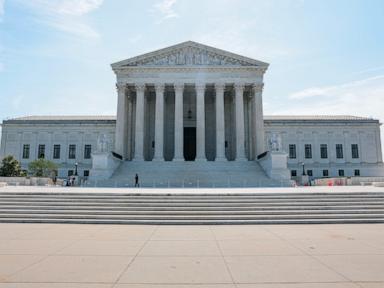
The allocation of legal defaults dictates the economic and operational burdens of constitutional compliance. In Wolford v. Lopez, the Supreme Court’s 6-3 decision striking down Hawaii’s Act 52 fundamentally shifts the transaction costs of firearms regulation from the citizen to the commercial property owner. By invalidating the state’s presumptive restriction—which required explicit, affirmative consent from a property owner before a concealed-carry permit holder could enter private land open to the public—the Court established that public-facing commercial entities are textually integrated into the geography of the Second Amendment.
This ruling alters the operational landscape for retail, hospitality, and service businesses. To understand the friction this decision introduces, one must analyze the mechanisms of default legal rules, the structural tension between property rights and public access, and the operational calculus now forced upon private enterprises. If you found value in this post, you should read: this related article.
The Mechanics of the Opt-In vs. Opt-Out Default
The core legal architecture of Wolford v. Lopez centers on a binary choice of default configurations. Legal defaults are powerful because of transaction friction: the party forced to take affirmative action to alter a state of affairs bears the administrative, financial, and social costs of that choice.
Under Hawaii's invalidated statute, colloquially dubbed the "vampire rule," the legal default was set to a state of absolute restriction. For another angle on this event, see the latest coverage from The Guardian.
- The Restricted Default (Act 52): Possession is unlawful unless explicit permission is granted. The burden of transaction falls entirely on the individual permit holder, who must solicit authorization prior to entering any commercial space, such as a gas station, grocery store, or hotel. Failing to secure this explicit permission elevated ordinary commercial entry to a misdemeanor offense punishable by up to one year in prison.
- The Permissive Default (Common Law): Possession is lawful unless explicit restriction is posted. The burden of transaction shifts entirely to the property owner, who must execute an affirmative act—such as posting a standardized physical sign or delivering a verbal trespass warning—to strip the implied license of entry from an armed individual.
Justice Samuel Alito’s majority opinion targets this structural inversion. The Court’s framework dictates that an opt-in requirement on publicly accessible private property effectively nullifies the practical exercise of public carry recognized in New York State Rifle & Pistol Association v. Bruen. When daily life requires transit through a mosaic of privately owned commercial nodes, a restricted default introduces insurmountable micro-transaction friction. A permit holder cannot logistically negotiate explicit permission at every commercial point-of-sale or refueling station, rendering the underlying constitutional right functionally inoperable across ordinary public life.
The Historicist Framework and the Bruen Test Collapse
The ideological divide in Wolford highlights a deeper systemic fracture in how courts must evaluate historical analogues under current Second Amendment jurisprudence. The Bruen standard demands that modern gun regulations mirror the historical traditions of the founding era (1791) or the ratification era of the Fourteenth Amendment (1868).
In defending Act 52, Hawaii relied on a historicist argument rooted in early colonial trespass laws and localized restrictions, including pre-statehood restrictions from the Kingdom of Hawaii, such as an 1833 edict by King Kamehameha III. The defense posited that property owners historically maintained absolute autonomy over entry conditions, and that the state could codify a collective default to streamline that autonomy.
The majority opinion rejects these analogues by enforcing a strict distinction between land completely closed to the public and private property intentionally held open for commercial profit. At common law, businesses that invite the general public onto their premises yield a portion of their exclusionary autonomy to an implied license of entry. Because the historical record does not support a sweeping, state-enforced presumption of firearm exclusion on businesses operating under this implied license, the state's collective mandate fails constitutional scrutiny.
Concurring opinions took specific aim at the state’s reliance on historical black codes and highly localized, discriminatory nineteenth-century statutes, demonstrating the structural volatility of the Bruen historicist test. When modern public policy must be justified solely by historical mirrors, the selection of those mirrors becomes highly contested, producing divergent applications of lower-court scrutiny across jurisdictions.
The Commercial Calculus: Operational and Liability Reconfiguration
For commercial enterprises operating in the five states directly affected by presumptive restrictions—Hawaii, California, New York, Maryland, and New Jersey—the dissolution of the restricted default forces an immediate operational pivot. Corporate compliance officers, risk managers, and small business owners must now choose between two distinct strategies, each carrying hidden operational costs.
Strategy A: Active Exclusion (The Opt-Out Play)
Businesses choosing to maintain gun-free environments must now bear the cost of physical and legal signaling. This requires deploying precise, legally compliant signage at all public ingress points.
This strategy introduces three distinct operational variables:
- Brand Friction: Explicitly posting firearm prohibitions can alienate specific segments of a consumer base, converting a passive structural policy into an active political statement.
- Enforcement Realities: Shifting enforcement from a state-mandated default to a corporate policy requires front-line employees (cashiers, hosts, security personnel) to actively monitor, identify, and manage non-compliance. This increases the probability of workplace altercations and demands specialized de-escalation training.
- The Illusion of Security: An explicit policy of exclusion relies entirely on voluntary compliance or low-level civilian enforcement. It provides no structural barrier to non-compliant actors while legally binding the enterprise to an explicit operational posture.
Strategy B: Passive Acquiescence (The Permissive Default Play)
Businesses that take no action default to allowing concealed-carry permit holders on their premises. While this avoids immediate brand friction and signage infrastructure costs, it alters the enterprise's civil liability profile.
In the event of an active critical incident or accidental discharge on commercial property, the absence of an explicit firearm policy will be scrutinized under traditional tort frameworks of negligent security and premises liability. Plaintiffs will argue that by failing to utilize their legally recognized right to post exclusionary signage, the business failed to maintain a reasonably safe environment for invitees. Conversely, implementing an unenforced ban could similarly expose a business to liability for creating a false expectation of security without providing the corresponding physical infrastructure, such as metal detectors or armed security guards, to validate that policy.
The Spatial Realities of the Sensitive Places Carve-Out
The Wolford decision maintains a strict boundary around specialized spatial classifications. The ruling does not impact state-level prohibitions governing explicitly sensitive locations, which were not directly challenged under this specific petition. Government buildings, schools, polling places, and specific public spaces like parks, beaches, or establishments serving alcohol remain subject to independent statutory frameworks currently undergoing separate lower-court litigation.
This creates a highly fragmented operational environment for the individual citizen. A permit holder moving through a standard urban corridor encounters a constantly shifting legal landscape:
[Private Residence] -> Restricted Default (Explicit permission required)
       │
       ▼
[Gas Station / Retail Store] -> Permissive Default (Allowed unless sign posted)
       │
       ▼
[Public Park / Restaurant with Alcohol] -> State Prohibitions Apply (Location Sensitive)
This spatial fragmentation ensures that while Wolford lowers transaction friction within pure commercial commerce, it increases the cognitive load on the individual to maintain continuous compliance across shifting legal zones.
Strategic Forecast: Structural Impacts on Commercial Real Estate
The long-term consequence of Wolford v. Lopez will manifest in commercial leasing structures rather than individual criminal prosecutions. Insurance underwriters are the ultimate arbiters of corporate risk, and they operate on actuarial data rather than constitutional theory.
Following this decision, commercial liability insurance carriers will likely adjust their risk models for properties operating under a permissive default. To mitigate exposure, underwriting guidelines may mandate that commercial landlords integrate explicit firearm policies directly into standard commercial lease agreements.
This structural shift effectively privatizes the restriction. If a master lease forces a retail tenant to maintain a gun-free premises as a condition of insurance compliance, the restriction is achieved through private contract law rather than state statutory mandates. Consequently, the Supreme Court’s removal of the state-enforced default will likely accelerate a private-sector counter-response, moving the battleground of Second Amendment execution from state legislatures to corporate risk portfolios and commercial lease covenants.