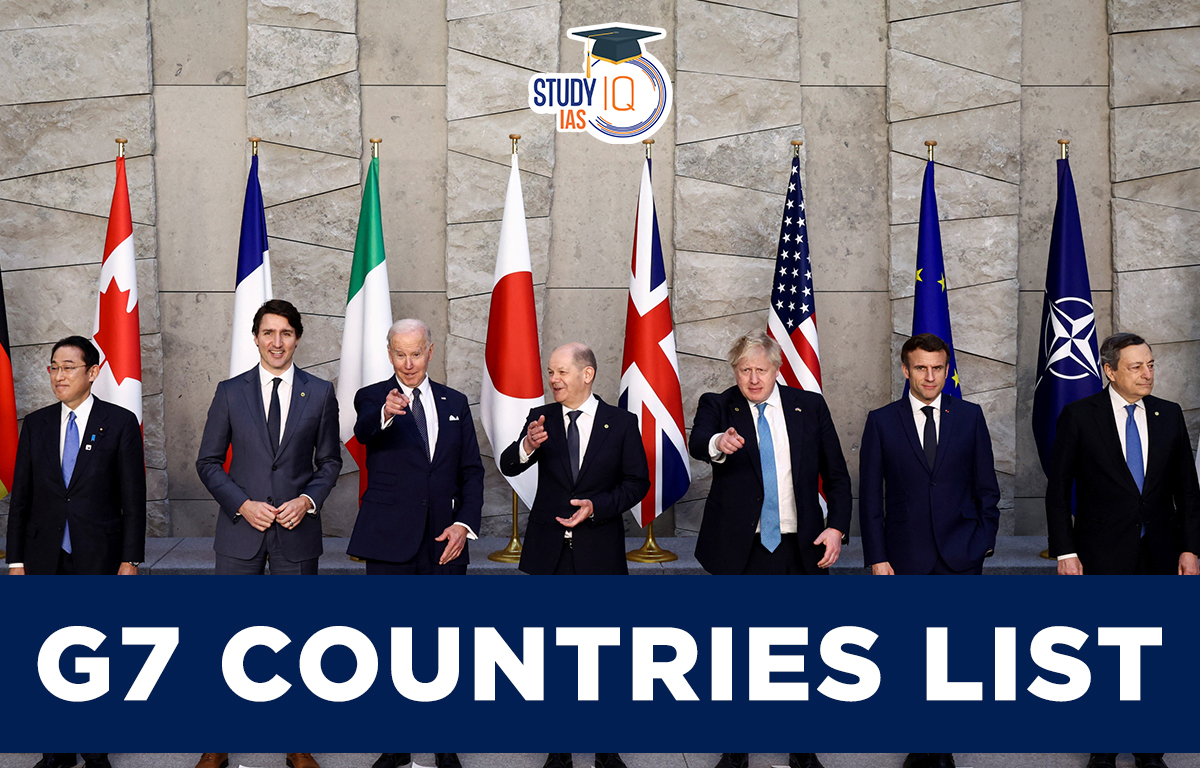
The Empty Ritual of the Summit Snapshot
Diplomats and press pools went into their usual frenzy over the latest G7 family photo featuring Indian Prime Minister Narendra Modi alongside Western heads of state. The official communiqués read like a copywriter’s dream, packed with lofty declarations about advancing global prosperity, securing sustainability, and elevating human well-being.
It is a comforting theater. It is also entirely detached from economic reality.
For decades, the global business community has treated these summits as bellwethers for international policy. We watch the handshakes, analyze the seating arrangements, and read the joint statements as if they possess actual regulatory weight. They do not. The belief that a synchronized photo op correlates with coordinated economic execution is the great lazy consensus of modern international relations.
In reality, these high-profile gatherings have become highly produced distraction mechanisms. While leaders smile for the cameras and pledge vague allegiances to green transitions and equitable growth, the actual tectonic shifts in global trade, supply chains, and industrial policy are happening entirely outside the frame. If you are building a corporate strategy around the promises made in a G7 group photo, you are lagging behind.
The Math Behind the Photo Op Failure
To understand why these summits yield so little substance, you have to look at the structural divergence of the economies involved. The G7 was conceived in the 1970s when its members controlled a massive share of global GDP. Today, that economic dominance has eroded.
Let us look at the raw data.
| Metric | G7 Nations (Aggregate) | Emerging Economies (BRICS+) |
|---|---|---|
| Share of Global GDP (PPP) | Hovering around 30% and declining | Exceeded 35% and climbing |
| Population Representation | Roughly 10% of global population | Over 45% of global population |
| Core Economic Driver | Service economies saddled with sovereign debt | Manufacturing hubs and resource-rich exporters |
When you slice the numbers open, the fundamental flaw of the summit becomes obvious. You cannot engineer "global prosperity" by excluding the very engines driving global growth.
The Friction of Divergent Incentives
Imagine a scenario where a multinational manufacturing company tries to set a unified global strategy based entirely on the desires of its minority shareholders, while completely ignoring the factories where the goods are actually built. That is the G7 attempting to dictate global economic terms today.
The domestic political incentives of the leaders in that photograph are fundamentally at odds with one another:
- Western Leaders face immense domestic pressure to protect local jobs, reshore supply chains, and impose strict carbon tariffs (like the European Union's Carbon Border Adjustment Mechanism).
- Developing Partners like India must prioritize rapid industrialization, job creation for massive youth demographics, and lifting millions out of poverty—goals that require cheap, reliable energy, often flying in the face of Western climate mandates.
When Prime Minister Modi stands in that lineup, it is not a sign of policy convergence. It is a tactical exercise in geopolitical hedging. India needs Western capital and technology; the West desperately needs India as a counterweight to China. It is a marriage of convenience, not a shared vision for human well-being.
Behind the Curtain: What Actually Happens When the Cameras Stop Blinking
I have spent years advising corporate boards on cross-border regulatory risks, watching executives scramble to align their operations with the "commitments" broadcast from these international summits. Millions of dollars are routinely wasted chasing initiatives that disappear the moment the leaders board Air Force One.
Consider the historical precedent of the Build Back Better World (B3W) initiative, launched with immense fanfare at the 2021 G7 summit. It was billed as a multi-hundred-billion-dollar infrastructure partnership to rival China’s Belt and Road Initiative. Bureaucrats cheered. Corporate consultancies spun up new practice groups to capture the anticipated funding.
The actual result? Years later, the initiative has delivered a fraction of its promised capital. It was strangled by bureaucratic red tape, conflicting national funding mechanisms, and a lack of real private-sector appetite. The grand announcement was a political commodity; the execution was a corporate ghost town.
The hard truth is that real geopolitical power does not manifest in joint declarations. It manifests in dry, boring, unilateral legislative frameworks.
- The Inflation Reduction Act (IRA) in the United States did more to reshape global clean energy supply chains than a decade of G7 climate communiqués.
- The European Union’s Corporate Sustainability Due Diligence Directive (CSDDD) forces global companies to alter their operations through legal penalty, not moral suasion.
While the G7 talks about sustainability, individual member states are actively engaging in protectionism, aggressive industrial subsidies, and trade disputes. The family photo is the velvet glove; the national legislature is the iron fist.
Dismantling the "People Also Ask" Illusions
The public discourse surrounding these summits is plagued by fundamental misunderstandings. Let us dissect the most common premises and answer them with cold realism.
Does India’s inclusion in G7 events mean it is joining the West's economic orbit?
Absolutely not. To assume India is aligning with Western economic orthodoxy is to completely misread New Delhi’s foreign policy playbook. India practices strategic autonomy. It will buy discounted Russian oil to keep its domestic fuel prices stable, participate in the BRICS bloc to challenge Western financial hegemony, and simultaneously stand in the G7 photo line to secure defense technology transfers. It is not choosing a side; it is playing the field to its own advantage.
Can the G7 actually deliver on global sustainability goals?
No. The G7 cannot solve global emissions because the G7 is no longer where the emissions are growing. The manufacturing powerhouse of the world is Asia. Attempting to dictate global climate policy through a club of post-industrial Western consumer nations is an exercise in futility. Unless these summits pivot from lecturing developing nations on emissions to radically lowering the cost of capital for green infrastructure in those nations, the speeches are just hot air.
How should businesses react to G7 policy statements?
By ignoring the rhetoric and tracking the capital. If a summit statement promises "digital cooperation," look for the specific export controls and data localization laws being drafted in Washington, Brussels, and New Delhi. The rhetoric will tell you where the politicians want you to look; the regulatory filings will tell you where the real friction is building.
The Contrarian Playbook for Global Operators
If you want to navigate the fracturing global economy successfully, you must stop managing your business based on political theater. The era of frictionless globalization is dead, and no amount of smiling summit photos will revive it.
Here is the alternative strategy that actually works in a fragmented world.
1. Build for Multi-Polar Redundancy
Stop optimizing your supply chain solely for cost efficiency under the assumption that global trade rules will remain stable. Assume that every major economic bloc will continue to erect digital and physical walls. If your operations rely on seamless cooperation between G7 technology and non-G7 manufacturing, you are exposed. Build regional self-reliance into your corporate structure, even if it hurts your short-term margins.
2. Ignore Pledges, Track Subsidies
Do not invest capital based on a summit's "vision for green energy." Invest based on hard, legislated tax credits, direct cash grants, and tariff protections. Money talks; communiqués walk. If a government is not willing to run a massive domestic deficit to fund an industry, that industry does not actually exist in their long-term strategic plans.
3. Factor in the Cost of Geopolitical Friction
Accept that doing business across borders is going to get more expensive, more bureaucratic, and more volatile. Compliance is no longer a back-office check-the-box exercise; it is a core strategic variable. You must stress-test your business model against sudden, aggressive sanctions, export bans, and currency devaluations.
The Price of Admission
Taking a contrarian approach to global policy is not without its risks. If you ignore the mainstream narrative surrounding these summits, you risk misjudging short-term market sentiments driven by media hype. Stock prices can move on a single tweet or a joint press conference, and being right about the long-term irrelevance of a summit does not protect you from short-term market irrationality.
But betting on the substance of a political photo op is a guaranteed losing strategy over a five-to-ten-year horizon. The leaders standing on that stage are managed by political consultants whose primary objective is the next election cycle, not the long-term viability of your global investments.
The next time a press release drops showing world leaders standing shoulder-to-shoulder, look past the smiles. Look at the balance sheets of the nations they represent. Look at the protectionist bills waiting on their desks at home. The real story of global power is never captured in a family photo. It is written in the fine print of the trade restrictions they sign when they get back to the office.