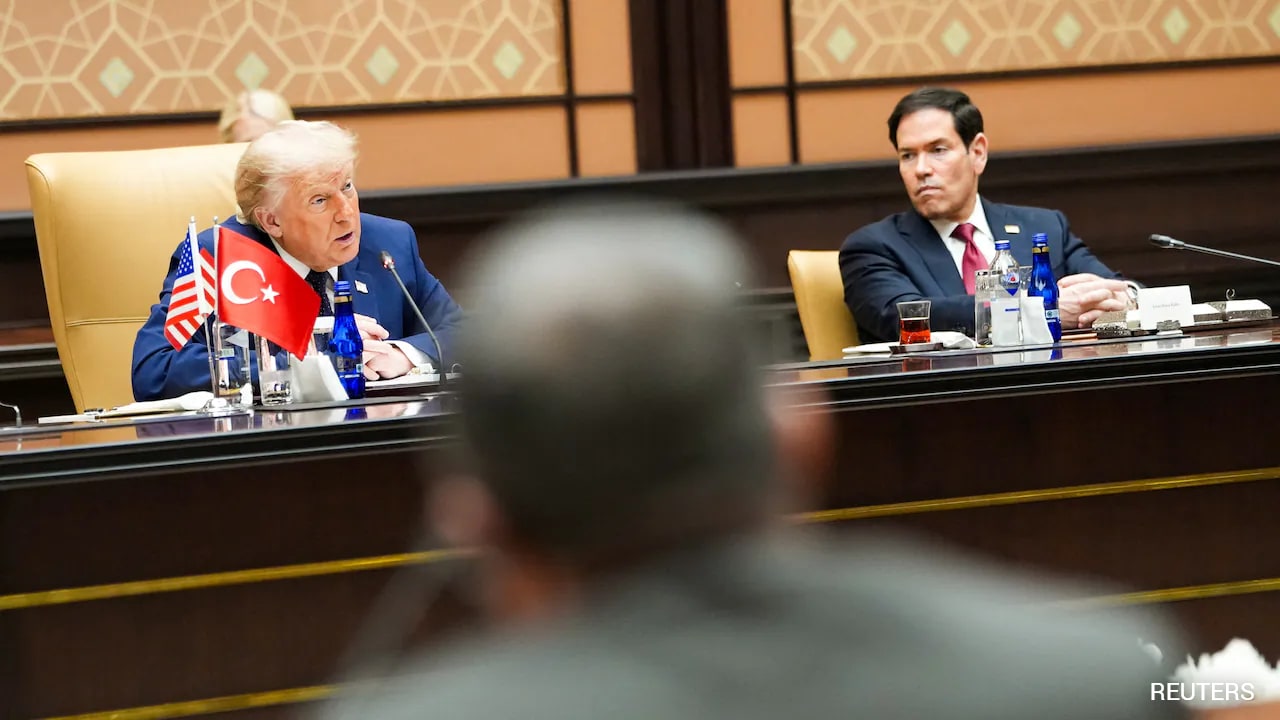
The friction at the NATO summit in Ankara centers on a fundamental divergence over sovereign real estate and resource custody in the High North. US demands for administrative or sovereign control over Greenland, a semi-autonomous territory of the Kingdom of Denmark, are routinely dismissed as rhetorical anomalies. This perspective miscalculates the structural drivers of the dispute. The friction is a rational, if aggressively articulated, response to an shifting Arctic operating environment.
The strategic value of Greenland is determined by three variables: the acceleration of maritime access due to ice mass reduction, the concentration of unexploited critical minerals necessary for energy transitions, and its position along defensive lines between North American and Eurasian ballistic trajectories. Evaluating the dispute requires moving past political rhetoric to analyze the underlying security architecture, fiscal dynamics, and legal mechanisms defining the Arctic frontier.
The Tri-Polar Security Deficit
The primary rationale for shifting Greenland's governance model rests on a perceived security deficit in the Arctic basin. The current administrative framework divides responsibility between Nuuk (local autonomy) and Copenhagen (defense and foreign policy). This split creates a capability-resource mismatch that the US argues compromises North American defensive integrity.
This security deficit can be modeled across three distinct geographic vectors:
- The Maritime Access Vector: Diminishing ice cover converts the Arctic from a kinetic barrier into an open transit corridor. The Northern Sea Route and the Northwest Passage are transitioning toward seasonal commercial viability. This shifts the strategic value of Greenland from a passive observation post to a choke point regulating access between the Atlantic and Arctic Oceans.
- The Domain Awareness Gap: Effective monitoring of the Greenland-Iceland-United Kingdom (GIUK) gap requires deep capital allocation toward sub-surface sensor arrays, long-range maritime patrol aircraft, and persistent satellite coverage. The Kingdom of Denmark’s defense spending historically falls short of the technical threshold required to monitor this expanding theater independently.
- The Force Projection Asymmetry: While Denmark and its European allies have initiated localized defense exercises, such as the deployment of forces to the island and proposals for a permanent NATO "Arctic Sentry" mission, these measures lack the structural permanence required for long-term deterrence. The US military maintains the Pituffik Space Base (formerly Thule Air Base) in northwestern Greenland, optimizing early warning systems and space surveillance. Expanding this footprint to counter Russian northern fleet modernizations or Chinese infrastructure investment requires sovereign or deep administrative latitude that current treaties do not explicitly provide.
The core dispute stems from differing assessments of rival activities in the region. Allegations that Greenland is heavily surrounded by adversarial fleets contrast with observational data from bodies like the Arctic Circle organization, which note no persistent, unauthorized presence of Chinese or Russian surface combatants within Greenlandic territorial waters. However, the underlying strategic logic remains sound: the trajectory of the region points toward increased international presence, creating a structural incentive for the US to secure its northern flank before deployment patterns solidify.
The Fiscal Asymmetry and Sovereign Leverage
The friction within NATO regarding Greenland is directly linked to the broader debate over alliance burden-sharing. The argument for a transfer of control is built on a specific fiscal critique: a structural imbalance exists where the US provides the overarching security umbrella for Western Europe while the nations benefiting from that protection restrict US strategic depth.
[US Security Subsidies to Europe] ──> [Enables Low European Defense Budgets]
                                             │
  ┌──────────────────────────────────────────┘
  ▼
[Restriction of US Strategic Latitude in Territories like Greenland]
This dynamic introduces a specific calculation regarding the costs and benefits of the alliance. The US administration views territorial concessions or expanded military access as a form of payment for its defense commitments. When European allies limit US operational freedom—such as restricting base usage during unilateral conflicts or rejecting territorial acquisition proposals—it disrupts this transactional logic.
The fiscal relationship between Copenhagen and Nuuk provides further leverage. Denmark supplies Greenland with an annual block grant of approximately $600 million, accounting for a significant portion of the island's public budget. The US strategy targets this dependence, arguing that Denmark lacks the capital surplus to develop Greenland’s infrastructure or secure its vast periphery.
By framing Denmark’s administration as financially insufficient, the US positions itself as the only entity capable of funding the necessary deep-water ports, airfield expansions, and radar networks. This economic argument is designed to offer Greenlandic authorities an alternative source of capital, potentially weakening their ties to the Danish crown.
Legal Boundaries and the Sovereignty Bottleneck
The primary obstacle to any modification of Greenland’s status is the international legal framework governing territorial integrity and self-determination. The political reality of the High North is constrained by several legal and institutional factors:
- The 1951 Defense Treaty: Current US military operations on the island are governed by a bilateral agreement between Washington and Copenhagen. This treaty allows for significant operational latitude at Pituffik Space Base but does not grant sovereign rights or the power to unilaterally expand military infrastructure outside designated defense areas without Danish and Greenlandic consent.
- The Greenlandic Act on Self-Government (2009): This constitutional framework recognizes the people of Greenland as an independent entity under international law. It grants Nuuk total authority over domestic policy, resource management, and economic development, while leaving defense to Copenhagen. Crucially, any alteration to Greenland’s sovereignty requires a referendum by the Greenlandic population, alongside approval from the Danish parliament.
- The Arctic Council Framework: The Arctic Council emphasizes adherence to the UN Convention on the Law of the Sea (UNCLOS) for resolving continental shelf extensions and maritime boundary claims. Unilateral geopolitical shifts disrupt this multilateral system, prompting pushback from other Arctic states like Canada and Norway.
Because of these legal constraints, any attempt to acquire or control the territory through economic pressure or threats of military action faces significant resistance. Danish Prime Minister Mette Frederiksen and Greenlandic officials have repeatedly affirmed that the island's sovereignty is non-negotiable.
Furthermore, attempts to link territorial concessions to broader trade or security commitments—such as threatening a 25% tariff on European goods or hinting at a complete withdrawal of US troops from Europe—ultimately undermine alliance cohesion. These tactics unite the European Union and NATO members in defense of sovereign norms, creating a diplomatic stalemate.
Strategic Realities and Future Postures
A pragmatic analysis shows that a formal transfer of Greenland's sovereignty to the United States remains highly unlikely due to local opposition and international legal protections. However, the underlying structural drivers—maritime access, critical mineral security, and missile defense—will continue to push Washington to seek greater control over the territory.
The likely path forward will not involve formal annexation, but rather a gradual expansion of influence through targeted bilateral agreements. The US State Department and Department of Defense are shifting toward an incremental approach, using monthly diplomatic engagements with Copenhagen and Nuuk to secure specific outcomes:
- Dual-Use Infrastructure Investment: Funding the construction of civilian airports and deep-water ports that can be quickly converted for military logistics during a crisis.
- Critical Mineral Joint Ventures: Securing exclusive extraction and processing agreements for Greenland's rare earth elements, effectively locking out Chinese capital without requiring a change in territorial ownership.
- Integrated Access Frameworks: Expanding the 1951 Defense Treaty to permit the deployment of advanced sensor arrays and anti-submarine warfare assets outside traditional base boundaries.
This approach addresses the US need for strategic depth while respecting the formal sovereignty of the Danish Kingdom, establishing a sustainable framework for Arctic security.