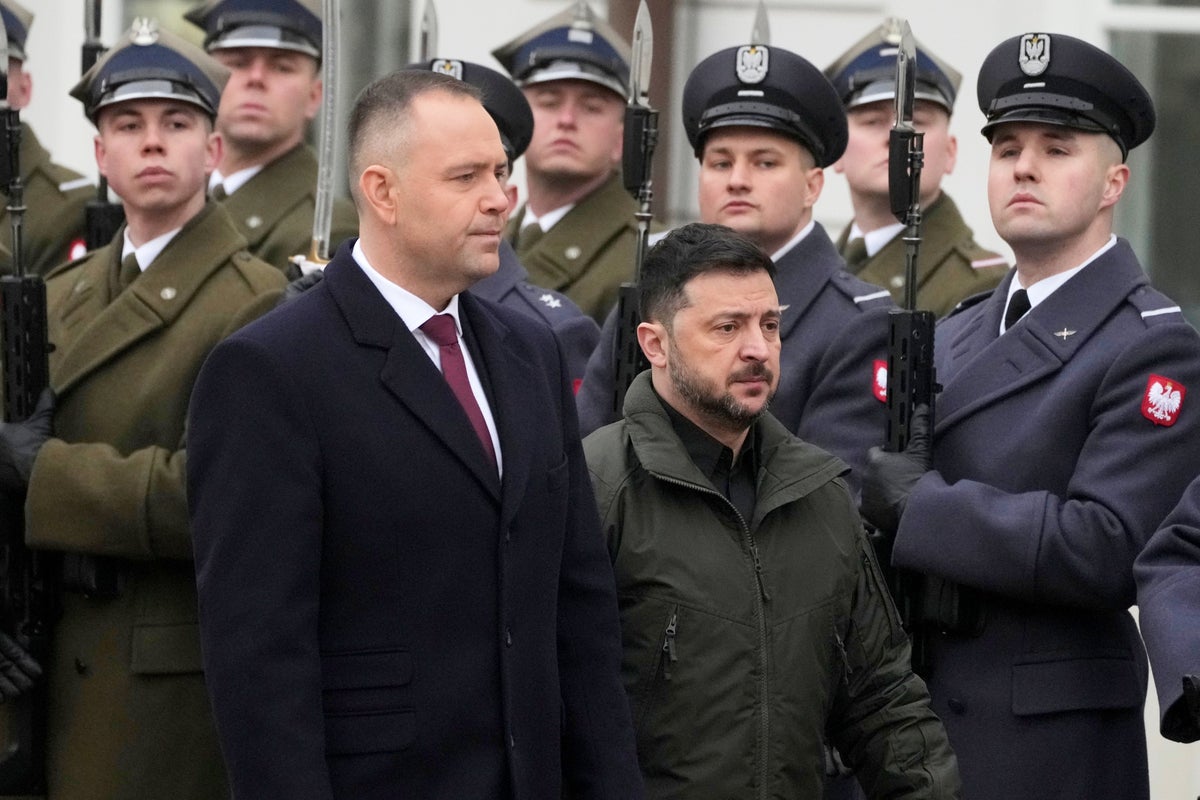
The strategic partnership between Warsaw and Kyiv is conventionally analyzed through the prism of shared threat perception and defensive realism. Since the 2022 full-scale Russian invasion of Ukraine, Poland has operated as the critical logistical hub for Western military and humanitarian assistance, matching this structural role with sweeping domestic legal protections for millions of displaced Ukrainians. However, by mid-2026, a series of acute escalations—most notably President Volodymyr Zelensky’s decision to award the honorary title "Heroes of the UPA" to a special forces unit—revealed that unresolved historical grievances are not merely background noise. They represent a hard constraint on bilateral security, capable of altering domestic political calculations, disrupting cross-border logistics, and shifting public consensus on European integration.
To understand why a security partnership forged under existential threat is showing deep structural strain, the relationship must be analyzed through a precise tripartite framework: the asymmetric memory marketplace, the economic protectionism of the agricultural transit corridor, and the shifting domestic electoral cost functions within Poland following its 2025 presidential transition.
The Asymmetric Memory Marketplace: Volhynia as a Non-Negotiable Asset
The most explosive fault line in contemporary Polish-Ukrainian relations lies in the competing national narratives surrounding the 1943–1945 Volhynia massacres. This historical friction behaves as an asymmetric market where the symbolic assets required for domestic political consolidation in one nation directly deplete the strategic capital of the other.
                  [COMPETING NATIONAL NARRATIVES]
                                 │
         ┌───────────────────────┴───────────────────────┐
         ▼                                               ▼
  POLISH PARADIGM                                Ukrainian Paradigm
• Event: Volhynia Genocide (1943-45)           • Event: Liberation & Anti-Soviet Struggle
• Focus: 60K-100K civilian victims             • Focus: UPA resistance to Russian hegemony
• Stance: Non-negotiable moral fact            • Stance: National survival symbol
The core mechanics of this ideological divergence are rooted in the mid-20th century:
- The Polish Paradigm: Warsaw views the systemic killing of 60,000 to 100,000 ethnic Polish civilians by the Ukrainian Insurgent Army (UPA) and the Organization of Ukrainian Nationalists (OUN-B) in German-occupied Volhynia and Eastern Galicia as a documented genocide. The Polish parliament codified this designation in 2016. For Poland, the preservation of this memory and the right to exhume mass graves are civilizational baselines.
- The Ukrainian Paradigm: Kyiv views the UPA primarily through the lens of national liberation and resistance against Soviet and Nazi totalitarianism. Amid an ongoing war for survival against modern Russian state expansion, symbols of historical anti-Moscow resistance are highly functional tools for military morale and civic mobilization.
The structural failure of standard diplomacy to reconcile these positions became clear when Polish Defense Chief Władysław Kosiniak-Kamysz informed Ukrainian officials that the memory of Volhynia victims is entirely non-negotiable. Because Ukraine honors historical actors for their anti-Soviet utility while Poland criminalizes them for their anti-Polish violence, any symbolic optimization by Kyiv for internal morale inflicts an immediate diplomatic cost in Warsaw. The friction is amplified because Polish partisan retaliatory actions, which killed several thousand Ukrainian civilians, are categorized by Polish historians as localized tactical reactions, whereas Ukraine frequently frames the entire era as a symmetrical bilateral conflict—a stance Poland’s Institute of National Remembrance (IPN) rejects.
The Border Friction Function: Logistical Bottlenecks and Trade Protectionism
While historical memory provides the emotional and ideological fuel for bilateral friction, the economic corridor serves as the physical bottleneck where these tensions manifest. This dynamic is governed by a complex trade-off between Ukraine’s wartime export requirements and Poland’s domestic market stability.
Following the 2022 black sea blockade, Ukraine was forced to reroute its massive agricultural output through European land corridors, transforming Poland into a primary transit state. The rapid influx of lower-priced Ukrainian grain and agricultural commodities into the European Union market created a severe supply shock. The structural consequences of this economic shift evolved through a clear sequence of escalations:
- Market Saturation: Delays in transit infrastructure led to the accumulation and localized sale of Ukrainian grain within Poland, undercutting local wholesale prices and threatening the financial viability of Polish farming operations.
- Unilateral Protectionism: In response to domestic agrarian distress, Warsaw bypassed broader European Commission transit monitoring frameworks to implement unilateral import bans on specific Ukrainian agricultural products.
- Physical Supply Disruptions: Frustrated Polish agricultural and logistics sectors established border blockades at key crossings, including Medyka and Dorohusk.
The strategic cost of these border disruptions extends far beyond agricultural balance sheets. While the acute border protests of 2023–2024 eventually de-escalated into managed transit controls, the infrastructure remains highly sensitive to political friction. During peak protests, the physical blockage of transit lanes caused collateral delays for non-agricultural shipments, slowing the delivery of dual-use equipment destined for the Ukrainian front lines, including night-vision systems, logistics vehicles, and unmanned aerial platforms. The economic corridor is therefore a dual-use pipeline; when trade protectionism closes the border, it creates an immediate logistical bottleneck for regional defense supply chains.
Shifting Cost Functions: The Post-2025 Electoral Re-alignment
The durability of Poland’s strategic alignment with Ukraine is fundamentally tied to the internal political incentives of Polish policymakers. The period between 2022 and 2024 was characterized by a broad political consensus in Warsaw that prioritized the total containment of Russian power over bilateral disputes. However, the domestic political landscape underwent a significant structural shift leading up to and following the 2025 Polish presidential election.
The rise of right-wing political actors, specifically the Konfederacja party, altered the electoral cost function for mainstream Polish coalitions. By organizing national political campaigns around the long-term fiscal costs of refugee integration, localized inflation, and unreciprocated diplomatic concessions to Kyiv, these factions successfully shifted the median voter’s tolerance for unilateral support. This political transformation is clearly visible in changing public opinion and official policy responses:
- Dwindling Institutional Consensus: Data from public polling institutes like IBRiS revealed a stark decline in institutional support for Ukraine's geopolitical trajectory. In 2022, approximately 85% of the Polish public favored Ukrainian accession to the European Union. By 2025, that figure dropped to 35%, with respondents frequently pointing to unresolved historical disputes and agricultural competition.
- The Integration Bottleneck: The election of President Karol Nawrocki signaled a clear shift toward a "Poland First" foreign policy model. This resulted in the gradual wind-down of special wartime social subsidies and extended residency privileges for Ukrainian citizens, transitioning them to standard foreign national frameworks.
- The Accession Veto Mechanism: Polish officials across the political spectrum have increasingly tied Ukraine’s long-term institutional goals directly to historical concessions. The Polish executive branch and defense ministry have explicitly stated that Warsaw will block Ukraine's accession to both the European Union and NATO until the Volhynia issue is resolved, including the unrestricted right to locate, exhume, and formally bury Polish victims.
This shift undermines a core assumption of Western security planning: that Poland's support for Ukraine is an infinite resource independent of domestic political outcomes. Instead, the current equilibrium demonstrates that as external existential panic subsides into a prolonged war of attrition, domestic political actors will increasingly optimize for internal economic stability and historical narrative dominance.
Strategic Forecast: The Fragmented Alliance
The interplay of memory politics, economic protectionism, and shifting electoral incentives points to a definitive long-term friction point rather than a clean diplomatic resolution. The relationship is locked in a fragmented alliance model characterized by two distinct operational realities.
In the realm of hard defense capabilities and counter-hegemonic strategy, Poland will remain a critical partner for Ukraine. The geopolitical cost to Warsaw of a total Ukrainian collapse remains unacceptably high, as it would bring Russian conventional forces directly to the Polish eastern border. Consequently, Poland will continue to facilitate Western weapons transfers, participate in regional air defense coordination, and maintain essential military supply lines.
However, this military cooperation will remain strictly compartmentalized from economic and institutional integration. At the negotiating table, Ukraine faces a formidable bottleneck. Kyiv’s assumption that its wartime sacrifices would grant it automatic, accelerated entry into Western institutions is running directly into the reality of Polish veto power. Poland will continue to demand structural trade caps to protect its agricultural sector and non-negotiable legal frameworks regarding historical exhumations.
For Ukraine, the strategic play requires a shift from emotional diplomacy to institutional pragmatism. Kyiv cannot bypass Warsaw on its path to Europe, and treating historical grievances as minor domestic folklore underestimates the deep role memory plays in Polish state identity. If Ukraine fails to decouple its modern military identity from controversial mid-20th-century nationalist figures, it will face a permanent institutional blockade from its most vital neighbor, regardless of the security guarantees provided by more distant Western allies.