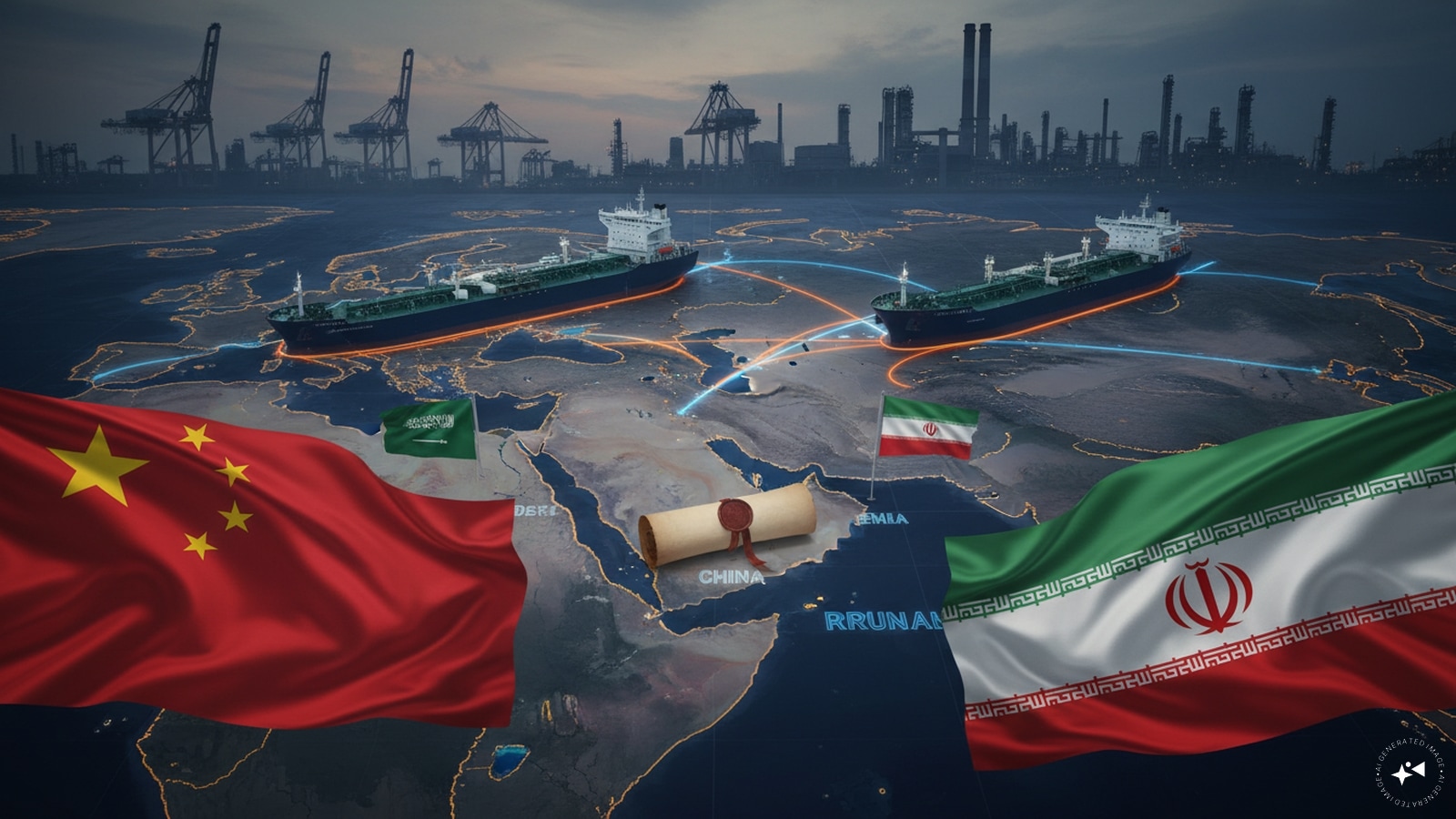
Global trade architecture relies on the uninterrupted kinetic flow of energy and goods through narrow maritime corridors. When regional actors weaponize these chokepoints, the resulting economic friction travels upstream to major consumer economies, forcing a recalibration of diplomatic leverage. The recent diplomatic interventions by Beijing, prompted by direct appeals from Riyadh following military advances by Houthi forces near the Bab el-Mandeb Strait, expose the operational limits of superpower influence in secondary proxy conflicts.
Analyzing this friction requires deconstructing the underlying strategic constraints, the economic exposure metrics, and the transactional limits of state-to-state persuasion.
The Exposure Matrix
To understand why external powers intervene in peripheral maritime conflicts, one must evaluate the structural dependency of importing economies on specific geographic chokepoints. China’s economic exposure rests on two pillars:
- Energy Imports: Approximately half of China's crude oil imports transit through Middle Eastern maritime corridors.
- Bilateral Commerce: Annual trade turnover between Beijing and the member states of the Gulf Cooperation Council (GCC) hovers around 300 billion dollars.
When maritime disruptions elevate freight insurance rates, force longer circumnavigation routes around the Cape of Good Hope, or threaten refined fuel supplies, the cost absorbs directly into industrial margins. The disruption transforms from a localized territorial dispute into a systemic tax on global manufacturing output.
The Principal-Agent Friction
The relationship between external patrons and regional proxy networks is frequently mischaracterized as a command-and-control hierarchy. In practice, it operates as a loose alliance of convenience governed by divergent risk tolerances.
When Beijing approaches Tehran to urge restraint on Houthi maritime operations, it collides with a complex internal decision-making apparatus within Iran. Tehran weighs multiple competing priorities:
- Regime Survival Pressures: Confronted with intense diplomatic, economic, and military pressure from Western adversaries, regional alignments and proxy assets serve as primary defensive deterrents.
- Strategic Autonomy: Proxy groups maintain distinct domestic political objectives, operational independence, and local grievances that do not always synchronize with the foreign policy timelines of their state supporters.
- Economic Reciprocity: While Iran relies heavily on China as an economic lifeline for trade and energy absorption, Tehran calculates whether compliance with Beijing's security demands yields tangible diplomatic protection or leaves it strategically exposed.
This dynamic creates a structural bottleneck. Beijing desires stability to safeguard its trade routes, yet its diplomatic capital in Tehran is constrained by Iran's acute existential pressures.
The Leverage Deficit
The effectiveness of any great power mediation depends on its willingness to alter the cost-benefit calculation of the target state through explicit consequences. Analysts evaluating diplomatic maneuvers in the region look for clear indicators of resolve:
- Economic Conditionalities: Tying long-term trade agreements, energy purchasing volumes, or financial support directly to regional security outcomes.
- Diplomatic Penalties: Adjusting multilateral voting behaviors or withholding strategic investments when security demands are ignored.
Without attached consequences, diplomatic appeals risk being interpreted as weak preferences rather than binding directives. Tehran retains structural leverage via its ability to influence maritime security in the Strait of Hormuz. However, excessive disruption eventually threatens the economic stability of the very partners upon whom Tehran depends for financial survival, creating a self-limiting threshold for regional escalation.
Strategic Forecast
The intersection of Gulf security appeals and Chinese economic diplomacy highlights a permanent vulnerability in unchokepointed trade networks. As long as regional actors retain asymmetric capabilities to disrupt critical maritime arteries, external superpowers will find their commercial interests hostage to local conflicts.
The primary variable determining future stability is not the frequency of diplomatic communiqués, but whether external capitals demonstrate the institutional appetite to impose direct economic costs for non-compliance. Until tangible penalties alter local risk assessments, maritime disruptions will remain a persistent structural hazard for international commerce.