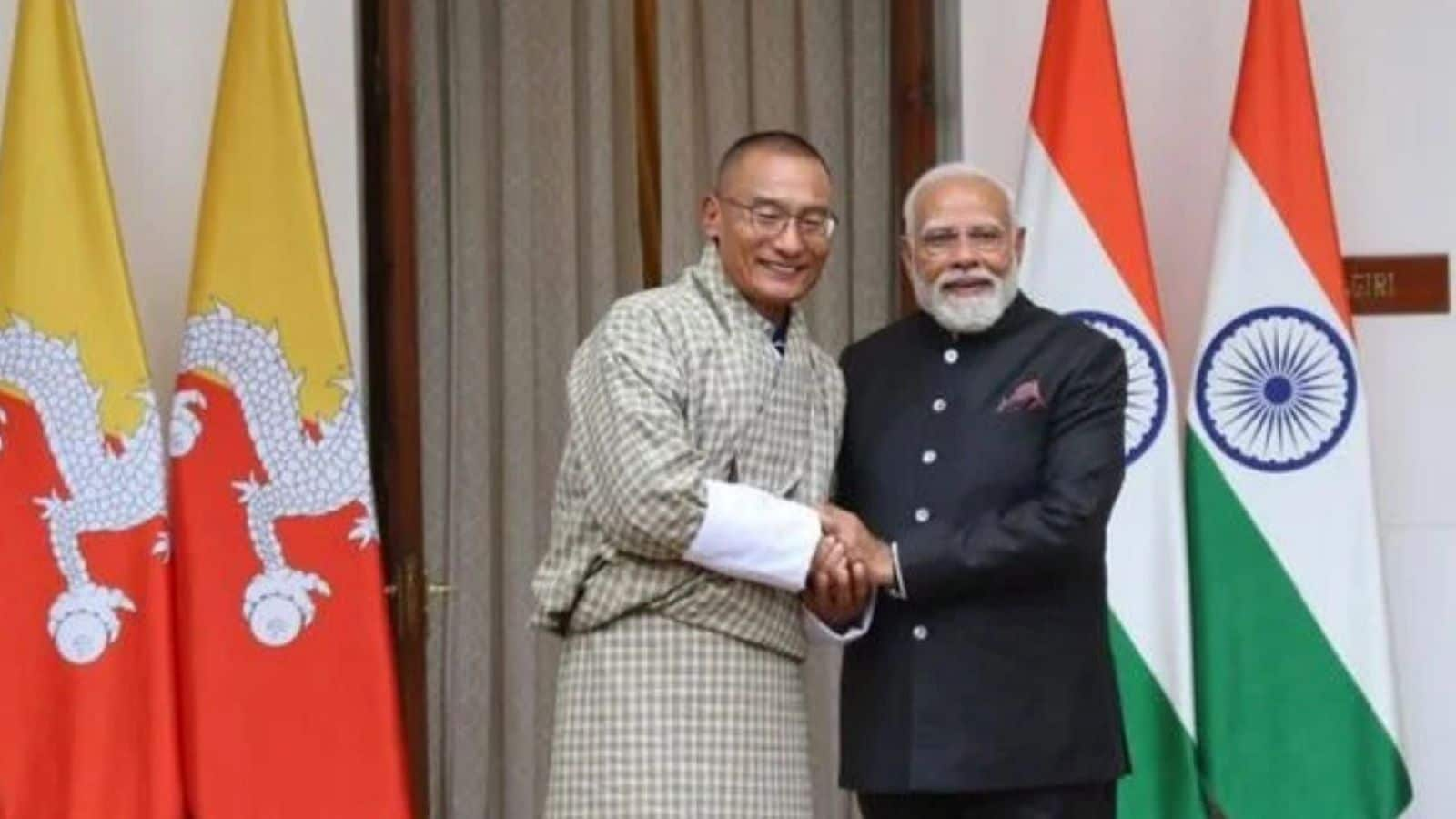
We love to mock political theatre until it works. When the former Prime Minister of Bhutan, Tshering Tobgay, or other regional figures lean into divine iconography—framing Narendra Modi as an avatar of Vishnu or Kalki—western media sneers. Editorial desks in London and New York clutch their pearls, writing long, condescending columns about the erosion of secularism in South Asia. They call it fringe fanaticism, populist cult-building, or embarrassing diplomatic pandering.
They are missing the plot entirely.
Strip away the western obsession with sterile, Enlightenment-era bureaucratic framing, and you are left with something far more potent: ancient strategic storytelling. In the Himalayas, power has never been maintained through PowerPoint presentations or technocratic GDP growth alone. It runs on cosmic legitimacy. When a small, landlocked buffer state navigates the most volatile geopolitical fault line on the planet, caught between two nuclear-armed leviathans, spiritual alignment is not a marketing gimmick. It is survival calculus.
Let us dismantle the lazy consensus. The common narrative claims that attributing divine status to modern politicians is a descent into irrational autocracy. That view assumes politics is a purely rational, transactional marketplace of policy metrics. That is a fantasy. Human beings do not vote, ally, or bleed for tax incentives. They rally around myth, destiny, and narrative inevitability.
The Western Trap of Literalism
The fundamental error critics make is reading South Asian political rhetoric through a literal, western lens. When someone invokes Kalki or Vishnu, the secular pundit imagines a literal deity descending from the clouds with a flaming sword. That is a profound category mistake.
In the Indic tradition, leadership and cosmic order, or Rta, are deeply intertwined. A ruler who embodies stability, civilizational defense, and economic transformation naturally attracts the language of divine preservation. It is a hyper-charged metaphor for efficacy. Bhutan shares a fragile, hyper-strategic border with a rising superpower. Its leaders understand power dynamics far better than a columnist sitting safely inside the beltway.
When a neighboring prime minister publicly elevates a powerful counterpart to a cosmic archetype, it signals absolute deference masked in cultural idiom. It establishes a hierarchy of protection without firing a single artillery shell. It is hard power dressed in soft mythology.
Think back to Machiavelli, though applied to a completely different civilizational operating system. Machiavelli understood that men are governed by appearances and symbols. Modern technocrats think they can engineer a society purely on data dashboards. They lose elections to populists who understand story every single time. Modi’s rise and the regional framing surrounding him are not anomalies of democracy; they are the reversion to the oldest form of political gravity known to civilization.
The Economics of Cosmic Branding
Let us look at the transactional reality underneath the saffron and silk. Bhutan needs India’s economic lifeline, security umbrella, and diplomatic backing against northern pressures. India needs a stable, friendly buffer state guarding its most vulnerable northern mountain passes.
How do you cement that alliance permanently? You do not just sign a trade agreement over warm tea and handshakes. Trade agreements can be broken by the next administration. You anchor the relationship in something transcendent. You tie geopolitical security to civilizational destiny.
When you frame a foreign leader as a cosmic restorer of order, you raise the political cost of betrayal to an astronomical level. Domestically and internationally, you create a narrative lock-in.
I have watched corporate boards try to manufacture brand loyalty with multi-million-dollar marketing campaigns that fail to move a single customer. Meanwhile, ancient statecraft achieves absolute alignment by tapping into a three-thousand-year-old software stack of human psychology. We mock the myth-makers while our own institutions collapse from a sheer lack of inspiring narratives.
The Danger of Our Own Blind Spots
Of course, this approach carries heavy risks. The downside to wrapping politics in divinity is the trap of infallibility. When a leader is cast as an avatar, criticism becomes blasphemy. Accountability gets swallowed by adulation. Pragmatic policy adjustments turn into religious dogmas, making course corrections exceptionally difficult when geopolitical realities shift.
That is the trade-off. Autocrats and clever strategists alike know that myth gives you immense mobilization power, but it handcuffs your ability to pivot when the strategy breaks down.
Yet, pretending this is unique to South Asia is peak hypocrisy. Western leaders wrap themselves in the mythology of the "free world," manifest destiny, and historical inevitability with just as much theatrical fervor. The only difference is that Washington uses the language of Hollywood and liberal internationalism, while New Delhi and Thimphu draw from the Puranas. The syntax changes; the utility of myth remains identical.
Stop viewing Asian statecraft through the narrow lens of western political science. The map is not the territory, and the rhetoric is never just hyperbole. It is the operating system of the region.
The next time a foreign leader invokes ancient avatars on the world stage, do not write it off as a stunt. Watch who is aligning with whom, and ask yourself what debt is being paid in the currency of the gods.