Berlin just made a massive move that changes the entire nature of European military aid. On July 8, 2026, on the sidelines of the NATO Summit in Ankara, Ukrainian Foreign Minister Andrii Sybiha and German Defense Minister Boris Pistorius signed a major implementation agreement. Germany will fully finance the initial production phase of Ukraine’s BARS jet-powered strike drones.
This isn't your standard weapons shipment. It falls under Kyiv’s "Build with Ukraine" initiative. Instead of waiting for slow Western supply chains or begging for permission to use foreign missiles, Ukraine is getting the cash to build its own long-range strike weapons. Every single drone produced under this deal goes straight to the front lines.
The strategy is brilliant, and frankly, it is about time. For years, Western allies wrung their hands over escalation. They drew red lines, restricted weapon ranges, and panicked over what would happen if a Western missile hit Russian soil. Germany found a clever workaround. By funding Ukrainian-designed technology, Berlin gives Kyiv the deep-strike capabilities it needs while keeping its own political hands clean.
Berlin steps up to finance the BARS drone fleet
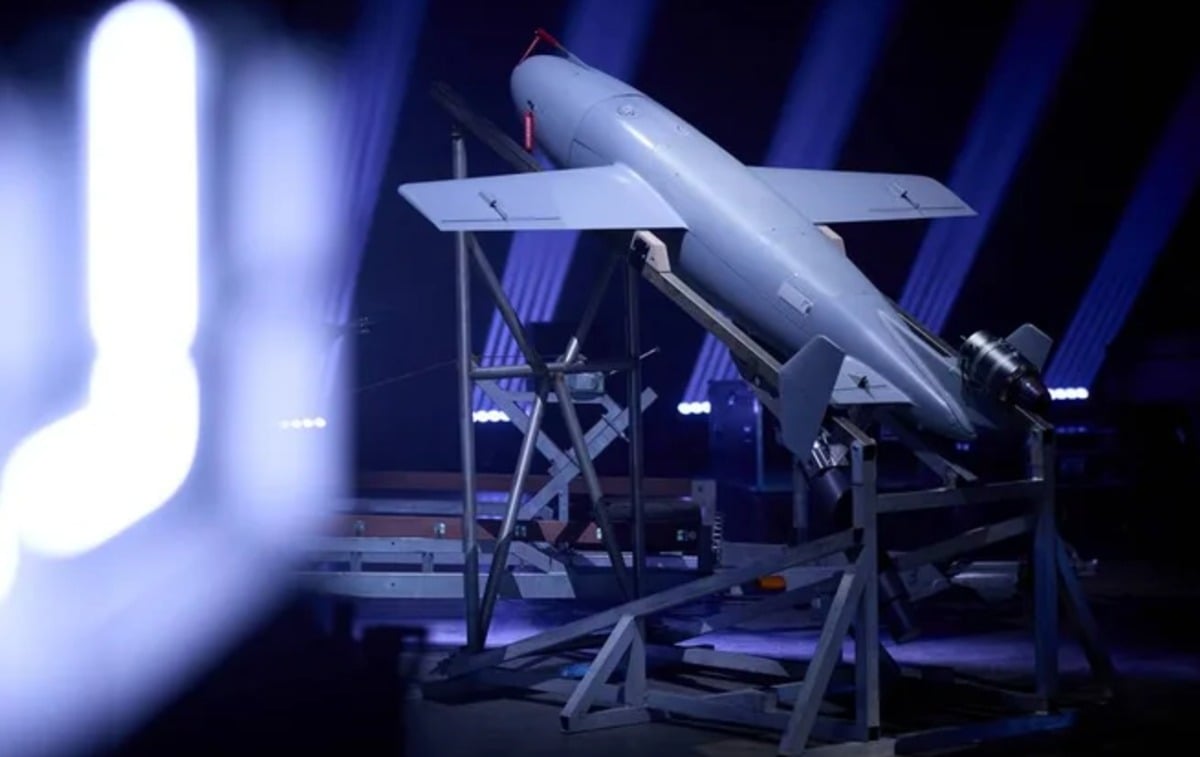
Let’s look at what is actually being built. The BARS drone is a sophisticated piece of hardware. It is a rocket-boosted, jet-powered strike drone designed explicitly for long-range attacks against military targets deep inside Russian territory. We aren't talking about small quadcopters dropping grenades on trenches. These are high-speed, long-distance systems capable of evading air defenses to hit strategic infrastructure.
The existence of the BARS program was first made public in early 2025 by Ukraine's ministry officials. Since then, it has quietly become a central part of Ukraine’s long-range strategy. Early versions have already seen operational use, reportedly striking military facilities as far away as Moscow.
By putting German financial weight behind this specific program, Berlin is acknowledging a stark reality. Ukraine cannot win a war of attrition by only playing defense. They need to strike the economic and military potential of the aggressor. The €300 million investment earmarked earlier this year for deep-strike capabilities is now flowing directly into hardware that can fly hundreds of kilometers behind enemy lines.
The strategy behind manufacturing on foreign soil
You might wonder why Germany is financing the production of these drones instead of just building factories inside Ukraine. The answer comes down to air defense and security. Russian cruise missiles and ballistic strikes constantly target Ukrainian industrial facilities. Building advanced jet drones requires stable assembly lines, undisturbed supply chains, and safe testing grounds.
Manufacturing under the "Build with Ukraine" framework allows Ukrainian defense tech to be scaled up in safe environments abroad. It protects the production process from incoming strikes while utilizing Western industrial capacity. Germany provides the secure infrastructure and the money. Ukraine provides the intellectual property, the battle-tested designs, and the engineering know-how.
It is a completely new model of defense cooperation. In the past, Western nations viewed Ukraine strictly as a recipient of charity. Today, the relationship is a two-way street. Ukraine has more real-world experience with drone warfare than any military on the planet. German defense firms get an up-close look at how these systems operate in highly contested electronic warfare environments.
Why this bypasses traditional political red lines
The political genius of this deal lies in how it handles the issue of weapon restrictions. For the longest time, the United States, Germany, and the United Kingdom barred Ukraine from using donated weapons like Storm Shadow or Taurus missiles against targets inside Russia. The fear of direct confrontation with Moscow paralyzed Western decision-making.
This drone deal completely sidesteps that debate. Because the BARS drone is a Ukrainian design, the intellectual property belongs to Kyiv. When these jet drones strike a fuel depot or a military airfield deep inside Russia, it is a Ukrainian weapon executing a Ukrainian mission. Germany merely wrote the check to scale the factory.
This approach gives Ukraine the autonomy it has desperately lacked. They don't have to call Washington or Berlin to ask for permission before launching a strike. If a target presents itself, they hit it. It fundamentally alters the power dynamic on the battlefield, forcing Russia to pull its logistics and aircraft even further back from the border.
The dramatic evolution of German military aid
To truly understand how massive this is, you have to look at where Germany started. Back in early 2022, Berlin famously offered Ukraine 5,000 helmets. It was a move that drew widespread mockery and symbolized Germany's deep-rooted reluctance to involve itself in European military conflicts.
Look at the numbers now. In 2026, Germany’s military assistance to Ukraine is projected to reach at least €11.5 billion. That is roughly 0.25% of Germany’s total GDP allocated strictly to military aid for Kyiv. Berlin has transformed from a hesitant bystander into Europe’s leading provider of military support.
The shift isn't just about the money. It is about the types of systems being financed. Alongside the BARS drone project, Germany is funding a €3.2 billion contract with Raytheon to supply hundreds of Patriot missiles to protect Ukrainian cities. They are also backing the production of thousands of mid-strike drones equipped with artificial intelligence solutions to counter Russian jamming.
What the defense industry learns from Ukrainian tech
This partnership isn't a one-sided donation. German defense companies are desperate for the data Ukraine possesses. Modern warfare changes at a breakneck pace. A drone tracking system that works perfectly in January might be completely useless by March because of new enemy electronic countermeasures.
By setting up joint ventures and financing Ukrainian drone lines, German engineers gain access to live combat data. They see exactly how Russian electronic warfare systems try to jam drone signals. They learn how autonomous navigation systems perform when GPS is completely blocked.
We are already seeing this influence flow backward. The Bundeswehr is currently overhaulings its own long-range strategies. Recent reports show the German military plans to procure up to 500 of its own long-range strike drones by 2029, with initial trial batches ordered this year. The lessons learned from funding the BARS drone will directly shape the weapons Germany buys to defend its own borders in the coming decades.
Common misconceptions about the drone fleet
A lot of commentators assume that drones are just cheap, disposable toys. They look at videos of small FPV drones and think that is the whole story. That is a major misunderstanding of how the air war has evolved.
Long-range strike drones like the BARS or the older Antonov An-196 Liutyi are essentially low-cost cruise missiles. They feature complex navigation suites, carbon-fiber fuselages, and sophisticated payload delivery mechanisms. They are designed to fly at varying altitudes, blending into the terrain to avoid radar detection.
Another misconception is that these drones will completely replace traditional artillery or air forces. They won't. Drones are a complementary capability. They allow Ukraine to conduct strategic bombing campaigns without owning a fleet of expensive, vulnerable long-range bomber aircraft. It is asymmetric warfare scaled to an industrial level.
Actionable steps for Western defense observation
For defense analysts, policymakers, and industry observers, this agreement provides a clear roadmap for how future alliance-based manufacturing will look. If you are tracking these developments, keep your eyes on three specific indicators over the next few months.
First, watch the delivery timelines. The initial production phase is fully funded, so the transition from the factory floor to the frontline should be rapid. Look for an uptick in long-range strikes on Russian logistics hubs as a sign that the German-funded lines are fully operational.
Second, monitor the expansion of the "Build with Ukraine" initiative to other nations. Ukraine has already signed defense cooperation deals with several other countries, including Lithuania, Latvia, and Qatar. See if these nations follow Germany's lead by financing specific Ukrainian missile-drone programs.
Third, look at how the technology integrates AI navigation. As electronic jamming gets heavier, the success of the BARS fleet will rely on its ability to navigate autonomously without a pilot link. The software updates tested on these drones will set the standard for global drone development.
Germany stopped overthinking its defense strategy and finally invested in what works. Funding Ukraine’s domestic innovation is the fastest way to build a sustainable defense ecosystem, and the BARS agreement proves that Berlin is finally ready to lead from the front.