The lighting is always warm in the aftermath.
That is the first thing you notice when you watch a digital resurrection unfold on a six-inch screen. There is no harsh hospital fluorescence, no cold sterile glare of a viewing room, no quiet rustle of tissues in a crowded chapel. Instead, there is a soft golden glow, a familiar cardigan buttoned neatly to the throat, and a voice that sounds ninety-four percent like the person who raised you.
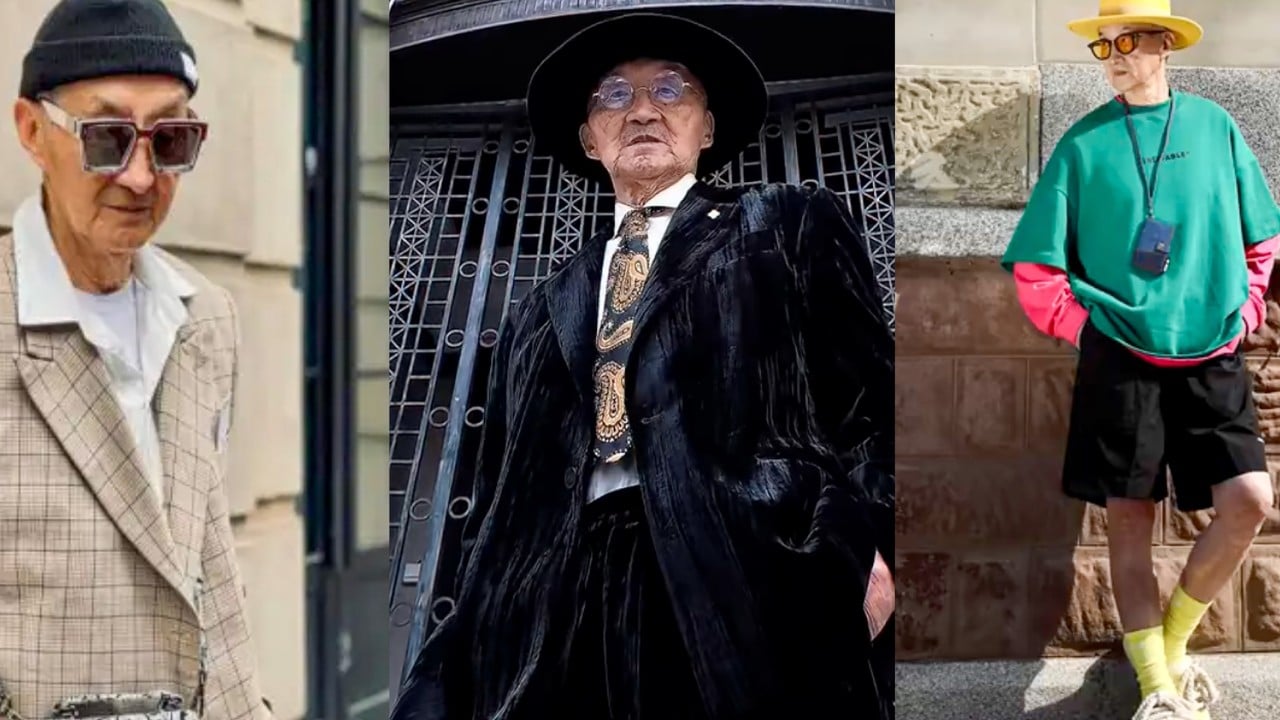
When a prominent Chinese fashion influencer recently used artificial intelligence to bring her late grandfather back to life on her popular social media account, she thought she was building a sanctuary for her grief. She fed old photographs and voice recordings into generative models, stitching together a digital puppet that blinked, smiled, and spoke comforting words directly to her millions of followers. She wanted to share her mourning. She wanted to hold onto the warmth of a man who had shaped her world before the silence set in.
The internet did not bring flowers. It brought torches.
Within hours, her comment sections turned into a tribunal. Accusations of clout-chasing, emotional manipulation, and commodifying the dead flooded the very platform where she had built her career. Critics argued that turning a deceased relative into content for a fashion feed crossed an invisible, sacred boundary. Supporters countered that grief has no rulebook, and that modern technology simply offers a new kind of mourning portrait.
Both sides missed the deeper tremor beneath their feet.
The Architecture of a Digital Haunting
To understand why this single video detonated such fierce moral outrage, you have to look past the influencer and examine the machinery humming quietly inside our pockets. We are standing at the edge of a profound shift in how human beings process mortality, and most of us have not read the terms of service.
Consider a hypothetical scenario that is already playing out in thousands of living rooms across Shanghai, New York, and London. Imagine a daughter—let’s call her Mei—sitting at her kitchen table three weeks after her father’s funeral. The house is unbearably quiet. She opens an app, uploads forty minutes of old voicemail messages and a dozen holiday snapshots, and pays the equivalent of a takeout dinner. Twenty minutes later, her phone chimes. Her father is on the screen. His head tilts at that exact, familiar angle. He asks if she has eaten dinner yet.
In that moment, Mei’s brain does not register code, neural networks, or predictive text algorithms. Her nervous system registers safety. It registers attachment.
I remember the first time I heard an AI voice clone of someone I had lost. It was a test file sent by a colleague working in audio synthesis—just three sentences read from a neutral script. My logical mind knew the waveform was generated by math, a statistical probability of pitch and cadence scraped from old podcast interviews. Yet my chest tightened instantly. My hands went cold. For four seconds, time collapsed, and the finality of death felt negotiable.
That physical jolt is the exact currency of the emerging grief-tech industry. Throughout history, humans have invented rituals to bridge the chasm between the living and the dead. The Victorians posed deceased relatives in armchairs for post-mortem daguerreotypes, painting open eyes onto closed eyelids so families could keep one final, lifelike image on the parlor mantel. Spiritualists held seances in darkened rooms. We built stone monuments, recorded video diaries, and kept voicemails saved on aging phones long after the carrier contracts expired.
Every generation builds a mirror to catch the shadow of those who leave.
The difference today is that the mirror talks back. And unlike a photograph, which remains frozen in the past and forces you to accept that the moment is over, a generative avatar exists in the continuous present. It reacts. It improvises. It mimics growth.
When Mourning Becomes a Content Strategy
Why did the Chinese fashion influencer’s tribute provoke such visceral disgust compared to a private family using the same software behind closed doors? The answer lies in the collision between two incompatible worlds: the sacred vulnerability of bereavement and the ruthless economics of the attention economy.
Social media platforms do not care why you are crying. Their recommendation engines cannot distinguish between a genuine breakdown, a scripted apology, and a meticulously lit tribute to a departed grandparent. To the algorithm, tears are simply high-retention engagement signals. Watch time spikes. Comments multiply. Shares surge.
When a creator with a massive fashion following places an AI-generated relative inside the same feed that sells trench coats and skincare routines, the context poisons the intention. Even if her tears were entirely real—and grief rarely follows neat, media-trained lines—the stage itself turns sorrow into spectacle. Audiences instinctively sense when intimate human pain is being fed into an engagement machine. They recoil not necessarily because she used artificial intelligence to grieve, but because the medium turned her grandfather into an unpaid actor in a public broadcast.
There is a crucial distinction between a private shrine and a public stage. A photograph on a bedside table asks nothing of strangers. A resurrected grandfather on a viral feed demands an audience. It invites millions of eyes to judge the authenticity of a family’s love, turning a private farewell into a performance metric.
We have spent fifteen years training ourselves to document every meal, every heartbreak, and every milestone for public validation. It was only a matter of time before we started livestreaming the afterlife.
The Illusion of the Unbroken Thread
Yet condemning the influencer misses the far more unsettling reality: millions of ordinary people, with zero followers and no desire for clout, are quietly doing the exact same thing.
In China, where rapid urbanization has separated generations across vast distances and deep cultural traditions emphasize filial piety and ancestor veneration, AI "ghosts" have rapidly evolved from novelty tech into a booming commercial service. Around the Qingming Festival—the traditional Tomb-Sweeping Day when families honor their ancestors—digital studios report surges in orders from grieving parents, spouses, and grandchildren willing to pay anywhere from a few dollars to several thousand for animated avatars of the deceased.
Think of this technology like a prosthetic limb for a phantom ache. When you lose someone central to your life, your brain keeps reaching for them out of sheer neurological habit. You turn to tell them a joke; you reach for your phone to share a piece of news. An AI avatar steps into that void and catches the fall.
At first, it feels like mercy.
Psychologists who study complicated grief, however, warn of a subtle trap hidden inside that comfort. Healthy mourning is not about forgetting the person you lost; it is about reorganizing your reality around their absence. Psychiatrist J. William Worden famously outlined the tasks of mourning, starting with the hardest one of all: accepting the reality of the loss.
You cannot accept a loss if the person keeps texting you back.
When an algorithm continuously generates new facial expressions, new sentences, and new interactions, it interrupts the brain’s painful, necessary process of integration. Instead of integrating the memory of who your grandfather was, you begin forming a relationship with a statistical simulation of who a machine predicts he might be. Over months or years, the real memories—sharp, flawed, wonderfully human—begin to blur, overwritten by the smoother, more compliant digital replica.
You stop remembering the real person, and start remembering the prompt.
Consent Beyond the Grave
There is another shadow hanging over this digital resurrection, one that law and ethics have barely begun to untangle: who owns a dead person’s face, voice, and likeness?
When the Chinese influencer’s grandfather was alive, did he ever imagine his image would be synthesized by neural networks and broadcast to millions of strangers on a fashion blog? Almost certainly not. Most people born in the twentieth century lived their lives under an unspoken assumption that their physical presence belonged to them, and that once they died, their voice would fall silent.
Generative AI breaks that covenant.
Right now, anyone with access to a handful of clear photos and thirty seconds of clean audio can clone a human identity without permission. While living celebrities and actors have unions, lawyers, and likeness rights to fight unauthorized deepfakes, the deceased have no legal standing to object. Once you are gone, your digital self becomes raw material for whoever holds your hard drive.
Consider what happens next in families where grief is messy and fractured. Imagine two siblings who disagree fiercely over how to honor their late mother. One sibling builds an interactive AI avatar of her and posts clips online; the other feels sickened, viewing the digital clone as a grotesque distortion of their mother’s dignity. Who holds the moral veto? Does a grandchild have the right to animate a grandparent if the parent objects? What happens when a grieving spouse sells the voice data of a deceased partner to a tech company, or when an estate licenses a dead relative’s likeness for commercial endorsements?
We are walking into a wilderness without maps, armed only with consumer apps designed to make grief feel frictionless.
Why Friction Matters in Sorrow
Modern technology has spent decades wage-war on friction. One-click purchasing. Instant messaging. On-demand entertainment. Whenever human life presents an inconvenience, Silicon Valley and Shenzhen race to smooth it away.
Death is the ultimate friction. It is abrupt, irreversible, and utterly indifferent to our convenience. It forces us to stop, to sit inside the wreckage of what cannot be fixed, and to confront the terrifying fragility of the people we love.
When we try to engineer the pain out of grief using generative algorithms, we risk hollowing out the very thing that makes human connection precious in the first place. A relationship matters because it is finite. The words spoken over a kitchen table carry weight precisely because they will not go on forever. If every goodbye can be undone with an upload button and a monthly subscription, presence itself loses its urgency.
I still keep a dusty shoebox in the back of my closet containing three handwritten birthday cards and a cassette tape from my grandmother. Sometimes, on quiet Sunday afternoons, I take them out. The ink is fading. The tape hisses softly when it plays, and her laugh cuts off abruptly mid-breath because the recording ran out of space.
It hurts every single time I hear that sudden silence at the end of the tape. There is no update coming. No new dialogue will ever be generated. The story is finished.
And yet, inside that ache, there is a strange, grounding clarity. Her voice belongs entirely to the real world she walked through, untouched by servers, training weights, or public comment sections. She lived, she loved, and she left behind the exact measure of her real life—nothing more, nothing less.
The backlash against the Chinese fashion influencer was harsh, loud, and often merciless. Perhaps she was simply a young woman lost in sorrow, reaching for the only tools her digital generation knew how to hold. We should be careful not to confuse her clumsy grief with malice.
Still, the discomfort millions felt watching her grandfather blink back to life on a glowing screen was not mere internet cruelty. It was an ancient human instinct sounding an alarm. It was a reminder that some doors are meant to close, not because we lack the technology to prop them open, but because the living can only truly love one another when they know that goodbye actually means goodbye.