The map on the wall of a Pentagon basement does not bleed. It glows in soothing shades of amber and tactical blue, a clean abstraction of a distant world where rivers are mere vector lines and cities are pinpricks waiting for a coordinate.
I remember watching that map twenty years ago. I was younger then, fueled by the breathless certainty of cable news anchors who swore that the road to democracy in the Middle East was paved with shock and awe. We were told it would be quick. We were told the cost would be manageable. We were not told about the dust. We were not told about the way a single miscalculated intervention can fracture a civilization, spilling out into decades of unending friction.
Now, the air is thick with a familiar, terrifying scent. It smells of old smoke and nervous calculus.
When political survival demands a distraction, leaders look to the horizon and find an ancient adversary. The drumbeat sounds different this time, dressed in modern rhetoric about containment and deterrence, but the rhythm is identical. We are staring into the mirror of history, refusing to recognize the cracks running down its center.
Consider what happens when a superpower decides that negotiation is too slow and restraint is too weak.
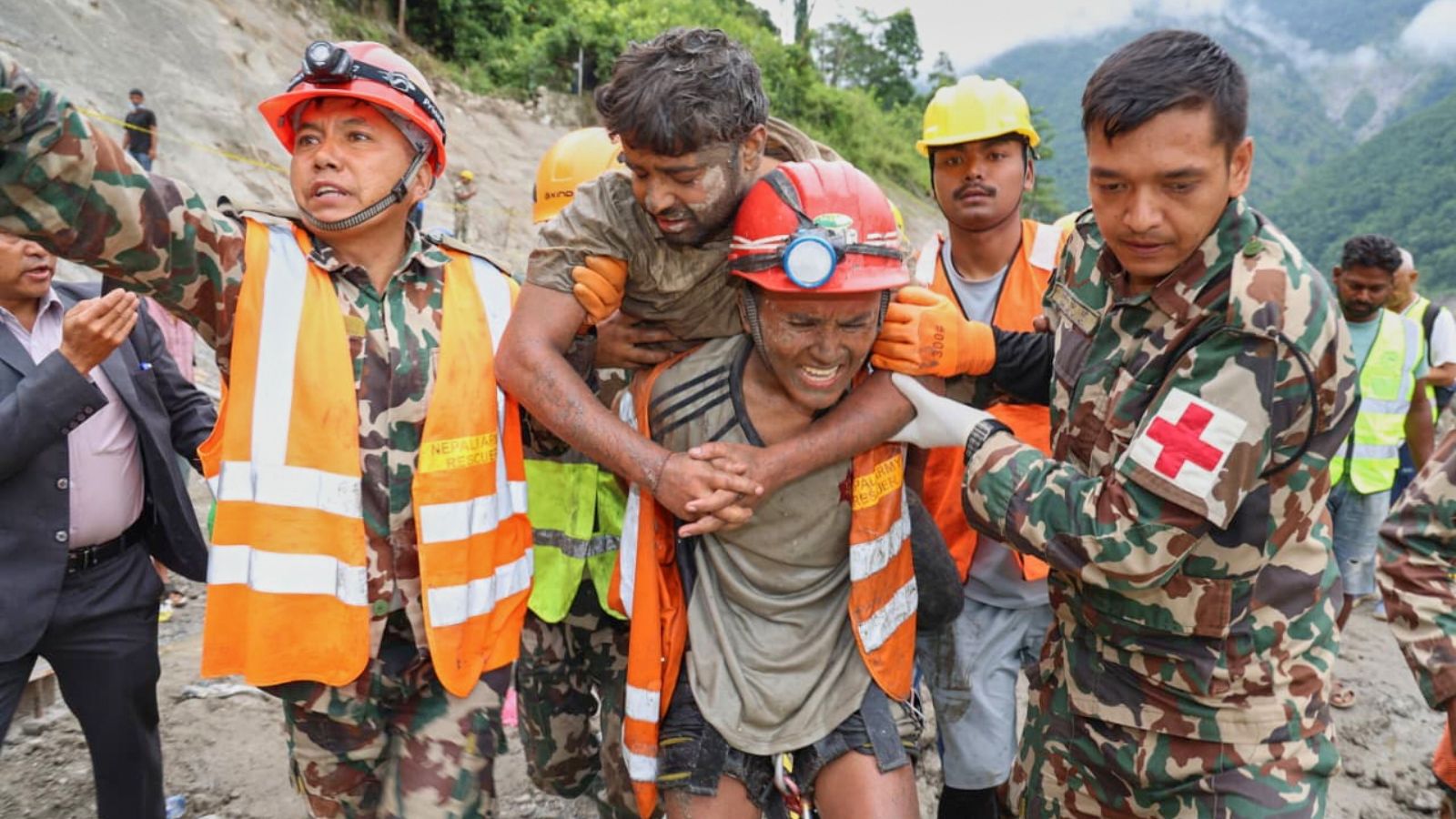
To understand the shadow stretching across the Persian Gulf today, you have to walk through the ruins of yesterday. Picture a young soldier in 2003 stepping off a transport plane into the furnace of Kuwait, his pockets stuffed with letters from home, his mind filled with the simple, dangerous lie that war has an ending. That soldier spent twelve months patrolling the volatile streets of Baghdad, chasing ghosts through crumbling alleyways, learning the cruel geometry of improvised explosive devices. He left a piece of his youth in the sand, returning to a country that thanked him with parades it barely watched and healthcare systems that barely functioned.
Multiply that soldier by millions. Multiply the cost by trillions. That is the ledger of the Iraq War. It was an enterprise born of hubris and sustained by institutional momentum, a conflict that metastasized from a targeted strike into a twenty-year hemorrhage.
And now, we are told that Iran is different. We are told that precision strikes and cyber dominance change the math.
They do not.
The geography of the Middle East is an unforgiving tutor. Iran is not a fractured, hollowed-out dictatorship caught in the aftermath of a decade of international sanctions and domestic collapse like pre-war Iraq was. It is a sprawling, mountainous fortress of nearly ninety million people, anchored by a deep-rooted religious nationalism and a formidable network of regional proxies stretching from the Mediterranean to the Gulf of Aden.
When a hypothetical cruise missile strikes a Revolutionary Guard compound outside Isfahan, the ledger does not close. That is merely row one on an endless spreadsheet of escalation.
The retaliation does not arrive with a formal declaration. It arrives in the dark. It arrives through a coordinated swarm of low-cost drones shutting down vital oil choke points in the Strait of Hormuz. It arrives through cyber attacks that paralyze financial grids in Western capitals. It arrives through sleeper cells activating in quiet suburbs thousands of miles away from the nearest desert.
We forget, with terrifying ease, that modern warfare is an interconnected web. Pull one thread in Tehran, and the grocery prices spike in Ohio. Pull another, and a generation of young men and women pack their duffel bags for a deployment with no name, no clear objective, and no horizon.
There is a profound sickness in the way modern empires sleepwalk into catastrophe. It begins with bravado in television studios. It proceeds to saber-rattling diplomatic cables. Then comes the inevitable spark—an intercepted vessel, a downed aircraft, a targeted assassination—and suddenly the machinery of war is moving under its own terrifying weight. No politician wants to look weak. No general wants to counsel patience when the drums are beating.
So the escalation feeds itself.
We must ask ourselves what victory even means in a conflict of this magnitude. In Iraq, victory was redefined year after year until it became synonymous with mere survival and eventual withdrawal. It meant leaving behind a power vacuum that birthed even worse horrors, proving that destroying a regime is infinitely easier than picking up the pieces of the society left behind.
If we stumble into a full-scale confrontation with Iran, we are not repeating history. We are supersizing it.
The parallels are not just tactical; they are psychological. The architects of the previous generation's mistakes are largely gone from active service, replaced by a new cadre of strategists who read about the horrors of Fallujah in textbooks rather than experiencing the copper taste of fear in their mouths. They treat human lives as acceptable losses in a grand geopolitical game of chess, moving pawns across a board they will never have to rebuild.
Step back from the map. Turn off the cable news pundits shouting about red lines and national honor.
Look instead at the kitchen tables where ordinary families bear the true cost of these grand delusions. Look at the mother in Shiraz watching her children play while the currency collapses under the weight of mounting tensions. Look at the father in Texas checking his phone every morning, praying that his daughter stationed on a carrier in the Gulf doesn't become a casualty of someone else's political pivot.
The ghost of Iraq is not a historical artifact. It is a warning. It is a restless spirit whispering that the distance between a localized crisis and a generational quagmire is measured in a single, arrogant miscalculation.
The drums are beating louder now. The lights on the Pentagon map are glowing a brighter, more urgent shade of amber. But the darkest room is the one where we pretend we do not know how this story ends.