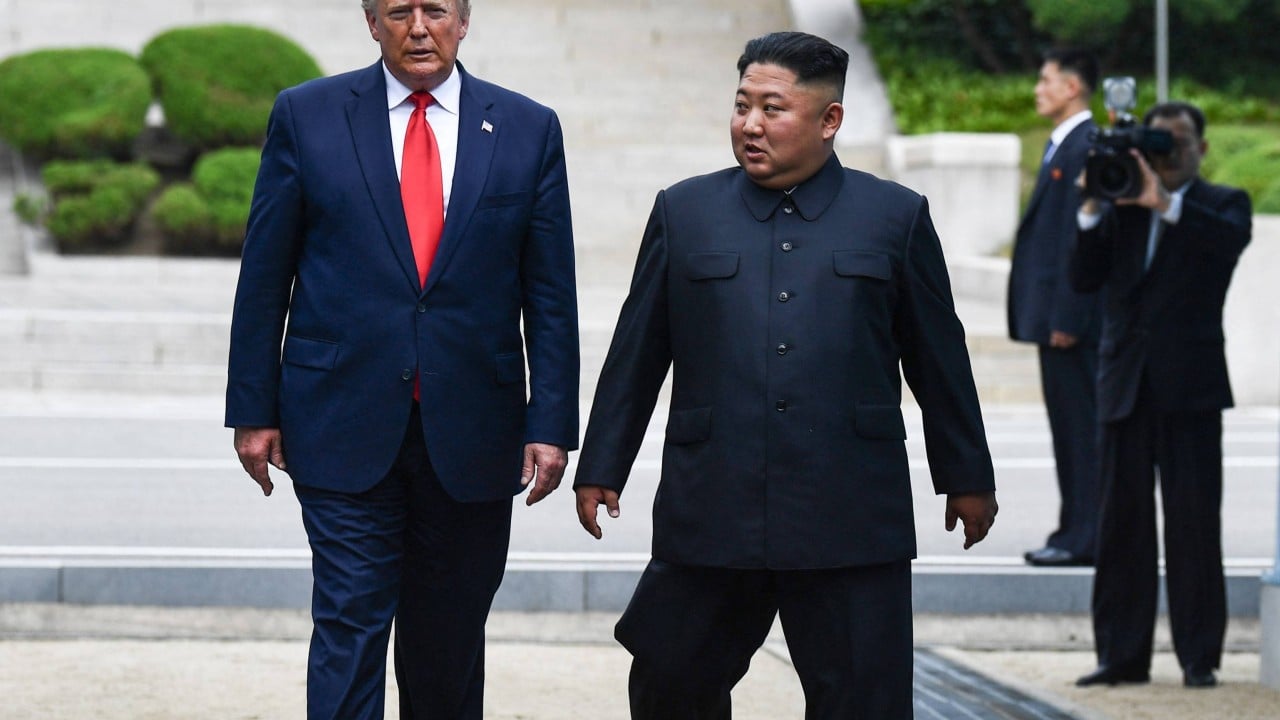
The carpet in the Metropole Hotel in Hanoi was thick enough to swallow the sound of a dropped glass, yet on the afternoon of February 28, 2019, the silence in the courtyard felt heavy enough to crack concrete.
I remember standing near the press risers in the humid Vietnamese heat, watching the motorcades idle. The air smelled of exhaust, damp stone, and the sharp, metallic tang of sudden panic. Two hours earlier, the menus for a joint signing lunch had already been printed. Calligraphy was dried on heavy cardstock. Cameras were calibrated for the handshake that was supposed to end a seventy-year standoff. Then, the doors swung open, the black SUVs roared out of the driveway without a signature, and the lunch went uneaten. Meanwhile, you can read other events here: Stop Calling the 2026 Midterms a Mixed Night for Indian Americans.
Most observers saw a diplomatic breakdown. Kim Jong Un saw a mirror.
To understand why Pyongyang has zero appetite for another summit with Donald Trump, you have to stop looking at satellite photos of launchpads and start looking at the anatomy of humiliation. In the West, politics is a theater of bounce-backs. A leader loses a vote, walks away from a table, spins the narrative on a Sunday morning talk show, and lives to fight another news cycle. In the sealed, vertical architecture of North Korean power, a public miscalculation does not fade into the news cycle. It echoes down marble hallways for years. To see the full picture, check out the recent analysis by BBC News.
The Arithmetic of a Sixty-Hour Train Ride
Picture a hypothetical mid-level functionary in Pyongyang—let’s call him Pak—whose entire career rests on reading the mood of the Supreme Leader before the Supreme Leader speaks.
Before Hanoi, Pak’s world was electric with dangerous hope. For decades, the North Korean state had sold its people a simple, brutal bargain: endure the dark, endure the cold, endure the empty shelves, because the nuclear shield is the only thing keeping the wolf from the door. Then, in 2018, the script flipped. Suddenly, state television was showing Kim Jong Un walking beside the American president in Singapore. The rhetoric softened. The promise hung in the air like spring thaw: we have the bomb, and now we are going to cash it in for prosperity.
To cash it in, Kim boarded an olive-green armored train in February 2019 and rattled south through China for sixty-five hours. Think about the sheer vulnerability of that journey. For nearly three days, the absolute ruler of a paranoid state was inside a moving steel tube on foreign tracks, surrendering control of his immediate physical environment to his Chinese neighbors, all to reach a table where he believed the deal was already done.
He had brought a specific card to play: the dismantling of the Yongbyon nuclear complex, the crown jewel of North Korea’s plutonium production. In exchange, he wanted the lifting of the crushing United Nations sanctions passed in 2016 and 2017—the ones that choked off coal exports, seafood, textiles, and fuel.
Trump said no. He laid down a map of North Korea’s secret enrichment sites—facilities Pyongyang hadn’t even admitted existed—and demanded everything in exchange for nothing upfront.
Then Trump walked out.
Consider what happens next on that sixty-five-hour train ride back north. The same tracks. The same click-clack of steel wheels. Only now, the silence inside the carriage is suffocating. Every mile marker passing the window is a reminder that the Supreme Leader traveled across a continent, exposed himself to the world’s cameras, offered up his most prized nuclear facility, and came home with an empty briefcase.
For our hypothetical official, Pak, the lesson was seared into memory: photo-ops do not pay for fertilizer. Handshakes do not light up the dark grid of Pyongyang at midnight.
Why the Old Playbook Expired
When pundits in Washington ask whether Kim Jong Un wants another round of "love letters" and televised summits, they are asking a question stuck in 2018. The world has shifted beneath their feet, and North Korea’s leverage has mutated entirely.
Think of diplomacy like a pawnshop. In 2018, Kim walked into the shop desperate for cash, holding one shiny watch—his willingness to pause nuclear and long-range missile tests. Trump was the only buyer on the street with the power to lift the global sanctions strangling the North Korean economy. Kim needed the buyer far more than the buyer needed the watch.
Today, the street is crowded with buyers, and Kim is no longer selling.
Look at the cold facts that have reshaped Pyongyang’s survival math since that afternoon in Hanoi:
- The Moscow Lifeline: Russia’s grinding war in Ukraine turned North Korea from an international pariah into a vital munitions factory. Millions of artillery shells and dozens of ballistic missiles have flowed north across the Tumen River border into Russian railcars. In return, Pyongyang has received food, fuel, hard currency, and—most terrifyingly for Western planners—suspected technical assistance for its spy satellites and submarine programs.
- The Death of Sanctions Enforcement: In March 2024, Russia used its veto at the United Nations Security Council to kill the panel of experts responsible for monitoring North Korean sanctions violations. The referee has left the field.
- The Arsenal Expansion: In 2019, North Korea had a nascent intercontinental ballistic missile capability and a handful of warheads. Today, analysts estimate Pyongyang possesses roughly fifty assembled nuclear warheads, enough fissile material for dozens more, solid-fuel missiles that can be fueled and fired in minutes rather than hours, and tactical nuclear weapons aimed directly at South Korea.
When you have fuel in your tanks, grain in your silos, and a permanent member of the UN Security Council running interference for you, why would you ever sit across from an American president who demands you surrender your weapons before he lifts a single restriction?
You wouldn't. You’d lock the door and keep building.
The Illusion of the Personal Bond
I have spent years watching how autocrats negotiate, and there is a recurring trap that catches democratic leaders every single time: the delusion of chemistry.
American presidents, particularly ones who pride themselves on deal-making instincts, often believe that geopolitical deadlocks are really just interpersonal misunderstandings. They think that if they can just get the other guy in a room, look him in the eye, crack a joke, and bypass the stuffy bureaucrats at the State Department, the ice will melt.
Donald Trump leaned into this harder than anyone in modern history. He praised Kim’s intelligence, called him "little rocket man" one month and a great leader the next, and genuinely seemed to believe that their personal rapport could override seventy years of structural hostility.
It is an intoxicating idea. It is also completely backward.
In a system like North Korea’s, personality is never stronger than survival. Kim Jong Un is the third generation of a dynasty that has watched what happens to dictators who trade away their deterrents. In 2003, Muammar Gaddafi gave up Libya’s nuclear program in exchange for Western trade and warm handshakes in European capitals. Eight years later, NATO bombs helped topple his regime, and he died in a drainage ditch.
Every single person in Pyongyang’s elite knows the story of Libya by heart. They teach it like scripture. To them, an American president’s personal warmth is as fleeting as morning fog—it lasts until the next election cycle, until Congress blocks the funding, or until a hawkish national security advisor whispers in his ear five minutes before lunch.
Look back at Hanoi. Trump didn’t walk out because he stopped liking Kim; he walked out because John Bolton was sitting at the table, domestic political pressure in Washington was boiling over, and the arithmetic didn't work for a quick television win. Kim realized in that moment that Trump’s affection had zero structural weight. It couldn't lift a single tariff. It couldn't clear a single bank transaction.
Flattery is cheap. Enriched uranium is forever.
Rewriting the Rules of the Peninsula
If you want to see how permanently Kim has turned the page on the summit era, look at what he did to the physical and constitutional architecture of his own country.
For decades, the official ideology of North Korea was peaceful reunification—the idea that the Korean peninsula was one family temporarily divided by foreign meddlers, waiting to be joined again. Pyongyang maintained an entire bureaucratic apparatus dedicated to inter-Korean dialogue, complete with a massive, concrete monument in the capital called the Arch of Reunification, depicting two women in traditional dress holding up a map of a united Korea.
In early 2024, Kim Jong Un declared South Korea the "principal enemy," formally abandoned the goal of peaceful unification, and ordered the Arch of Reunification demolished. Bulldozers tore down three stories of concrete and symbolism, erasing decades of state doctrine in a matter of days.
Stop and appreciate the violence of that act. You do not bulldoze your own foundational mythology if you are planning to walk back into a ballroom in Singapore or Panmunjom to smile for the cameras. You bulldoze it when you are preparing your population for permanent confrontation—and when you want to signal to Washington and Seoul that the old diplomatic menu has been burned.
When people ask if North Korea would ever return to talks, the honest answer is uncomfortable: yes, eventually, maybe—but not to discuss denuclearization.
If Kim Jong Un ever agrees to sit across from an American president again, it will not be as a supplicant trading missiles for food aid. It will be as the leader of a recognized nuclear-armed state demanding arms control talks—the exact same status Washington grants to Russia or China. He won't be asking how many centrifuges he has to dismantle to get sanctions lifted. He will be asking what Washington is willing to pay—perhaps withdrawing American troops from South Korea or halting joint military drills—just to convince him not to test a seventh nuclear device.
That is a pill no American administration is currently willing to swallow, and Kim knows it.
The Weight of the Empty Chair
I still think about that printed menu from the Metropole Hotel in Hanoi. Somewhere in an archive—or maybe a souvenir drawer in a diplomat’s desk—there is a piece of heavy cream paper listing seared foie gras, snow fish, and candied ginseng, dated February 28, 2019.
That menu represents the exact peak of an illusion. It was the moment two men convinced themselves that sheer force of personality could bend history without doing the grueling, unglamorous work of compromise. For Trump, walking away from the table was just another episode in a life defined by high-stakes drama—a dramatic exit that played well on cable news back home before he boarded Air Force One and flew ten thousand miles away from the consequences.
For Kim Jong Un, there was no flying away. He had to get back on the green train, ride past the impoverished farms of his own border provinces, and look his generals in the eye. He had gambled his prestige on a handshake and lost.
Today, when reporters shout questions across the tarmac about whether he plans to reach out to Pyongyang again, the rhetoric sounds familiar—warm, nostalgic, almost wistful for the days when the two leaders dominated the world’s front pages together.
The phone in Pyongyang isn't broken. They just stopped answering it.


