The flash went off, capturing a moment that was supposed to belong to a student.
It was a standard campus photograph, snapped to document an achievement, a milestone in a young person’s life. But somewhere between the camera sensor and the final publication, the image passed through an invisible filter. When it emerged, the student was no longer who they had been a moment before. Their gender had shifted. Their race had been rewritten. The algorithm had decided, in its cold and silent calculations, that reality was merely a suggestion.
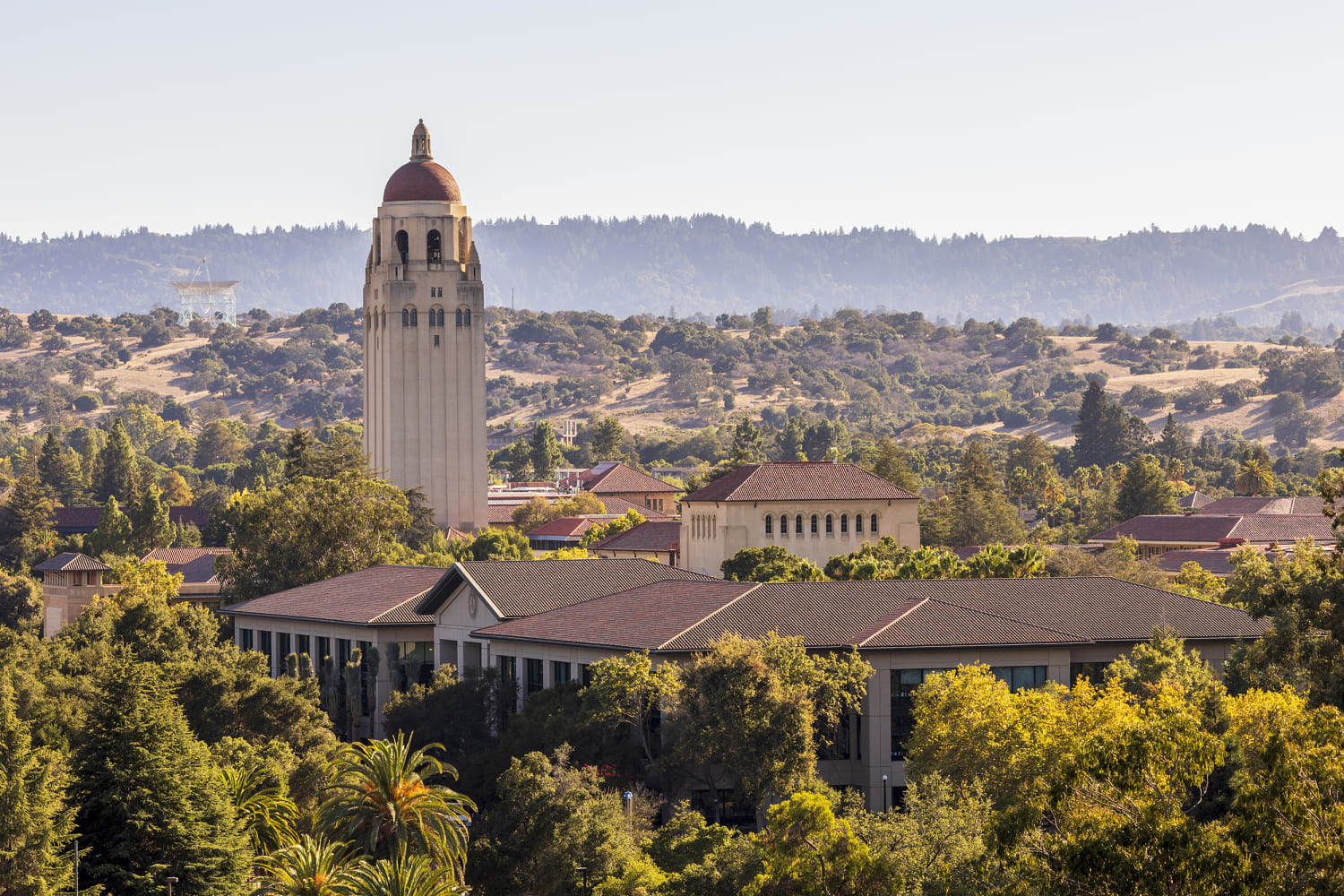
Stanford University apologized. They called it a violation of policy. They spoke of misapplied tools and unintended alterations, of automated enhancements gone rogue.
Yet, an apology is a cheap currency. It cannot undo the quiet erosion that happens when a person’s identity is treated as raw data to be optimized, smoothed over, or completely swapped out by software that cannot see them.
We have built a world that is deeply obsessed with perfection, yet strangely indifferent to truth.
Consider what happens next: a photograph is no longer a witness to history. It is a draft. It is malleable clay in the hands of an invisible editor that operates without human consent, ethics, or memory. When an institution as prestigious as Stanford publishes an AI-altered image that alters the fundamental demographic markers of a student, it exposes a terrifying vulnerability in how we perceive the modern record.
We are handing over our mirrors to machines that do not know what we look like.
To understand why this matters, we have to look past the corporate press releases and the boilerplate statements about responsible innovation. We have to look at what it feels like to stand in front of the lens.
Imagine walking across a stage, holding a diploma, your family watching from the third row. You have worked for years through exhaustion, self-doubt, and late-night library shifts. The shutter clicks. You are immortalized. But when the university’s magazine hits the stands, the person on the page is a stranger. They share your clothes, perhaps your general posture, but their face belongs to an archetype manufactured by a server farm.
How do you reclaim your own story when the institution that witnessed your struggle decides that an algorithm’s aesthetic preference matters more than your actual existence?
This is not a technical glitch. It is a symptom of a much deeper cultural sickness. For years, we have treated artificial intelligence as an enthusiastic intern, a harmless helper designed to brighten colors, remove stray power lines, or sharpen a blurry background. We told ourselves that editing tools had always existed, that darkrooms were full of retouchers, that Ansel Adams burned and dodged his skies.
That comparison is a comfortable lie.
Ansel Adams manipulated light to evoke the emotional grandeur of Yosemite. He did not invent a granite cliff that was never there. He did not look at a portrait of a Black student and decide to render them white, nor did he swap a woman's features for a man's because a software plugin deemed the original composition statistically suboptimal.
Generative AI does not retouch. It hallucinates. It interpolates data points across vast oceans of probability, creating a composite fiction that masquerades as documentation. When applied to human beings, this technology commits a subtle form of erasure. It says: You are close, but our parameters prefer someone else.
The stakes are invisible until they happen to you.
We live in an era where photographic evidence is the bedrock of credibility. Courts rely on images. News outlets rely on images. Historians rely on images. If the baseline assumption shifts from "this happened" to "this might have been generated," trust collapses. But the collapse is asymmetrical. While powerful institutions use generative tools to curate a pristine, frictionless aesthetic, everyday people bear the cost of having their identities commodified and distorted.
Stanford’s blunder is a warning shot. If one of the foremost academic institutions in the world, equipped with world-class computer science departments and endless ethical oversight boards, cannot prevent its own publications from running AI-altered faces that mutate race and gender, who can?
The answer is no one. Because the software is designed to do exactly what it did. It optimizes for visual balance, skin tone variance, and algorithmic attractiveness according to biased training sets. It does not care about dignity. It cares about pixels.
We are sleepwalking into a visual dystopia where nobody has an authentic face anymore. Every portrait is suspect. Every promotional banner is a synthetic fabrication. We are spending billions of dollars to build sophisticated systems capable of generating infinite falsehoods, while forgetting how to protect simple, unvarnished truth.
The student whose image was altered did not ask to become a case study in corporate ethics failures. They wanted to be seen. They wanted their labor, their presence, and their reality to be acknowledged by the institution they invested in. Instead, they became a pixelated casualty of convenience.
Look closely at the next image you see online. Ask yourself what was smoothed away. Ask yourself whose features were erased to make the composition more palatable to a machine learning model trained on the biases of the internet.
The machine is ready to rewrite your history, too.
All you have to do is let it take the picture.