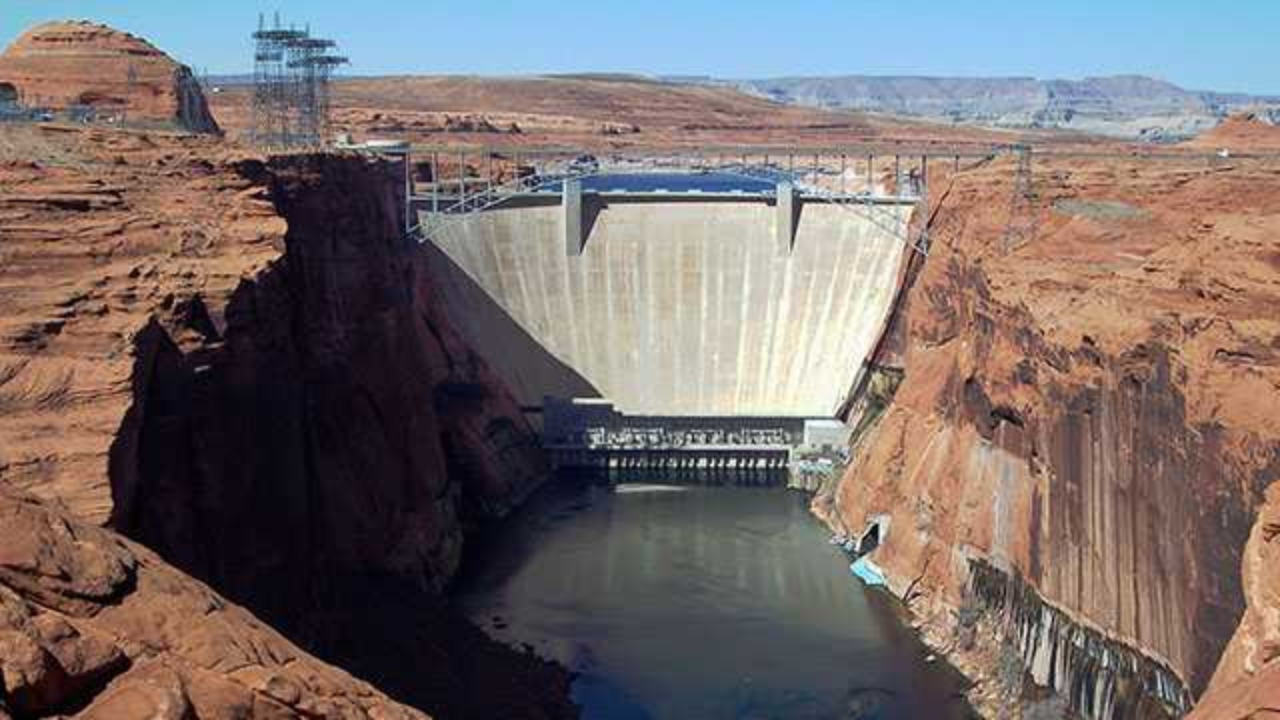
In the mid-1960s, the federal government initiated a quiet, systematic eviction of roughly 600 families living along a 40-mile stretch of the Delaware River valley. Armed with eminent domain and an unwavering belief in mid-century hydraulic engineering, the U.S. Army Corps of Engineers intended to submerge centuries of agrarian history beneath a massive artificial lake. The Tocks Island Dam project was designed to control floods, generate hydroelectric power, and supply water to an expanding industrial corridor. Instead, it birthed a decade-long civil insurgency that culminated in 1975 when regional authorities shelved the dam permanently, leaving behind a 70,000-acre national recreation area.
Understanding why this massive infrastructure initiative collapsed requires looking past the standard narrative of environmental awakening. The failure of Tocks Island was not merely an early victory for conservationists. It was a structural breakdown in how federal agencies calculated human displacement, underestimated regional economic friction, and ignored the shifting mechanics of public trust.
The Machinery of Displacement
The human cost of the Delaware River valley clearance unfolded through bureaucratic exhaustion. When Congress authorized the project following the devastating floods of 1955, federal planners treated the valley as an empty map rather than a living community. Families who had farmed the fertile bottomlands since the eighteenth century received notices that their land was slated for inundation.
The federal acquisition strategy relied on psychological wear-down. Once the Army Corps designated property lines, they began buying parcels piecemeal. To offset preliminary costs, the agency rented acquired homes back to short-term tenants. Former landowners watched strangers occupy ancestral homesteads while awaiting final eviction orders. This real estate purgatory fractured local social cohesion just as broader anti-establishment movements gained traction nationwide.
Yet, the resistance did not materialize overnight. It was forged in small town halls and kitchen tables where local residents realized the mathematical models justifying their displacement were fundamentally flawed.
Economic Fallacies and Engineering Hubris
The justification for the Tocks Island Dam rested on projections of exponential regional growth and tourism demand. Planners argued that a 40-mile lake would attract millions of weekend visitors from New York and Philadelphia, necessitating expansive highway networks and commercial developments.
Independent economists and local citizen groups began picking these projections apart. The cost-benefit ratios presented by the Army Corps relied on inflated recreation values and underestimated the capital required to upgrade regional infrastructure. Furthermore, hydrologists raised alarms about eutrophication. Stagnant reservoirs in humid continental climates frequently suffered from severe algae blooms and oxygen depletion, transforming a promised aquatic paradise into a shallow, weed-choked basin.
The federal apparatus assumed local opposition would fold under the weight of national progress. Instead, regional taxpayers questioned why they were expected to surrender their livelihoods to subsidize speculative recreational boating for urban commuters.
The Legislative Shield
As local organizing matured into a sophisticated regional coalition, the legal landscape shifted beneath the feet of federal planners. The late 1960s and early 1970s introduced a suite of federal statutes that fundamentally altered project approvals.
The National Environmental Policy Act of 1969 forced federal agencies to publish exhaustive environmental impact statements, exposing the ecological vulnerabilities of the Tocks plan. Subsequent legislation, including the Clean Water Act and the Endangered Species Act, provided citizen groups with actionable legal standing. The courts transitioned from deferential arbiters of executive authority to active skeptics of bureaucratic overreach.
The dam became indefensible not only because people protested, but because the rules of engagement had changed. Bureaucracies built to pour concrete could not adapt to a statutory framework that demanded ecological accountability.
The Long Shadow of Abandonment
When the Delaware River Basin Commission voted to terminate the project in 1975, the federal government owned thousands of acres of depopulated land. Rather than selling the parcels back to private owners or auctioning them to developers, the administration transferred control to the National Park Service.
The resulting Delaware Water Gap National Recreation Area stands as a monument to administrative miscalculation. Visitors driving through the protected corridor encounter abandoned foundations, overgrown orchards, and historical markers detailing communities that vanished on paper long before they could be drowned in reality.
Modern infrastructure debates rarely reckon with the human residue left behind when grand visions stall. The Tocks Island collapse demonstrated that public works projects require more than legislative authorization and engineering drawings. They require a social contract that federal planners in the mid-century were entirely unequipped to maintain.
The river continues to run free between Pennsylvania and New Jersey, carving through the mountains exactly as it did before planners decided to redraw the map. The families are gone, their farms turned into timber and trail, but the valley remains a permanent reminder of the limits of state power against united local resistance.