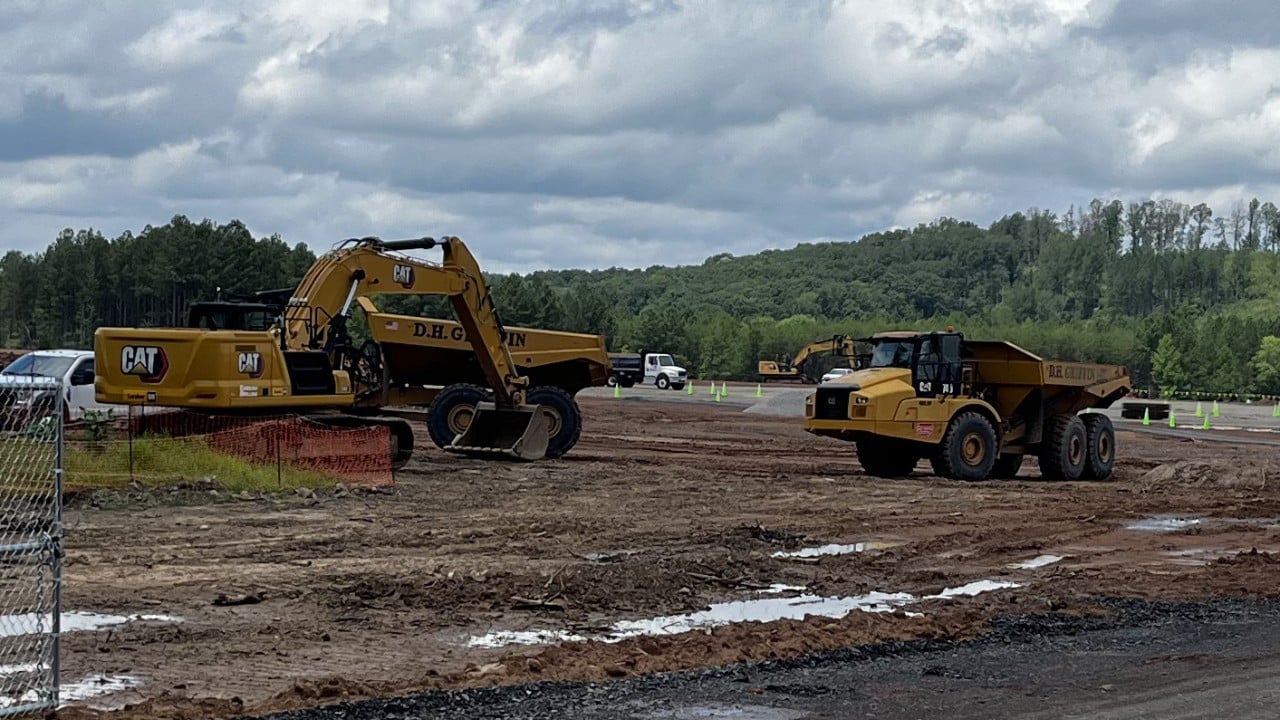
The air in the Virginia highlands smells of damp earth, woodsmoke, and the metallic tang of high-voltage transmission lines that cut through the old growth like open wounds.
Stand on the porch of a weathered farmhouse outside a town whose name only appears on local maps, and you will hear it. A low, persistent hum. It is not the sound of wind rustling through the mountain laurel. It is the sound of the future cooling itself. Millions of gallons of water rushing through closed loops of pipe, and banks of server racks breathing out heat into the autumn chill.
They call it progress. The national capital is barely a morning drive away, but culturally, it might as well be on another planet. Down here, the government is something that taxes your tobacco, regulates your well water, and occasionally drops a promise through the mail slot about broadband that never quite reaches the end of your gravel driveway.
Now, that same distant machinery wants something else. It wants your data. It wants your geography. It wants your trust.
And that is where the grand ambition of a national artificial intelligence push hits a wall of cold, hard stone.
To understand why a federal initiative designed to outpace global competitors stalls out in the shadow of the Blue Ridge Mountains, you have to look past the policy white papers. You have to look at memory.
Take Arthur Vance. He is seventy-two, his hands permanently stained with the grey dust of engine blocks and diesel grease. Arthur remembers when the power companies came through in the nineteen-sixties, promising cheap electricity for everyone if only they would sign away the mineral rights to their ridges. The electricity went north to the cities. The stripped hills stayed behind, washing mud into the creeks every time a heavy rain broke open the sky.
When a corporate scout from a major technology firm arrives in town today wearing a fleece vest and speaking fluent corporate syntax about machine learning models, cloud architecture, and federal infrastructure grants, Arthur does not see an innovator. He sees the man with the power company contract.
"They talk about the future like it's a gift," Arthur told me last month, leaning against the fender of a rusted truck that refuses to die. "But every time someone from far away brings a bright idea down this mountain, my property taxes go up and my wells taste worse. Why should I believe this box of microchips is going to do a single damn thing for my grandchildren?"
That skepticism is not a political talking point. It is a protective reflex.
Across the country, policymakers in glass-walled conference rooms wonder why local communities push back against the sprawling data centers required to train heavy neural networks. They wonder why rural counties pass zoning restrictions that choke out server farms before the first foundation can be poured. They treat it as a communication problem. If only we explained the math better, they think. If only we showed them the charts on job creation.
They are entirely wrong.
The friction between national artificial intelligence strategy and local reality comes down to a fundamental failure of translation.
A data center is not a factory. A factory employs hundreds of people who walk through the gates at shift change, buy lunch at the diner, and coach Little League on Tuesday nights. A modern data center covering forty acres of cleared timberland might employ twelve technicians, most of whom commute in from the regional hub forty miles away. It consumes enough electricity to power a small city, yet leaves behind virtually no local economic footprint save for a tax payment that rarely trickles down to the people whose peace and quiet were traded away.
When the federal government announces a sweeping initiative to accelerate artificial intelligence development to secure geopolitical dominance, the immediate local translation is simple. More data centers. More transmission lines. More strain on the grid. Higher electric bills for the retired widow living on a fixed income down the lane.
Consider the arithmetic of distrust.
When an institution has lied to you, ignored you, or used your backyard as a dumping ground for half a century, asking you to embrace an invisible, autonomous algorithm that decides everything from credit scores to military targeting is not a hard sell. It is an impossible one.
The distrust of Big Tech in these towns is rational. It is empirical. It is based on a long, unbroken chain of cause and effect where the big entity wins and the small community absorbs the cost.
Yet, the push continues. The race for technological supremacy does not pause for local grievances.
On paper, the national strategy is elegant. Billions of dollars targeted toward domestic semiconductor fabrication, energy grid modernization, and open-source machine learning frameworks. The goal is to ensure that democratic nations set the rules of the road for the next century of computing, rather than authoritarian rivals who view technology strictly as an instrument of control.
Every time a server farm faces local resistance in a Virginia county, national security analysts sweat. They see a bottleneck. They see a domestic vulnerability disguised as a zoning dispute.
They try to bridge the gap with public-private partnerships. They fund digital literacy programs at the local community college. They promise grants for smart-farming equipment that uses computer vision to optimize fertilizer application.
Sometimes, it works. A young farmer who spent four years studying mechanical engineering in Roanoke looks at a drone mapping his family’s cornfields and sees a tool to save fifty hours of labor a week. He doesn't see a threat; he sees leverage against bad weather and rising fuel costs.
Yet, for every farmer who embraces the digital harvest, ten more look at the humming monoliths rising on the horizon and feel a cold knot in their stomach. They sense that something fundamental is being taken from them without their consent. An entire way of life being flattened into zeroes and ones, cataloged, monetized, and controlled by people who have never smelled mountain laurel in the rain.
The tension cannot be resolved by better public relations campaigns or slicker advertising. It requires a reckoning.
If the architects of the modern technological state want communities to welcome the infrastructure of the future, they have to prove that the future includes those communities as something more than a power source and a cooling basin. They have to share the wealth before the ground is broken. They have to guarantee that the energy keeping the server cool also keeps the local school lit without bankrupting the taxpayer.
Until that happens, the hum will remain just that—a foreign noise echoing through the valleys.
A reminder of what is coming.
A warning of what is being lost.
Night falls heavy in the highlands. The lights of the distant server banks blink on, a constellation of cold blue stars cutting across the dark, indifferent to the old stone walls below them, waiting for the morning to bring the next argument over who owns the ground we stand on.