Every time an arrest warrant drops from The Hague, the same tired script gets dusted off. A talking head appears on a cable news panel, sighs heavily, and declares that the International Criminal Court is nothing more than a neocolonial weapon wielded by Western powers to bully the Global South.
It is an easy argument. It sounds righteous. It flatters anti-imperialist sensibilities without requiring anyone to read a single page of the Rome Statute.
And it is completely backward.
If you look at the actual receipts of international criminal law—the treaty negotiations, the state referrals, the docket history, and the institutional mechanics—the "Western tool" narrative collapses under its own weight. Calling the ICC a European trap ignores the inconvenient truth that developing nations drafted its sharpest teeth, ratified it in droves, and repeatedly begged the court to intervene in their own backyards.
The Myth of the Imposed Court
Let us dismantle the primary historical hallucination first. The ICC was not cooked up in a smoke-filled room in Brussels and forced onto developing nations at gunpoint.
When delegates gathered in Rome in 1998 to finalize the court's founding treaty, the loudest voices demanding an independent, aggressive prosecutor came from Africa, Latin America, and the Caribbean. Meanwhile, the major global powers—the United States, China, Russia, and India—fought tooth and nail to neuter the court or walked away entirely.
The Like-Minded Group, the coalition that pushed hardest for a strong, autonomous ICC, was heavily anchored by Global South states. Trinidad and Tobago—specifically former Prime Minister A.N.R. Robinson—revived the modern push for an international criminal court in 1989 to help small states combat transnational drug trafficking and violence that overwhelmed their domestic courts.
African states were the first and most enthusiastic adopters. Senegal was the very first country on earth to ratify the Rome Statute in February 1999. Today, African nations represent the largest regional bloc of State Parties to the court.
When commentators claim the ICC is a foreign imposition, they erase the diplomatic agency of dozens of Global South nations that fought to bring the institution into existence. You do not get to co-design a fire station, demand the biggest trucks, sign the lease, and then scream "foreign interference" when the sirens go off on your street.
Who Actually Invited the Prosecutors In?
Here is the detail that lazy punditry always omits: the ICC did not kick down the doors of the Global South. It was invited inside.
Under Article 13 of the Rome Statute, the court can exercise jurisdiction in three ways:
- A State Party refers a situation to the Prosecutor.
- The UN Security Council refers a situation under Chapter VII of the UN Charter.
- The Prosecutor initiates an investigation proprio motu (on their own initiative), subject to judicial authorization.
Look at the early cases that supposedly prove "anti-African bias." Almost every single one of them began as a self-referral.
- Uganda (2003): President Yoweri Museveni referred the situation concerning the Lord's Resistance Army to the ICC himself.
- Democratic Republic of the Congo (2004): President Joseph Kabila requested the court's intervention in the Ituri region.
- Central African Republic (2004 and 2014): The government in Bangui asked the Prosecutor to step in twice.
- Mali (2012): The Malian government formally referred the crisis in its northern territories to The Hague.
I have watched political strategists and diplomatic advisors routinely conflate ICC jurisdiction with Western foreign policy because it makes for cleaner soundbites. In reality, sitting leaders in the Global South realized early on that the ICC was a brilliant domestic political instrument.
If you are a head of state facing an entrenched insurgency you cannot defeat militarily, referring your domestic enemies to The Hague delegates the dirty work to an international body. You neutralize your rivals, gain international legitimacy, and let European taxpayers foot the massive bill for the investigation and trial.
The outrage only started when the court refused to play along as a one-sided hit squad. Once prosecutors began looking at state-sponsored atrocities alongside rebel crimes—or issued warrants for sitting heads of state like Sudan's Omar al-Bashir or Kenya's Uhuru Kenyatta—the rhetoric shifted overnight from "welcome partner" to "imperialist tool."
The Real Design Flaw Nobody Talks About
Admitting that the "Global South target" talking point is flawed does not mean the ICC is a pristine beacon of blind justice. Far from it. If you want to critique the court honestly, you have to look at its structural hypocrisy, not imaginary conspiracies.
The real problem with the ICC is not that it targets the Global South. The real problem is structural impunity for the Global North and the UN Security Council.
1. The Complementarity Trap
The ICC operates on the principle of complementarity (Article 17). It is a court of last resort. It can only step in when a national judicial system is "unwilling or unable" genuinely to carry out the investigation or prosecution.
Think about what that means in practice. Wealthy Western nations have hyper-developed, endlessly funded domestic legal bureaucracies. When Western militaries commit alleged war crimes, their governments launch multi-year internal inquiries, courts-martial, and parliamentary reviews. Those processes rarely put senior generals or politicians behind bars, yet they are procedurally sophisticated enough to satisfy the ICC's complementarity threshold. The court's hands remain tied.
Developing nations frequently lack the institutional capacity, security infrastructure, or judicial independence to prosecute warlords or high-ranking officials during or immediately after a conflict. They fail the "unable" test by default. Thus, the architecture of complementarity naturally funnels cases from weaker judicial systems into The Hague while insulating wealthy states with polished legal machinery.
2. The Security Council Veto
The original sin of the Rome Statute is Article 13(b) and Article 16, which tether an independent judicial body to the deeply political UN Security Council.
Three of the five permanent members of the Security Council—the United States, Russia, and China—have not ratified the Rome Statute. Yet, through their seats on the Council, they hold the power to refer non-member states to the ICC (as they did with Sudan and Libya) or defer active investigations for a year at a time. Meanwhile, those same superpowers use their veto power to shield themselves and their close allies from ever facing scrutiny.
That is not an "anti-Global South" conspiracy. That is raw, unvarnished superpower privilege baked into the post-1945 international order.
| Narrative | The Pundit Claim | The Institutional Reality |
|---|---|---|
| Origin | Western powers created the ICC to police developing nations. | Global South states formed the core bloc demanding a strong, independent court in 1998. |
| Docket Bias | Prosecutors actively hunt African leaders while ignoring others. | Most early African cases were self-referred by the sitting governments themselves. |
| Double Standards | The ICC hates the Global South. | Complementarity favors rich legal systems, and the UN Security Council shields superpowers. |
| Recent Shifts | The court will never touch powerful states or their allies. | Investigations in Palestine, Ukraine, Afghanistan, and Myanmar shattered the "Africa-only" myth. |
Why the "Africa-Only" Argument Expired
If you are still repeating the line that the ICC only goes after Africans, you have not checked the court's docket in a decade.
The geography of The Hague has shifted dramatically, and it has triggered a fascinating reversal in who is screaming about "judicial overreach."
- Palestine: When the ICC opened an investigation into the Situation in the State of Palestine and subsequently issued arrest warrants for top Israeli officials alongside Hamas leaders, the loudest accusations of "lawfare" and "illegitimacy" did not come from Nairobi or Pretoria. They came from Washington, D.C.
- Ukraine: The issuance of an arrest warrant for Russian President Vladimir Putin proved the court was willing to indict the sitting leader of a nuclear-armed permanent member of the UN Security Council—a move applauded by the very Western powers that had spent decades undermining the court's authority.
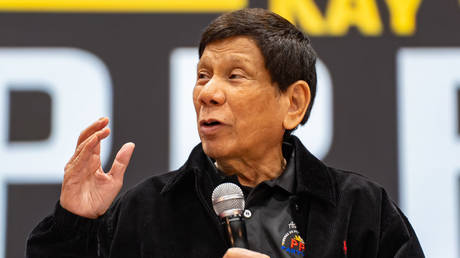
- Afghanistan and the Philippines: Probes into alleged crimes by U.S. personnel in Afghanistan and Rodrigo Duterte's drug war in the Philippines pushed the court directly into the crosshairs of major geopolitical powers and fierce nationalists alike.
Notice the pattern. Every single power bloc loves the ICC when it indicts their adversaries and screams "politicization" the second the gavel swings toward their own camp.
When South Africa brings a case against Israel at the International Court of Justice (a separate UN body, though routinely confused with the ICC by careless commentators) and backs ICC warrants in the same conflict, it proves that Global South nations do not view international courts as colonial traps. They view them as contested arenas of power—tools they can wield just as effectively as anyone else when it aligns with their strategic interests.
Stop Asking If the ICC Is Biased
When readers search whether the ICC targets the Global South, they are asking the wrong question. Asking if an international court is "biased" assumes there is some neutral, apolitical vacuum where global justice happens. That vacuum does not exist.
International criminal law is always a collision between legal ideals and geopolitical reality. Every prosecution is selective because no court on earth has the budget, police force, or political capital to prosecute every atrocity simultaneously.
If you want to understand how the ICC actually operates—and how nations should engage with it—stop listening to ideological pundits and look at the cold mechanics of leverage:
- Fix domestic courts to keep The Hague out. Under complementarity, the fastest way for any Global South nation to block ICC intervention is to conduct credible, transparent domestic prosecutions. The ICC cannot touch a state that genuinely polices its own.
- Separate the Court from the Security Council. True reform does not mean burning down the Rome Statute or staging performative withdrawals (notice how despite years of threats, only Burundi and the Philippines have actually left). It means amending the statute to strip the UN Security Council of its referral and deferral powers so non-member superpowers cannot weaponize a treaty they refuse to sign.
- Recognize who the victims actually are. When political commentators weep over the sovereignty of indicted warlords and authoritarian presidents, they conveniently forget the victims of mass atrocities in Darfur, Ituri, Northern Uganda, and Gaza. Those victims are overwhelmingly citizens of the Global South. Calling the only permanent court offering them a sliver of accountability a "Western tool" is an insult to the survivors demanding justice.
The ICC is slow, expensive, bureaucratically bloated, and painfully constrained by global power politics. It deserves relentless criticism for its inefficiencies and the selective outrage of its funders.
What it does not deserve is the lazy fiction that the Global South is merely a passive victim of a European courtroom. Developing nations fought to build The Hague, used it to solve their domestic crises, and are now utilizing international law to challenge Western hegemony on the world stage.
The next time a commentator tells you the ICC is just a weapon used against the Global South, ask them a simple question: why are the leaders of the Global North suddenly the ones terrified of its reach?


