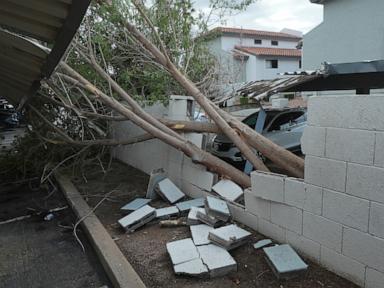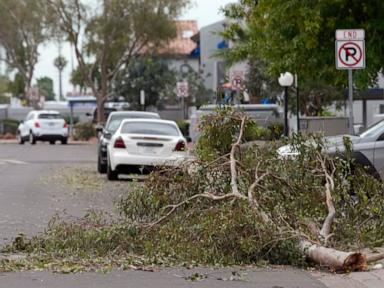
Golf ball hail in Arizona rarely happens by accident, even when an unseasonable storm rolls across the American West. When stones around 1.75 inches across drop out of a desert sky, they catch residents, insurers, and city planners off guard because Arizona’s built environment and weather lore condition people to expect either blistering heat or brief monsoon downpours. A rare western storm system moving through the region can turn a seemingly ordinary afternoon into a costly test of infrastructure, exposing how easily desert communities absorb severe hail damage despite decades of watching the skies.
I have covered weather extremes, insurance disputes, and municipal planning long enough to recognize a familiar pattern whenever severe weather strikes a place that treats it as an anomaly. Headlines tend to focus on the novelty of ice in the desert or the immediate drama of dented hoods and shattered windshields. That framing is easy to digest. It is also incomplete. Large hail does not become a major story simply because it falls in Arizona; it becomes a major story because of how moisture, wind shear, heat islands, vehicle fleets, and insurance underwriting collide on the ground.
How Rare Western Storms Manufacture Large Hail
Meteorology textbooks make hail sound straightforward. Strong updrafts carry raindrops above the freezing level, where they accumulate layers of ice until they become too heavy for the rising air to support. In practice, producing golf ball hail across parts of Arizona requires a delicate balancing act that western storms do not always pull off.
Desert air near the surface is frequently dry. Falling precipitation often evaporates before reaching the ground, cooling the lower air and creating outflow boundaries that can either choke a storm or trigger new cells. When a rare storm tracks through the West, it often brings sharper troughing, cooler air aloft, and stronger wind shear than a typical summer thermal thunderstorm produces. Shear tilts the updraft so precipitation does not fall straight back into the rising column and drown it, giving stones longer residence times in the growth zone where supercooled liquid water freezes onto them.
Elevation adds another twist. Across northern and central Arizona, higher terrain lifts air mechanically and sits closer to freezing levels, whereas lower desert basins bring intense daytime heating that fuels buoyant instability when mid-level moisture arrives. Even then, large stones require sustained vertical velocity. A golf ball sized stone has real mass and terminal velocity, meaning the storm feeding it has to sustain a powerful core rather than a brief flash of lightning and a gust front.
When a storm over-performs in a region that rarely sees large stones, the physical surprise is matched by an institutional surprise. Nobody builds daily habits around a hazard they experience once every few years.
Observers sometimes assume that any strong thunderstorm with dark clouds and loud thunder can drop damaging ice. It cannot. Many intense desert storms produce heavy rain, frequent cloud-to-ground strikes, and damaging straight-line winds while dropping only pea-sized or dime-sized ice that melts before anyone notices. Large hail demands the right overlap of instability, moisture, and vertical wind profile at the exact hours daytime heating peaks or a dynamic front passes through.
The Desert Built Environment Takes a Different Beating
Walk through a parking lot or neighborhood after a severe hail event in Arizona and you see the second half of the story. Hail is a meteorological event. Damage is a structural and behavioral event.
Desert living shapes how property is exposed. Cars sit outside in vast uncovered lots, at shopping centers, in apartment complexes without garages, and in driveways where shaded carports might offer canvas or thin metal slats rather than solid roofs. When hail damage hits a dense metro area or a busy highway corridor, thousands of vehicles can take impacts within minutes. Modern cars rely heavily on aluminum body panels, complex sensor suites, and laminated or acoustic glass, which changes repair math compared to older steel-heavy models.
Roofs and Exteriors Under Stress
Homes in Arizona face relentless ultraviolet radiation and extreme thermal cycling year-round. Asphalt shingles dry out and lose granules under intense sun, making them more brittle when struck by hard ice, while tile roofs—so common across the Southwest—can crack along edges or ridge caps under sharp impacts even if they shrug off ordinary heat. Flat or low-slope roofs, evaporative cooler housings, skylight domes, and solar arrays add extra vulnerable surfaces.
Consider a hypothetical example to see how small differences add up. Imagine two similar subdivisions hit by the same swath of 1.75-inch hail over ten minutes. One has mostly covered parking and newer impact-resistant roofing materials; the other has open street parking, older sun-baked roofs, and hundreds of parked commuter cars. The meteorological event is identical. The financial and logistical fallout is lopsided.
People also react in ways that turn a storm into a secondary hazard. Drivers pull under highway overpasses, snarling traffic and creating rear-end collision risks right when visibility drops and stones bounce off pavement. Others rush outside with umbrellas or towels to protect vehicles, putting themselves in the path of fast-falling ice and lightning.
Insurance Math and the Myth of Easy Recovery
Whenever severe weather hits an area that does not experience it every spring like the central Plains, people ask why repair backlogs stretch for months and why premiums keep climbing. The answer lies in how catastrophe modeling and claims networks operate.
Insurers price policies using historical loss data combined with modeled catastrophe probabilities. Because Arizona has historically seen fewer widespread, multi-state hail outbreaks than states in Tornado Alley, local body shops, roofing crews, and claims adjusters are sized for normal regional demand rather than sudden, massive hail surges. When a major storm hits, out-of-state catastrophe teams and mobile paintless dent repair technicians often have to travel in, while glass and parts supply chains tighten.
There is a real gray area here that policy debates often flatten. Insurers argue that risk-based pricing reflects rising repair costs, labor shortages, and higher-frequency severe convective events, and that underpricing risk leaves carriers unstable when a rare storm strikes. Homeowners and consumer advocates counter that insurers sometimes use infrequent severe events as justification for steep across-the-board hikes even in pockets that saw minimal impact. Both sides point to real pressures: repair bills genuinely have risen with vehicle complexity and construction labor costs, yet policyholders feel whipsawed when rates jump after a storm they barely felt.
| Factor | Typical Assumption | Ground Reality During a Rare Hail Storm |
|---|---|---|
| Storm Frequency | Large hail is mostly a Plains and Midwest problem | Western troughs and shear can produce large stones in Arizona |
| Vehicle Exposure | Hail mostly affects rural or agricultural areas | Suburban lots, apartments, and highways concentrate high-value fleets |
| Repair Capacity | Local shops can absorb storm spikes quickly | Parts, glass, and skilled technicians bottleneck rapidly |
| Risk Perception | Heat and flash floods are the main local threats | Sudden hail catches drivers and homeowners unprepared |
Deductibles add another friction point. Many policies carry percentage deductibles for wind and hail or higher flat deductibles than drivers expect until they file a claim. A homeowner who assumes a roof or car policy covers everything seamlessly may discover out-of-pocket costs that turn a weather nuisance into a household budget squeeze.
What Changes When Weather Extremes Shift
Climate discussions around the American West usually center on drought, heatwaves, and wildfire smoke. Severe convective storms and large hail get less oxygen in public debates, yet they interact with the same warming atmosphere.
Warmer air can hold more moisture, and shifts in jet stream patterns or seasonal transitions can create sharp temperature contrasts between warm surface air and cooler air aloft. Even if overall storm days in a given desert location remain relatively low compared to storm capitals elsewhere in the country, a single high-end cell dropping golf ball hail can cause outsized disruption in a single afternoon.
No single fix eliminates the risk. Building every structure to withstand extreme hail is cost-prohibitive, and weather forecasting—while far better at spotting severe thunderstorm signatures and issuing warnings than it was a generation ago—still struggles with exact stone size and street-by-street swaths until radar detects strong cores and hail signatures. Still, communities and individuals are not helpless. Better storm-warning habits, smarter parking choices when severe warnings are issued, regular roof inspections that catch sun-weakened materials early, and clear-eyed policy reviews before storm season arrives all reduce avoidable losses.
A rare storm does not rewrite Arizona’s climate on its own, nor does it turn every afternoon cloud into a threat. It does something simpler and sharper: it tests what is fragile in plain sight, right where people park their cars, patch their roofs, and assume tomorrow will look just like yesterday. Check your policy deductibles before the next severe warning lights up your phone, because finding out what you actually owe while standing next to a shattered windshield is the hardest way to learn.