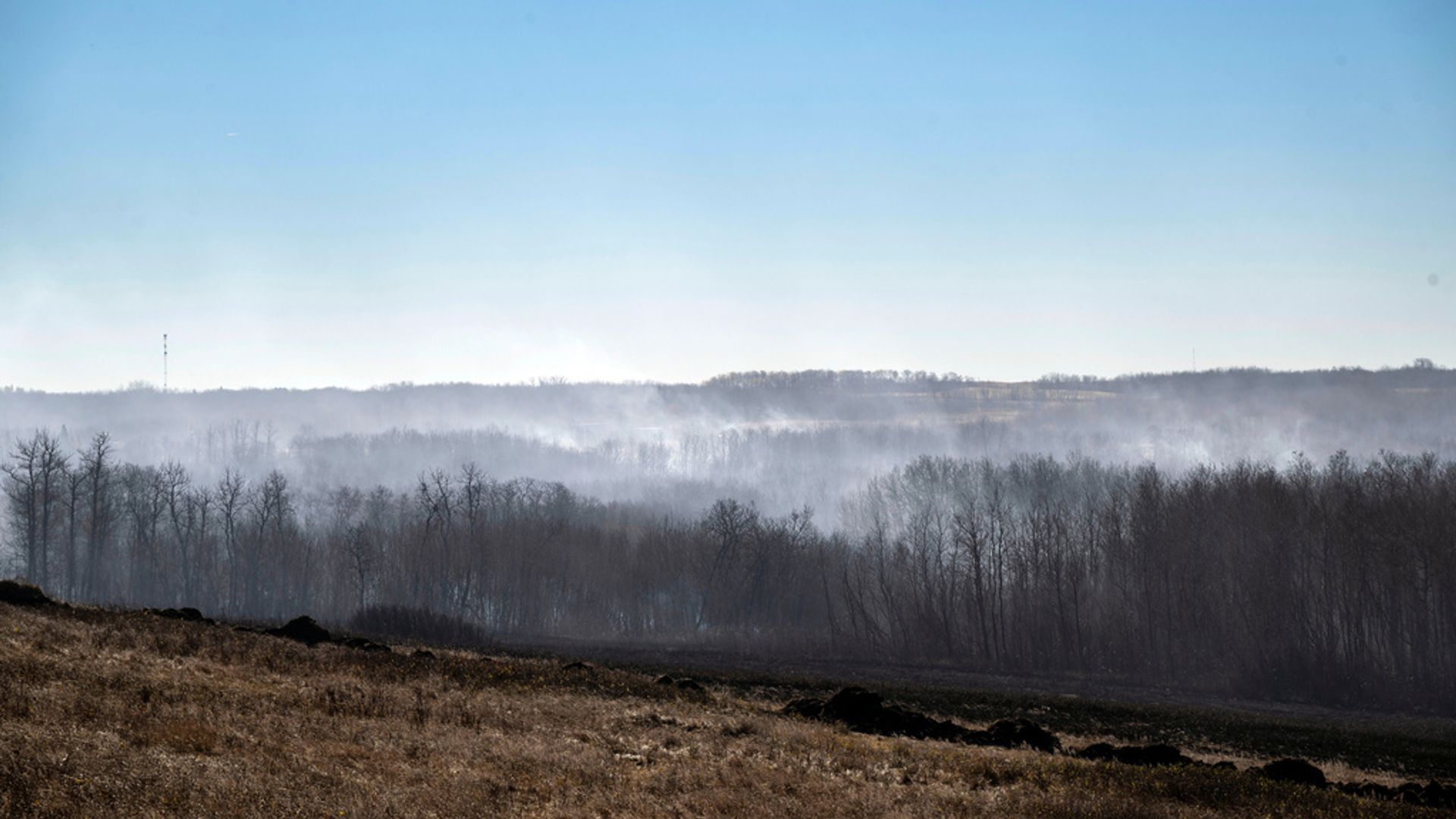
Thirty-six seconds to cover a kilometre sounds like a sports statistic, not a wildfire behavior report. Yet that exact burst of speed is what turned a seemingly contained grass fire at Canadian Forces Base Wainwright in Alberta into one of the deadliest domestic peacetime tragedies in Canada's military history.
When the wind shifted on October 17, 2026, flames that had been sitting roughly a kilometre away surged into troops from the 3rd Battalion, Princess Patricia's Canadian Light Infantry during live-fire combat training. Maj. Gen. Wade Rutland put it plainly at a news conference in Edmonton: it is not normal for a fire to move a kilometre in 36 seconds. Four soldiers died initially, dozens more were injured, and by mid-November a fifth soldier had died from injuries sustained in the blaze.
For anyone watching the story unfold, the immediate gut reaction is shock. How does dry grass move faster than an Olympic sprinter for nearly a full kilometre? And why were troops training near a fire in the first place?
How a Grass Fire Crosses a Kilometre in 36 Seconds
Do the math and the physics becomes chillingly clear. Covering 1,000 metres in 36 seconds works out to roughly 27.8 metres per second—about 100 kilometres per hour (around 62 mph).
Most people picture forest fires as slow, towering walls of flame that chew through timber over hours. Grass fires work differently. Fine, cured grass acts like kindling stacked side by side with almost no moisture holding it back. Once dry prairie grass ignites and catches a strong wind, heat preheats the blades ahead of the flame front, igniting them almost instantaneously.
When the wind shifts direction, the flanks of a burning area can rapidly become a new head fire. Instead of creeping sideways, the flames push straight into fresh fuel at wind-driven speed. Spot embers can also jump ahead of the main front, starting new pockets of fire before people even realize the direction has changed.
Officials noted that military personnel had been aware of a grass fire for hours on Saturday morning and believed it was sufficiently contained for live-fire training to continue. That detail gets to the heart of why grass fires are so deceptive. A fire can look manageable, boxed in, or distant right up until a gust or wind shift changes the geometry of the blaze.
Why Containment Assumptions Fail in Wind Shifts
Fire containment on paper rarely behaves like fire containment in gusty, open terrain. A perimeter that holds under steady breeze can fail in seconds when wind speed spikes or swings toward unburned grass.
In live-fire training areas like CFB Wainwright—a 609-square-kilometre facility in Alberta equipped with 25 weapons ranges—training involves high-intensity maneuvers, equipment, and personnel spread across tactical and administrative zones. Reports indicated that after the wind shifted, the fire swept into a second training area and overtook personnel on the range as well as an administrative area.
Investigators have examined what sparked the initial blaze, with reporting pointing to an initial investigation suggesting it was likely sparked by a grenade launcher fired at the base's grenade range, while military officials also noted early on that oil and gas infrastructure was not believed to be behind explosions. Still, the ignition source isn't what made the fire lethal in 36 seconds. Wind, fuel continuity, and timing did.
What Happened at CFB Wainwright and Who Was Affected
The tragedy struck Charlie Company of the 3rd Battalion, Princess Patricia's Canadian Light Infantry, based in Edmonton, as troops conducted high-intensity training ahead of rapid crisis readiness and a planned mission reinforcing Canadian forces in Latvia. About 84 soldiers were involved in the training group, with casualties spanning regular force members, reservists, and personnel from bases across Canada.
Four soldiers were killed initially: Sgt. Morgan Wong of Edmonton, Pvt. Shaun Farrell of Prince Albert in Saskatchewan, Pvt. Aidan Goulding of North Vancouver in British Columbia, and Pvt. Hayden Lykkemark of Langley in British Columbia. Alberta health and provincial officials reported 39 people receiving medical care across facilities, including 19 in critical condition, while Prime Minister Mark Carney ordered federal flags lowered to half-staff nationwide and called it one of the worst peacetime tragedies on domestic soil. Weeks later, on November 14, 2026, the military confirmed a fifth soldier had died from injuries suffered in the fire.
Conservative opposition leader Pierre Poilievre, who represents the area in Parliament, visited Wainwright the day after the fire and spoke of accounts of service members running toward danger to help others before ending up in hospital themselves. Those details underscore how fast chaotic emergencies escalate when smoke, heat, and disorientation hit a training ground.
Common Misconceptions About Grass Fires and Training Safety
Watching coverage of a disaster like Wainwright brings out a lot of armchair second-guessing. A few misconceptions tend to pop up right away.
- Myth: Grass fires aren't as dangerous as forest fires. Honestly, that's backwards when speed is the threat. Forest fires can burn hotter and deeper for days, but fast-moving grass fires can outrun people and vehicles in seconds, leaving almost zero reaction window.
- Myth: If a fire has been burning for hours without spreading toward you, the danger is low. A fire can look stable for hours while burning into a dead end or mild breeze, then explode across open grass the moment wind direction shifts.
- Myth: Military live-fire training ignores weather and fire risk. Range operations routinely weigh weather, fuel conditions, and containment status, yet real-world wind shifts still surprise experienced fire and military professionals. Knowing a risk exists doesn't make sudden meteorological changes predictable to the minute.
There's also a real tension in military readiness that isn't easy to resolve. Soldiers train in realistic, demanding conditions because deployment to crises or overseas missions—like Canada's commitment in Latvia—requires sharp coordination under pressure. At the same time, pushing ahead with high-tempo exercises near an active fire carries steep exposure if conditions turn. Investigations and safety reviews exist precisely to examine where risk assessments, thresholds, or evacuation triggers fell short.
Practical Lessons for Anyone Operating Near Grasslands
You don't have to wear a uniform to get caught off guard by a fast-moving grass fire. Farmers, ranchers, rural homeowners, hikers, off-roaders, and utility crews all work or travel around cured grass in fall, spring, and dry spells.
If you spend time near grasslands or brush, a few habits actually matter:
- Watch wind shifts, not just wind speed. A steady breeze tells you where smoke and flames are going; a sudden lull or shift in flags, dust, or grass bend often signals a change in direction.
- Park and stage with an unobstructed exit. Never leave a truck, trailer, or equipment boxed in by tall dry grass or narrow access routes where you have to turn around under pressure.
- Treat "contained" as temporary. When conditions are dry and windy, assume fire perimeters can breach without warning and keep escape routes in mind before smoke blocks visibility.
- Follow official updates from primary agencies. During fast-moving incidents, early casualty numbers and causes can shift as investigators and medical teams verify facts—rely on official military, provincial, and emergency management releases rather than early rumor.
- Support affected service members and families. When tragedies hit training bases, local community funds, hospital support efforts, and peer mental health resources for injured troops and first responders stay vital long after the initial headlines fade.