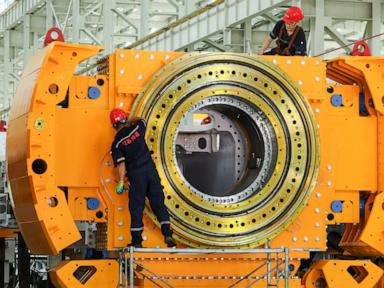
The trading floors of Hong Kong and Shanghai are currently experiencing a frantic surge of public listings driven by an insatiable public appetite for artificial intelligence and automation hardware. While global headlines focus on the high-profile public debut of fast-fashion giant Shein arriving at a severely discounted valuation of twenty-seven billion dollars, a much larger structural rotation is occurring beneath the surface. Capital is abandoning legacy consumer retail models and flowing aggressively toward domestic hardware, semiconductor fabrication, and bipedal automation startups.
This capital migration is not a spontaneous accident of market sentiment. It is the direct byproduct of deliberate national industrial policy paired with an acute investor desperation for structural growth stories.
The Real Driver Behind the Market Shift
Look past the retail ticker symbols and examine where the actual capital is concentrating. Memory chip giant CXMT raised more than eight billion dollars in Shanghai during a blockbuster public offering that saw its share price surge nearly five hundred percent on opening day. Simultaneously, humanoid robotics pioneer Unitree made its market debut with astronomical initial gains, riding a wave of state-backed initiatives designed to achieve absolute technological self-sufficiency.
Investors are actively starving traditional consumer discretionary stocks of fresh capital to feed the artificial intelligence hardware engine. Shein's delayed and heavily downscaled listing trajectory tells the story of an era ending. The company once commanded a private valuation near one hundred billion dollars, but vanishing tax loopholes for low-value cross-border shipments, tightening European regulatory fines, and fierce margin compression have exposed the vulnerabilities of the pure-play e-commerce arbitrage model.
When cross-border parcel exemptions vanished in the United States and the European Union instituted flat customs duties on low-value imports, the foundational unit economics of ultra-fast fashion fractured. Retail is messy, political, and vulnerable to shifting trade barriers. Silicon, memory chips, and machine-learning codebases represent the clean architecture of the future in the eyes of institutional allocators.
The Mathematics of the Automation Frenzy
To understand why dozens of robotics startups are stampeding toward public markets in Hong Kong and the mainland, one must examine the venture capital pipeline. Over the past twenty-four months, hundreds of early-stage enterprises focused on embodied intelligence have absorbed billions of yuan in rapid-fire financing rounds.
These firms are racing to list before the public window narrows, driven by the pressure of early investors demanding liquidity. The pitch to the public is simple yet intoxicating. If intelligent hardware can eventually achieve smartphone shipment volumes while maintaining the price point of a mid-sized passenger vehicle, the total addressable market eclipses traditional manufacturing entirely.
Yet the underlying technical maturity of these systems tells a sobering story. Industry insiders frequently note that while industrial robotic arms operate reliably in controlled environments, bipedal humanoid systems and dexterous robotic hands still face massive algorithmic and mechanical bottlenecks. Software capability often lags far behind hardware aesthetic design.
When a newly listed automation firm commands a valuation multiple stretching hundreds of times beyond its current earnings, it leaves zero room for execution error. The initial pop on trading day masks a precarious reality. Early trading spikes for several high-profile robotics listings have already given way to steep corrections as retail participants realize that quarterly earnings reports demand actual commercial utility rather than promotional demonstration videos.
The Geopolitical Bottleneck
The concentration of listings on Chinese domestic exchanges and the Hong Kong bourse reflects a deeper geopolitical reality. Foreign regulatory hurdles and intense scrutiny over data practices and supply chain transparency have effectively closed Western capital markets to many of these enterprises.
Rather than fighting protracted compliance battles in New York or London, founders are finding a receptive audience closer to home. Regional exchanges are eager to welcome high-tech listings to offset sluggish performances in traditional sectors. This domestic capital recycling creates a closed loop where local savings fund national technological ambitions.
However, this inward-looking capital strategy carries distinct systemic risks. If macroeconomic pressures soften consumer spending within the domestic economy, or if international export restrictions tighten further around advanced semiconductor components, the entire valuation structure supporting these automation darlings will face an immediate stress test.
What Comes After the Opening Bell
The juxtaposition between Shein entering public markets at a fraction of its former peak and hardware startups debuting to triple-digit percentage gains is a stark market signal. The era of subsidizing endless customer acquisition through cheap venture capital and regulatory loopholes is closing.
The market is no longer rewarding companies that merely move cheap goods across borders through logistical arbitrage. It is rewarding physical infrastructure, domestic chip production, and industrial automation. Whether these high-flying robotics valuations survive their first full year of public financial scrutiny will determine the trajectory of Asian capital markets for the next decade.
The opening bell is just the beginning of the audit.