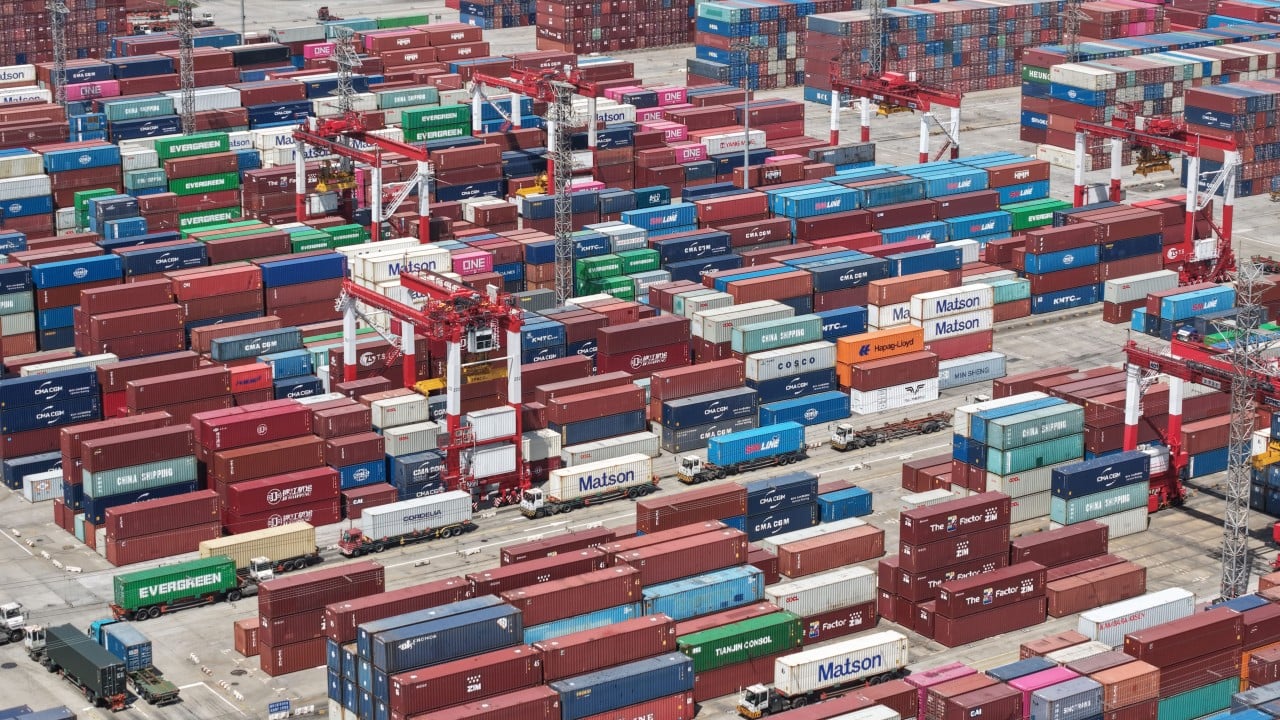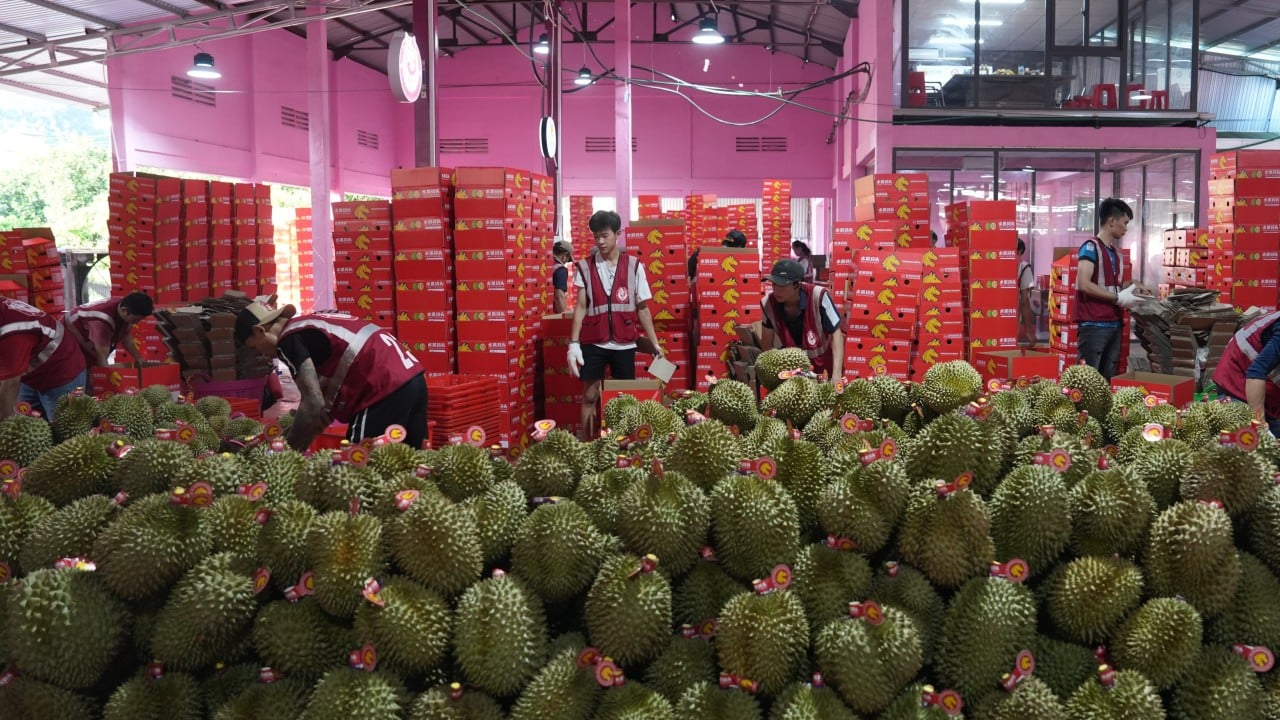
In the first six months of 2026, Chinese customs recorded a staggering 1.07 million tonnes of fresh durians crossing its borders, marking a 47 percent surge compared to the same period in 2025. On paper, these numbers depict an unrivaled success story for Southeast Asian agriculture. Thailand commanded a dominant $3.79 billion share of the trade, Vietnam held onto its second-tier foothold with $846 million, and Malaysia posted a dramatic 342 percent year-on-year jump in shipments following the 2024 clearance of fresh fruit exports. Yet beneath this record-breaking volume lies a stark economic contradiction. Wholesale prices across mainland markets have slid by up to 20 percent year-to-date, while farmgate values in Pahang, Chanthaburi, and the Mekong Delta have plummeted. The region is confronting a structural supply crisis built over a decade of aggressive land conversion, speculative capital investments, and a misplaced bet on infinite Chinese demand.
For years, the math behind the king of fruits seemed unbreakable. Chinese middle-class consumers treated premium varieties like Malaysia’s Musang King and Thailand’s Monthong as status symbols, driving retail prices to astronomical heights. That speculative frenzy triggered an agricultural land rush. Thousands of hectares of rubber, palm oil, and traditional fruit orchards were ripped out across Southeast Asia to make way for high-density durian groves. Today, those trees have reached maturity all at once. Combined with synchronized flowering seasons, fast-growing graft techniques, and improved cold-chain infrastructure, a tidal wave of fresh fruit is crashing onto the market. Demand in major Chinese cities remains strong, but it can no longer absorb this level of sheer tonnage without severe price erosion. The golden era of effortless margins has officially ended.
The Decade Long Bet That Broke the Price Floor
Agriculture operates on a delay. When an investor plants a durian sapling, five to seven years pass before that tree yields its first full crop. Between 2015 and 2023, high market prices created an illusion that durian cultivation offered guaranteed returns. Smallholders and corporate conglomerates alike flooded the sector, expanding acreage by fourfold to fivefold across major growing regions.
What the market experienced in mid-2026 was the inevitable collision between biological maturation and market capacity. In Malaysia, where Musang King once fetched upwards of RM90 per kilogram at retail peak, farmgate prices collapsed by more than half. Grade A Black Thorn dropped to around RM20 per kilogram, while local kampung varieties flooded domestic roadside stalls for as little as RM1 to RM2 per fruit. The Federal Agricultural Marketing Authority was forced to step in with emergency intervention buys to keep small farmers afloat, setting floor prices to cushion the blow.
A similar structural squeeze unfolded in Thailand’s southern and eastern provinces. Thai exporters, who still control over 80 percent of China’s import volume, found themselves locked in aggressive price wars. Even with the logistical advantage of established shipping channels and the China-Laos Railway, Thai shippers were forced to discount Grade A Monthong from 26.5 RMB per half-kilogram down to 18 RMB to maintain clearance rates at wholesale distribution hubs in Guangzhou and Shanghai.
The root cause goes beyond sheer production volume. The central mistake made by developers was assuming Chinese consumer spending power would expand indefinitely at a hyper-growth rate. As broader economic headwinds encourage more cautious consumer behavior across mainland tier-two and tier-three cities, luxury fruit purchases are among the first discretionary line items to undergo repricing. Buyers still want durians, but they refuse to pay 2023 scarcity premiums for a commodity that now arrives by the trainload.
Infrastructure Speed versus Logistics Costs
Moving a highly perishable, strong-smelling fruit thousands of kilometers across international borders requires an unrelenting logistics chain. Fresh durians do not tolerate transport delays. Once picked or drop-harvested, the window between peak ripeness and unmarketable rot is measured in days, not weeks.
Thailand and Vietnam hold significant structural advantages over their southern neighbor due to overland geography. Vietnam utilizes direct border crossings into Guangxi and Yunnan, allowing truck fleets to deliver fresh harvests to southern Chinese markets in under 48 hours. Thailand relies heavily on multimodal freight via the China-Laos Railway, which has drastically reduced transit times from Chanthaburi to Kunming. These established rail and road corridors keep freight costs low enough to absorb falling retail prices.
Malaysia, by contrast, faces a distinct logistical bottleneck. When Beijing granted access for fresh Malaysian durians in June 2024, exporters initially relied almost exclusively on air freight to maintain quality standards for tree-ripened fruit. Air transport guarantees that a Musang King harvested in Pahang can reach a store shelf in Beijing within 24 to 36 hours, but the cost structure is brutal. Air cargo rates consume a massive percentage of the final retail margin. When Chinese wholesale prices were high, exporters could easily pass those shipping costs onto the consumer. Under current depressed market conditions, high air freight charges make margins thin or negative.
To survive, Malaysian trade groups and logistics operators have begun testing long-haul overland corridors. In mid-2026, trial convoys carried fresh cargo from the Bukit Kayu Hitam border checkpoint in northern Malaysia, transiting northbound through Thailand to reach southern China in roughly 75 hours. While overland trucking reduces transport expenses by up to 40 percent compared to air freight, it introduces severe operational risks. Border clearance delays, temperature fluctuations in refrigerated containers, and phytosanitary inspections can destroy an entire shipment before it reaches a Chinese distribution center.
Quality Control as a Weapon for Market Survival
In a market saturated with product, quality control becomes the ultimate differentiator. China’s General Administration of Customs has steadily tightened inspection protocols for imported agricultural goods. Shipments found with pest contamination, excessive chemical residue, or improper cold-chain tracking face immediate rejection or quarantine at port of entry.
Vietnam experienced this friction firsthand when rapid export expansion led to sporadic quality inconsistencies, briefly triggering heightened border scrutiny. Thailand responded by instituting rigorous provincial export grading systems, penalizing orchards that harvest immature fruit to chase early-season pricing. Early harvesting damages the reputation of the crop, causing long-term harm to national brand equity.
Malaysia’s traditional harvest methodology presents its own unique challenge. Unlike Thai growers, who harvest Monthong durians directly from the tree before full maturity to allow for ripening during transit, Malaysian farmers traditionally wait for Musang King and Black Thorn to fall naturally from the tree at peak maturity. Tree-ripened fruit delivers the rich flavor profile that enthusiasts demand, but its shelf life is short.
[Harvest Strategy Comparison]
Thailand / Vietnam: Picked early from tree -> Longer shelf life -> Lower transit risk -> Ideal for rail/sea freight
Malaysia: Tree-ripened drop harvest -> Superior flavor profile -> Very short shelf life -> High transit risk / Air freight dependent
If a tree-ripened durian spends four days in transit, it risks over-fermentation, cracking, or souring before it reaches the end customer. Consequently, the industry is splitting into two distinct operational models. Mass-market supply relies on early-harvest varieties transported via rail and road, while ultra-premium segments attempt to preserve high air-freight margins for nitrogen-frozen whole fruit or pristine, line-caught fresh drops.
The Downstream Pivot and the Future of Domestic Processing
When raw commodity exports fail to deliver historical profit margins, processing becomes the default defense mechanism. Across Southeast Asia, growers and agribusinesses are shifting capital away from fresh fruit logistics and toward downstream processing facilities.
Blast-freezing technology and nitrogen-lock packaging allow processors to preserve whole durians and extracted pulp for up to two years without significant degradation of taste or texture. This capability breaks the seasonal trap. Instead of dumping millions of tonnes of perishable fruit onto the market during a two-month summer harvest window, processors can store inventory and release it strategically throughout the year, including during peak consumption spikes like Lunar New Year.
Furthermore, the industrial application of durian pulp is expanding rapidly across Asian food manufacturing. Puree that once fed small-scale local bakeries now supplies multi-national fast-food chains, beverage brands, and snack manufacturers. Durian-flavored ice cream, bakery fillings, beverages, and pre-packaged desserts offer predictable, year-round volume channels for lower-grade or surplus harvests that fail to meet strict aesthetic standards for fresh display.
This downstream shift provides a floor for farmgate prices, but it requires substantial capital investment. Smallholders who spent their savings planting high-density orchards during the boom years rarely possess the liquidity to build cold-storage infrastructure or nitrogen-freezing plants. As a result, the industry is heading toward consolidation. Corporate agribusinesses with integrated processing capacity, direct retail partnerships in China, and diversified logistics portfolios will absorb failing orchards or squeeze independent growers on purchasing contracts.
The illusion that durian farming was a risk-free path to wealth has been shattered by the cold realities of global trade. The market is not dying; Chinese appetite for the fruit remains higher than for almost any other imported tropical produce. However, the dynamics have fundamentally shifted from a seller's market driven by scarcity to a buyer's market driven by volume, efficiency, and supply chain control. Growers who adapt their logistics, manage production costs, and diversify into processed products will endure the downturn. Those who planted indiscriminately and relied on eternal price spikes are discovering that even the king of fruits must obey the laws of supply and demand.