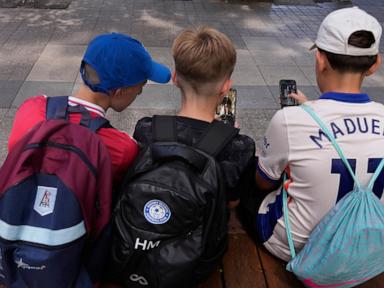
Chloe is fourteen, and her bedroom smells faintly of vanilla and heavy anxiety. It is midnight in a quiet suburb outside Paris, but Chloe is not in her bed. She is sitting cross-legged on the floor, the harsh blue light of a smartphone illuminating a face that looks far older than fourteen. Her thumb moves with a mechanical, rapid-fire jerk. Flick. A twenty-second video of a girl showing off a hyper-thin waist. Flick. A comment thread trading vicious insults about a classmate’s shoes. Flick. A loop of a stylized, melancholic video romanticizing isolation.
Her heart rate is up. Her breathing is shallow. She wants to put the phone down—she truly does—but a dark, invisible calculus engineered thousands of miles away in Silicon Valley and Beijing has determined that if Chloe stays awake for just ten more minutes, the platform wins.
This is the quiet war occurring in millions of households, and French lawmakers have decided they are losing it.
In a frantic rush against the ticking clock of the summer recess, Paris has become the epicenter of a radical experiment. The French National Assembly and Senate are locked in high-stakes negotiations to force a total social media ban for children under the age of fifteen, aiming to implement the law before the school gates open this September.
It is a policy born out of desperation. It is also an admission of defeat: we gave our children the keys to the digital universe, and now we are trying to change the locks.
The Clock is Ticking in Paris
To understand the urgency, you have to look at the calendar. Lawmakers are racing through an accelerated legislative process championed by President Emmanuel Macron. They know that if the bill stalls past the summer, another generation of freshmen will enter high school with their attention spans pre-fractured by the feed.
The proposal is sweeping. It mandates that online social networks must prohibit access to minors under fifteen. It pairs this digital lock with a physical one: a complete ban on mobile phones inside high school walls, expanding on a 2018 law that already stripped phones from primary and middle schools.
But passing a law in a grand, stone-carved palace in Paris is entirely different from enforcing it in Chloe’s bedroom.
The friction right now isn't about whether children need saving; it is about how to build the wall. The National Assembly wants a blanket ban on all social platforms. The Senate prefers a specific blacklist. Meanwhile, the European Commission is watching closely, raising concerns that France’s unilateral move might overlap with the broader EU Digital Services Act.
Then there is the logistical nightmare of age verification. How do you prove a user is fourteen without creating a massive, invasive database of facial scans or government IDs? Tech companies have historically treated age gates like a joke, relying on a simple "Click here to confirm you are 13" box that a toddler could bypass. Under the proposed French framework, the stakes are real. If passed, platforms will have until December 31 to scrub non-compliant existing accounts from their systems.
The Colonization of the Mind
"The emotions of our children and teenagers are not for sale," Macron stated in a video broadcast, his words sharp, targeting the American platforms and Chinese algorithms that dictate the daily rhythms of youth. Former Prime Minister Gabriel Attal went further, warning that foreign tech entities are actively working to "colonize minds."
This language sounds like wartime rhetoric because, for parents, it feels like a war.
Consider the raw data from France’s health watchdog, ANSES: one in two French teenagers spends between two and five hours every single day glued to a smartphone. Nearly 90% of kids aged 12 to 17 use these devices daily, and the vast majority are there for the social networks.
But numbers don't capture the slow erosion of a child's sense of self. The watchdog tied this constant exposure directly to plunging self-esteem, cyberbullying, and a terrifying uptick in exposure to content celebrating self-harm and suicide. In France, this isn't theoretical. Several grieving families have launched lawsuits against TikTok, alleging the platform’s algorithm fed their struggling teenagers a steady diet of depressive content until it was too late.
The human brain at fourteen is a beautiful, fragile construction zone. It is highly malleable, desperately seeking social validation, and utterly unequipped to handle the dopamine firehose of a personalized algorithm. When a teenager walks down a real street, they might face a few judgments. When they open an app, they are judged by a coliseum of millions.
The Paternalism Debate
Not everyone believes a ban is the cure. Within the French political landscape, critics from the hard left have called the move "digital paternalism," an overly simplistic band-aid for a deeply complex mental health crisis. Nine separate child protection associations recently broke ranks with the government, urging lawmakers to hold the massive platforms accountable instead of effectively locking children out of the modern digital square.
They argue that an outright ban will simply push the behavior underground. A teenager determined to access the digital world will find a VPN, a hidden account, or a older friend's login credentials. By criminalizing their presence online, we risk cutting them off from the healthy parts of the web—the peer groups, the creative outlets, and the community support systems that isolated kids rely on.
Even former Prime Minister Elisabeth Borne expressed doubts, noting softly that the reality of policing a child’s digital life is "more complicated than that."
She is right. It is terrifyingly complicated. If you take away the phone, what fills the void? In an era where physical youth spaces have shrunk and modern socializing happens almost exclusively through a glass screen, an abrupt disconnection can feel to a teenager like psychological exile.
A Template for the West
France is not acting in a vacuum. They are chasing Australia, which passed a landmark ban for under-16s. The United Kingdom, Denmark, and Ireland are watching the French experiment with quiet intensity, treating the scramble in Paris as a test case for their own future legislation.
We are witnessing the beginning of a great global retrenchment. For two decades, society operated under the assumption that technology was an unalloyed good, an infinite library that would make our children smarter, more connected, and more empathetic. We forgot that libraries do not track your eye movements, log your insecurities, and sell your attention span to the highest bidder.
The rush to pass this law before September is a confession of parental and societal exhaustion. It is the sound of an entire culture saying: We cannot fight these algorithms alone anymore.
On the first day of September, if the lawmakers get their way, Chloe will walk through the doors of her high school. She will not have a phone in her pocket. When she goes home, her apps may be dark, her accounts deactivated by corporate compliance teams terrified of French regulatory fines.
She will sit in her room, smelling of vanilla, looking at a blank wall. She will feel an uncomfortable, hollow ache in her chest—the sudden withdrawal of a simulated world. And for the first time in years, she will be forced to sit alone with her own quiet, uninterrupted thoughts.
Whether that silence saves her or breaks her is the gamble France is willing to take.