Apocalypse sells clicks, not gigawatts.
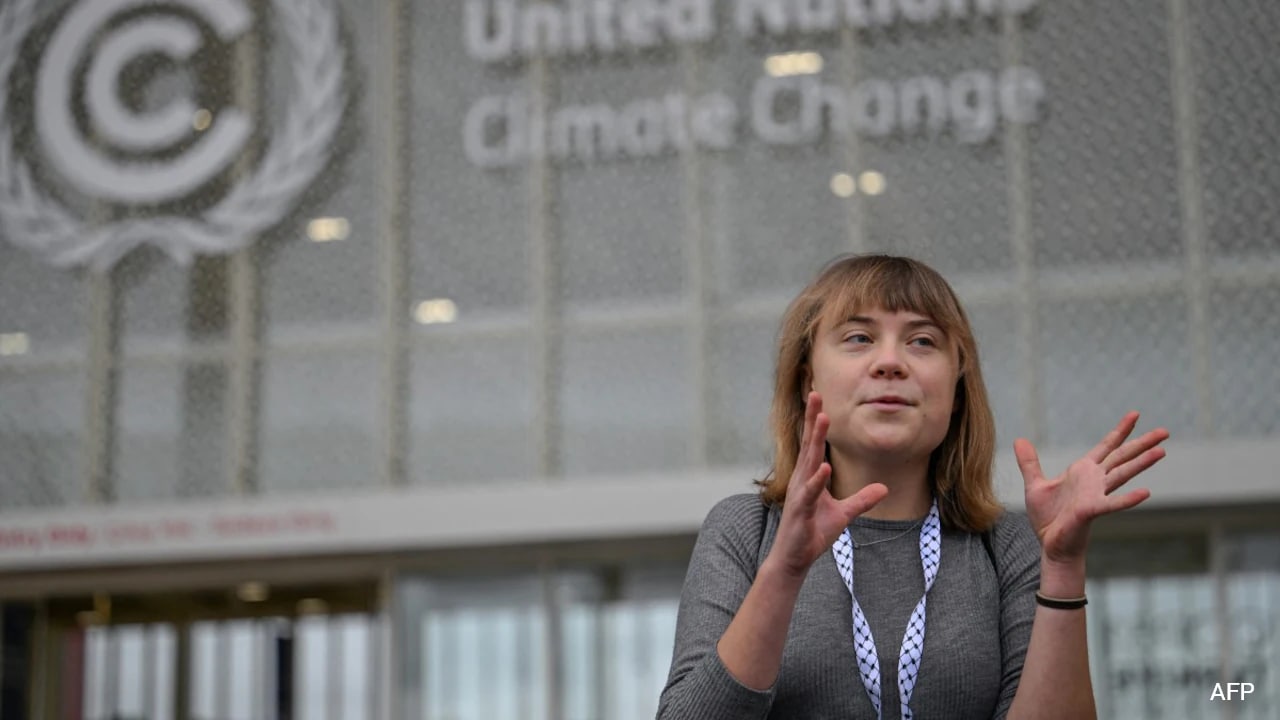
Every November, the international press corps descends upon whatever host city is staging the United Nations Climate Change Conference, cameras primed for a single, predictable soundbite. This week, as COP31 kicks off in Antalya, Turkey, the legacy media machine right on cue plastered Greta Thunberg’s latest warning across every front page. "Everything we love is at stake," she declared upon arrival.
It is poetic. It is urgent. It is also the exact kind of maximalist framing that paralyzes capital allocation, alienates the developing world, and gives fossil fuel incumbents a free pass to stall for another decade.
The mainstream press treats COP summits like high-stakes moral theater—a binary showdown between heroic youth activists and cartoonishly evil oil executives. That is the lazy consensus. If you actually sit in the rooms where grid interconnects are financed, where copper supply chains are negotiated, and where sovereign debt is restructured for emerging markets, you quickly realize that apocalyptic moralizing isn't just unhelpful. It is actively counterproductive.
The Physics Of Doom Versus The Math Of Deployment
When activists frame the energy transition as an existential cliff-edge where "everything is at stake," they inadvertently validate a dangerous binary: either we achieve immediate, total decarbonization right now, or we are doomed.
In the real world of industrial engineering, that binary kills pragmatic progress.
I have watched municipal utilities and mid-cap industrial firms burn millions of dollars on performative "net-zero by 2030" roadmaps simply to appease ESG rating agencies and avoid activist blowback. Two years later, when those companies realize the local transmission grid cannot physically handle their proposed electrification load, they quietly scrap the entire project and revert to diesel backup generators. All-or-nothing rhetoric produces nothing.
Let’s look at the actual mechanics of energy addition versus energy transition. Historian and energy scientist Vaclav Smil has spent decades demonstrating that global energy transitions are agonizingly slow because of the sheer physical scale of our existing infrastructure. You do not replace a multi-trillion-dollar hydrocarbon backbone overnight with hashtags and hunger strikes. You build parallel capacity—solar, wind, nuclear, geothermal, battery storage—until the new system outcompetes the old one on pure economics.
Consider the distinction between emissions intensity and absolute emissions.
- Emissions intensity measures the amount of carbon dioxide emitted per unit of economic output (GDP) or per kilowatt-hour generated.
- Absolute emissions measure the total volume of greenhouse gases pumped into the atmosphere.
The Western media routinely attacks developing nations at COP summits because their absolute emissions are rising. Meanwhile, those exact nations are aggressively driving down their emissions intensity while lifting millions of citizens out of extreme poverty. When activists arrive at COP31 demanding immediate fossil fuel phase-outs without accounting for baseload power reliability, they aren't fighting for the planet. They are demanding that the Global South remain energy-poor to satisfy Western moral anxiety.
Why The "COP Is A Failure" Narrative Is Fundamentally Broken
If you read standard coverage of COP31, you will inevitably encounter the familiar trope: Thirty-one summits, and global emissions are still rising. The system is broken.
That premise is completely flawed because it misunderstands what the Conference of the Parties actually is. COP is not a global legislature. It has no military, no tax authority, and no enforcement mechanism. Treating a diplomatic consensus forum like a sovereign government—and then declaring it a failure when it doesn't pass binding global laws—is like complaining that a screwdriver is broken because it won't hammer a nail.
The real work of COP does not happen on the protest lines outside the Blue Zone, nor does it happen in the plenary halls where politicians deliver tear-jerking speeches for domestic consumption. The real work happens in the bilateral side-rooms where multilateral development banks, sovereign wealth funds, and private equity infrastructure groups hash out blended finance structures.
Blended finance is the unglamorous, hyper-technical mechanism of using public or philanthropic capital to de-risk private investment in emerging markets.
Imagine a scenario where a solar developer wants to build a 500-megawatt utility-scale array in Sub-Saharan Africa or Southeast Asia. The sunshine is abundant, and the engineering is straightforward. The deal dies because the local utility has a junk credit rating, currency volatility threatens to wipe out returns, and the cost of capital sits at 14 percent. No amount of chanting outside the gates in Antalya changes that interest rate.
What changes that interest rate is a World Bank first-loss guarantee negotiated quietly at a COP side-event, dropping the cost of capital to 5 percent and unlocking $800 million in private pension fund money. That is how gigawatts get built. Yet, because debt-for-nature swaps and concessional credit facilities do not make for viral TikTok clips, the media ignores them in favor of Greta Thunberg’s latest press conference.
The Uncomfortable Truth About Critical Minerals And Permitting
There is a glaring contradiction at the heart of the current climate activist movement that nobody at COP31 wants to touch: you cannot simultaneously demand a rapid transition to renewable energy and oppose the industrial extraction required to build it.
Every electric vehicle, grid-scale battery, and offshore wind turbine is a monument to mining. According to the International Energy Agency (IEA), a typical onshore wind plant requires nine times more mineral resources than a gas-fired power plant of the same capacity. An electric car requires six times the mineral inputs of a conventional internal combustion vehicle.
To hit the deployment targets activists demand, the global mining sector has to scale up lithium, cobalt, nickel, and copper production at a pace never before achieved in human history.
Yet, across North America and Europe, the exact same activist networks applauding Thunberg’s speeches at COP31 are actively litigating against domestic lithium mines, blocking high-voltage transmission corridors, and protesting deep-sea nodule exploration. They want the clean electrons without the dirty mines. They want the electric grid without the power lines.
If you want to understand why the green transition is stalling in Western democracies, stop looking at oil company lobbying budgets and start looking at local permitting bottlenecks. In the United States and the European Union, it routinely takes seven to ten years just to permit a new high-voltage transmission line—and another decade to permit a copper mine. You cannot solve a climate crisis on a twenty-year permitting timeline.
Brutal Answers To The Questions People Actually Ask About COP31
When ordinary citizens search for news about COP31, they aren't looking for ideological purity tests. They are trying to figure out if this massive diplomatic circus actually accomplishes anything, or if it’s just an expensive junket for elites. Let’s strip away the PR spin and answer the real questions directly.
Does Greta Thunberg still have real influence over climate policy?
Her cultural influence remains massive, particularly among Western media outlets and urban voters, which forces politicians to pay lip service to climate targets. However, her direct influence over actual energy policy and capital deployment has plummeted. Policymakers in Brussels, Washington, and New Delhi have realized that activist-driven targets—like banning internal combustion engines by arbitrary dates without securing domestic battery supply chains—create severe economic backlash and voter revolts. Today, industrial policy is being dictated by energy security and supply chain resilience, not street protests.
Why do COP summits keep happening if emissions keep going up?
Because tracking global emissions in real time is a lagging indicator of energy infrastructure. Power plants, steel mills, and shipping fleets have 30-to-40-year lifespans. When global coal consumption ticks up slightly due to a drought in China reducing hydropower output, headlines scream that COP has failed. Those headlines miss the structural curve: global solar installations are doubling roughly every three years, and clean energy investment now outpaces fossil fuel investment globally by nearly two to one. COP exists to coordinate the standards, carbon accounting rules, and cross-border financing that accelerate that structural curve.
Is "everything we love" actually at stake?
Framing climate change as literal human extinction is scientifically inaccurate and psychologically paralyzing. Even the Intergovernmental Panel on Climate Change (IPCC)—the gold standard of climate science—does not project human extinction in its baseline or high-emissions scenarios. Climate change is a severe, compounding risk multiplier that threatens coastal infrastructure, agricultural yields, insurance markets, and geopolitical stability. Treating it as an apocalypse breeds fatalism; treating it as an engineering and capital-allocation problem breeds solutions.
How To Actually Accelerate Decarbonization (Without The Moral Panic)
If we want to move past the performative gridlock of COP31, governments, investors, and even activists need to abandon the apocalyptic script and adopt a ruthless focus on deployment economics.
- Slash permitting timelines for green infrastructure. Governments must treat high-voltage transmission lines, nuclear reactors, geothermal wells, and critical mineral processing facilities with the same regulatory urgency as wartime defense production. If an environmental review takes longer than constructing the actual wind farm, the regulatory framework is broken.
- Embrace firm, zero-carbon baseload power. Weather-dependent renewables alone cannot run modern industrial economies without astronomical overbuilding and storage costs. Any serious decarbonization strategy must aggressively fund next-generation nuclear fission, enhanced geothermal systems, and long-duration energy storage—even when legacy anti-nuclear activists throw a fit.
- Price carbon at the border, not just at home. Domestic carbon taxes simply force heavy industry—steel, cement, aluminum, chemicals—to relocate to jurisdictions with weaker environmental standards, a phenomenon known as carbon leakage. Mechanisms like the European Union’s Carbon Border Adjustment Mechanism (CBAM) force foreign exporters to pay for the carbon embedded in their goods, turning climate policy into a hard-nosed trade advantage rather than an act of economic self-harm.
- Fund adaptation alongside mitigation. For decades, hardline activists viewed climate adaptation—building seawalls, developing drought-resistant crops, hardening electrical grids—as a defeatist distraction from cutting emissions. That dogma is lethal. Developing nations need billions of dollars right now to survive the warming already locked into the climate system.
The Trade-Offs Nobody Wants To Own
Taking this pragmatic, industrial-scale approach to the energy transition comes with massive, uncomfortable downsides that cannot be brushed aside.
First, fast-tracking mines and transmission lines means overriding local environmental objections. You will inevitably disrupt local ecosystems, upset rural landowners, and create localized pollution in order to secure the raw materials required to lower global carbon emissions. You have to choose which environmental harm you are willing to tolerate.
Second, shifting away from activist-driven timelines toward market-driven industrial policy means accepting that fossil fuels—particularly natural gas—will remain part of the global energy mix far longer than climate advocates want to admit. Natural gas is the bridge fuel that allows countries to shutter coal plants immediately while maintaining grid stability as renewables scale. Demanding an immediate halt to all gas infrastructure simply locks coal into the grid for another twenty years.
Finally, this approach strips away the moral clarity that makes climate activism so emotionally satisfying. There are no simple villains when you realize that your smartphone, your electric car, and your rooftop solar panels all depend on massive open-pit mines and complex, carbon-intensive global supply chains.
Greta Thunberg is right about one thing: the stakes are high. Precisely because the stakes are so high, we can no longer afford to treat the energy transition like a morality play. Leave the apocalyptic poetry to the cameras outside the gates in Antalya; the people actually saving the planet are inside, arguing over transformer lead times and interest rate swaps.