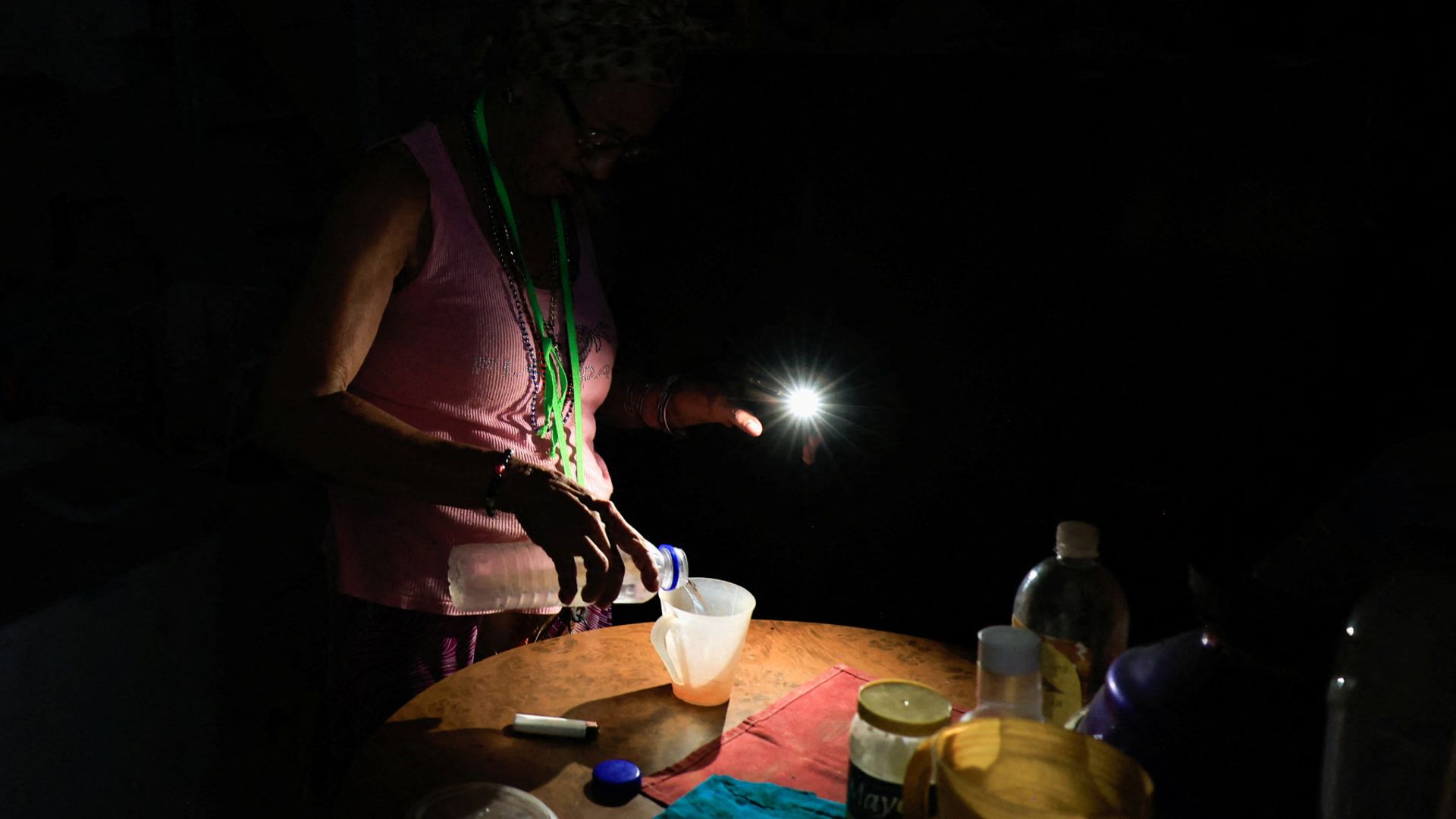
The headlines are practically writing themselves right now, weeping over a Caribbean island plunged into total darkness and pinning the entire catastrophe on external political pressure. It is a comforting, lazy narrative. It gives pundits a clear villain and gives a failing regime a convenient scapegoat.
But it is entirely wrong.
When a national power grid collapses into a total, nationwide blackout, you are not looking at the sudden result of a trade blockade or a diplomatic freeze. You are looking at decades of systemic, domestic neglect masquerading as a political crisis. The narrative that external sanctions single-handedly flipped the switch on Cuba’s electricity grid ignores the brutal reality of engineering, thermodynamics, and fiscal mismanagement.
Blaming the blockade for a dead grid is like blaming the wind for knocking down a house held together by Scotch tape and wishful thinking.
The Thermoelectric Time Bomb
To understand why the lights went out, you have to stop looking at geopolitical chessboards and start looking at the actual boilerplate plates on the island’s generation plants.
Cuba relies heavily on Soviet-era thermoelectric power plants. These facilities are not just old; they are ancient. In the world of power generation, a thermal plant has a reliable operational lifespan of about 30 to 35 years, provided it undergoes rigorous, multimillion-dollar capital overhauls every decade. Most of Cuba's primary generation units, like those at the Antonio Guiteras or Felton plants, have been chugging along for over four decades without deep capital restoration.
I have spent years analyzing energy infrastructure assets across developing markets. When you neglect basic lifecycle maintenance because you lack the foreign currency to buy specialized alloy tubes or high-pressure valves, the system starts cannibalizing itself.
- The Scale of Decay: By recent estimates, the island's operational generation capacity has hovered at less than 50% of its nominal peak for years.
- The Band-Aid Strategy: Instead of rebuilding the foundational grid, the strategy shifted to renting floating power barges from Turkish companies like Karpowership.
Renting power barges is a classic symptom of a dying grid. It is an expensive, short-term fix that consumes massive amounts of heavy fuel oil while doing absolutely nothing to fix the crumbling transmission lines onshore. When the underlying grid infrastructure is so fragile that a single trip at a major plant triggers a cascading failure across the entire network, the problem isn’t the supply of fuel. The problem is structural rot.
Dismantling the Premise of the "External Blockade"
The standard media consensus loves to ask: How can an economy survive when it is cut off from global markets?
Let's answer that brutally. The premise assumes that Cuba has no trading partners. It ignores the massive, decades-long lifelines provided by Venezuela, Russia, and more recently, subsidized fuel shipments from other regional players.
For years, Venezuela shipped tens of thousands of barrels of crude daily to Havana at steep discounts, effectively subsidizing a broken economic model. The current crisis didn't happen because a US administration tightened a screw; it happened because Venezuela’s own oil production collapsed, leaving Havana to scramble for spot-market fuel with an empty treasury.
The embargo does not prevent a country from maintaining its own domestic boilers if it has the cash to do so. The reality is that the state budget systematically prioritized tourism infrastructure—building luxury hotels that now sit largely empty—over the dull, unglamorous work of upgrading the national electricity network.
"Capital allocation is a mirror of a government's true priorities. When you build hotels instead of fixing boilers, you are choosing a future blackout."
The Physics of a Cascading Failure
When a grid suffers a total blackout, it is a failure of frequency stability. A power grid must maintain a precise balance between electricity generation and consumer demand every single second. If demand outstrips generation, the frequency drops. If it drops too low, safety relays trip automatically to protect the generators from physically ripping themselves apart.
In a healthy system, if one plant goes down, spinning reserves elsewhere on the grid instantly ramp up to absorb the shock.
In a starved system, there are no reserves. Every single megawatt-hour of capacity is already strained to the limit. When the Antonio Guiteras plant tripped, the rest of the network was so weak, so poorly synchronized, and so stripped of modern automated control systems that the entire national grid collapsed like a house of cards within minutes.
No embargo can force a grid to lack spinning reserves. That is a failure of operational protocol and engineering reality.
The Flawed Questions People Keep Asking
The public discourse surrounding this blackout is choked with bad data and wrong-headed questions. Let's dismantle the two biggest offenders.
"Why doesn't the island just transition to solar and wind to bypass the fuel issue?"
This is a favorite talking point for green-energy utopians who do not understand grid mechanics. Renewable energy sources like solar and wind are intermittent. They require a stable, baseline grid to hook into. If you inject massive amounts of variable solar power into a grid that lacks modern distribution automation and battery storage, you actually increase the risk of a frequency collapse. You cannot stabilize a dying 20th-century grid with 21st-century intermittency without spending billions on grid stabilization technologies that the state simply cannot afford.
"If the sanctions were lifted tomorrow, would the lights come back on?"
Absolutely not. This is the most dangerous myth of all. If every trade restriction vanished tomorrow morning, the physical infrastructure of the island would still be broken. It takes years, not days, to rebuild a thermal generation fleet. It requires manufacturing custom turbines, rewiring high-voltage transmission lines, and training a new generation of engineers to replace the talent that has fled the island over the last decade. Lifting sanctions does not instantly manifest spare parts that take eighteen months to forge in a specialized foundry.
The Cost of the Counter-Intuitive Truth
Admitting that the crisis is internal rather than external is uncomfortable. It forces an acknowledgment that centralized, state-run monopolies are fundamentally incapable of managing complex, capital-intensive infrastructure over the long haul.
The downside to this perspective is obvious: it offers no quick fixes. There is no stroke of a diplomatic pen in Washington or Havana that can fix a warped turbine blade or clean decades of scale out of a boiler tube. It requires massive, structural economic reform, privatization of utility assets, and an influx of foreign direct investment that guarantees property rights—things the current political framework is fundamentally designed to prevent.
Stop looking at the political theater. Look at the thermodynamics. The lights didn't go out because of a blockade; they went out because the laws of engineering finally caught up with decades of economic delusion.
The grid didn't collapse yesterday. It has been dying for forty years.