The Weight of the Checkout Lane
Elena stands at the register of a mid-sized supermarket in Ohio, watching the digital numbers climb. Milk. Eggs. A pack of chicken breasts that costs nearly double what it did three years ago. She has a steady job in logistics, and her husband works in commercial HVAC repair. By all traditional metrics broadcast on cable news, they are doing fine.
Yet, as the total passes one hundred dollars for a meager basket of essentials, a familiar tightness forms in her chest.
This is the psychological baseline of the modern American consumer. Economists call it consumer sentiment. Elena calls it looking at her checking account and wondering where the leaks are.
For months, the official financial channels have broadcast a steady drumbeat of optimism. They point to rising stock indices, stabilizing inflation percentages, and historically low unemployment rates. But when you step inside the actual lives of the people fueling this economy, the view changes. The numbers look good on a spreadsheet. They feel terrible at the kitchen table.
The disconnect is not a figment of Elena’s imagination. It is a mathematical reality masquerading as a psychological paradox. While the rate of inflation has slowed down, prices have not dropped; they have merely stopped skyrocketing quite so fast. A plateau at a high altitude still leaves you gasping for air.
The June Cooling
Every first Friday of the month, the Bureau of Labor Statistics drops a cluster of data points that sends Wall Street into a frenzy of algorithmic trading. The June employment report arrived with the quiet thud of a door closing.
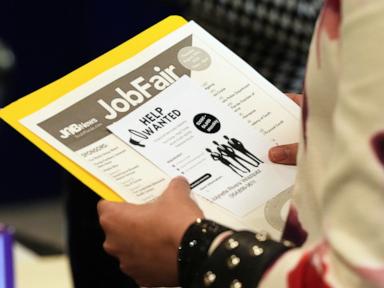
American employers added fewer jobs than anticipated. The hiring engine, which had been chugging along with surprising resilience, showed clear signs of fatigue.
To understand why this matters, we have to look past the macro numbers and look at the hiring managers themselves. Consider Marcus, a regional director for a mid-sized software firm. For the last two years, Marcus spent his mornings battling what he called the talent wars. He lost engineers to competitors offering remote perks and signing bonuses. He felt constant pressure to raise starting salaries just to get resumes in his inbox.
Now, Marcus faces a different reality. His budget has been frozen. When a senior account manager left in May, the executive team did not approve a replacement. Instead, they asked Marcus to redistribute the workload among the remaining staff.
"We are not laying people off," Marcus says, rubbing his temples during a late-evening video call. "But we are absolutely not growing. We are holding our breath."
This is the invisible slowdown. It does not show up in dramatic headlines about mass corporate downsizings. It manifests as a quiet vacancy left unfilled, an internship program canceled, a temporary contract that does not get renewed. When June hiring numbers fall, it means thousands of people like Marcus received a memo telling them to wait and see.
The Anatomy of the Gloom
Why does the American consumer remain stubbornly gloomy when the labor market is, by historical standards, still relatively tight?
The answer lies in the erosion of the safety margin.
During the pandemic era, American households accumulated a massive cushion of excess savings, fueled by stimulus checks, paused student loan payments, and a sudden drop in experiential spending. That cushion acted as a shock absorber. If a transmission blew or a root canal was required, the money was there.
That money is now gone.
Recent banking data shows that the bottom eighty percent of American households have less liquid cash available now than they did in 2019, adjusted for inflation. The shock absorber has been worn down to the bare metal. When people look at the future, they no longer see a safety net. They see a tightrope.
Let us trace the mechanics of a cooling job market down to the individual worker. When hiring slows, the dynamic shift between employer and employee reverses.
For a brief window, workers held the leverage. If you did not like your boss, you could walk across the street and find a twenty percent raise. That mobility gave people a profound sense of economic security. It felt like freedom.
When June data shows hiring falling, that freedom evaporates. Workers stay put. They tolerate longer hours, fewer raises, and poorer management because the alternative—jumping into a freezing job market—feels too risky. The quit rate, a favorite metric of the Federal Reserve that tracks how many people voluntarily leave their jobs, has steadily declined. People are digging in, putting their heads down, and hoping they do not get noticed during the next budget review.
The Federal Reserve’s Dangerous Game
High above the grocery store aisles and the corporate middle-management offices sits the Federal Reserve, operating a massive monetary thermostat.
For over a year, they have kept interest rates at their highest levels in decades. The goal was simple but brutal: cool the economy down enough to break the back of inflation. They wanted Marcus to stop hiring so aggressively. They wanted Elena to spend a little less at the store.
The danger of this strategy is that monetary policy operates with what economists call long and variable lags. It is like steering a massive cargo ship. You turn the wheel now, but the vessel does not change direction for miles.
If the Fed keeps interest rates too high for too long, the gentle cooling they desired can quickly transform into a deep freeze. The June drop in hiring suggests the steering wheel turn from last year is finally gripping the water. The ship is turning. The question is whether it can turn fast enough to avoid the rocks of a genuine recession.
For the average citizen, high interest rates are not an abstract concept discussed in monetary policy minutes. They are a wall.
- Credit Cards: The average interest rate on credit card balances has surged past twenty-one percent, turning revolving debt into a financial quicksand pit.
- Auto Loans: A reliable used car now requires a monthly payment that rivals a small apartment mortgage from a decade ago.
- Housing: The American housing market has effectively frozen. Homeowners who locked in three percent mortgages refuse to sell, while first-time buyers face a combination of sky-high prices and seven percent interest rates that price them out of the market entirely.
This interest rate wall traps people in their current circumstances. If you cannot move for a new job because you cannot afford to give up your current mortgage, your economic mobility drops to zero. You become stuck. And nothing breeds gloom quite like the feeling of being trapped.
The Mirage of the Averages
We live in an era of economic bifurcation. The headline numbers tell the story of the average, but the average is a mirage.
If one person makes a million dollars a year and nine people make zero, the average income of that group is one hundred thousand dollars. The statistics look healthy. The community, however, is starving.
The current economic landscape rewards those who already own assets—stocks, real estate, yielding capital—while penalizing those who rely solely on a paycheck to survive. The stock market reaches historic highs because corporations have successfully maintained profit margins by raising prices. But those raised prices are the exact reason Elena feels a knot in her stomach at the grocery store register. Corporate profit margins are, quite literally, the consumer's cost of living.
This explains the persistent disconnect between the consumer confidence surveys and the macroeconomic reports. When a pollster calls a household and asks how the economy is doing, the respondent does not think about the Gross Domestic Product expansion rate. They think about the fact that their teenager’s college tuition just increased by eight percent while their own salary grew by three.
The Ripple Effect of Hesitation
When hiring falls in June, it creates a psychological ripple effect that alters behavior long before a single pink slip is printed.
Fear is a highly effective economic depressant. When a worker notices that a colleague who left was not replaced, they make a mental adjustment. They decide against remodeling the bathroom this autumn. They opt to patch up the old lawnmower instead of buying a new one. They cancel the weekend trip three states over.
Multiply that hesitation by thirty million households, and you get a sudden, sharp reduction in aggregate demand.
This is how recessions are born. They do not typically begin with a sudden cataclysm. They begin with a million quiet decisions to wait until next year. The June data suggests that the American consumer, long praised as the unstoppable engine of global economic growth, is finally starting to lift their foot off the accelerator.
They are not lifting it because they want to; they are lifting it because the tank is running dry. The combination of depleted savings, stubborn high prices, and a cooling job market has forced a return to economic austerity at the household level.
The View from the Register
Back in the Ohio supermarket, Elena finishes paying. She loads the plastic bags into the back of her seven-year-old SUV. She keys the ignition, and the engine cranks a little slower than it should. A winter battery replacement is on the horizon.
She sits for a moment in the air-conditioned cabin, looking out over the asphalt lot. Across the street, a fast-food restaurant displays a large banner offering a signing bonus for shift managers—a banner that has been hanging there so long the edges are frayed and sun-bleached.
The sign feels like a relic from a different era, a monument to a brief moment when the world felt wide open and full of leverage.
The economic data points from June will be parsed, debated, and forgotten by the time the next monthly report arrives. The algorithms will adjust, the bond yields will fluctuate by fractions of a percent, and the talking heads will find a new adjective to describe the labor market. But for the people navigating the actual terrain, the reality remains unchanged. The ground beneath their feet is shifting, the margins are shrinking, and the simple act of providing for a family has taken on the quiet tension of an endurance sport.