The sound came first.
It was not the sharp crack of thunder or the roar of wind. It was a heavy, grinding groan deep beneath the asphalt—a sound of earth and concrete surrendering to an invisible force.
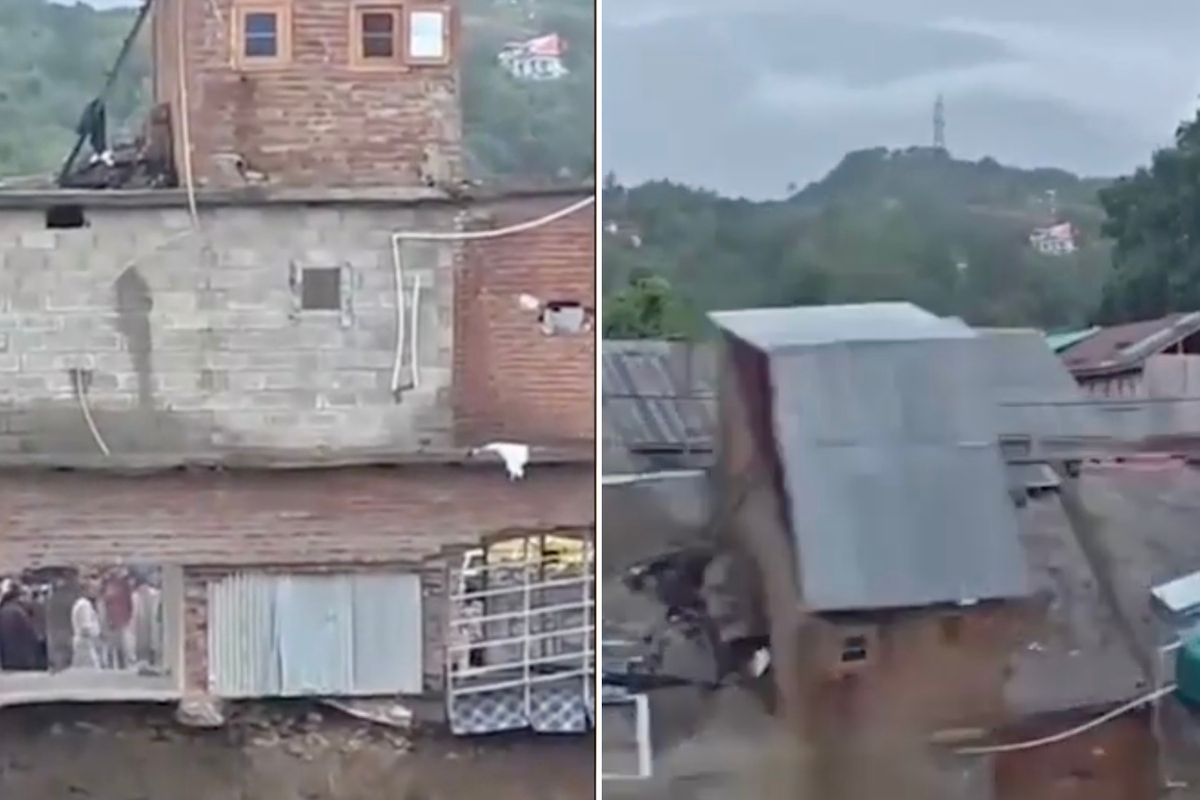
Within minutes, an entire strip of storefronts, decades of family history, and the quiet rhythm of a neighborhood vanished into a surging torrent of brown water. Brick walls buckled like cardboard. Glass shattered in slow motion. Signboards that had greeted morning commuters for thirty years tipped forward and dissolved into the current.
To read a standard news ticker, you would hear that a flash flood caused structural collapse along a commercial district. You would see numbers: rainfall totals, estimated property damage, emergency response times. But numbers are cold. They do not capture the smell of damp mortar, the sickening sway of a floorboard underfoot, or the sudden, absolute silence that follows the crash of a ruined life.
The Foundations We Take for Granted
Consider a hypothetical shopkeeper named Marcus.
Every morning at five o'clock, Marcus turns a brass key in the lock of a bakery his father built. He knows which floorboard squeaks near the display case. He knows how the sunlight hits the brick facade at nine in the morning. To Marcus, and to millions of people like him living in vulnerable flood zones, the ground beneath his feet is the ultimate constant. It is solid. It is permanent.
Except it isn't.
Water possesses a quiet, relentless patience. Long before a river overflows its banks or a storm drain bursts, water works in the dark. It seeps into micro-cracks in the foundation. It washes away soil granule by granule, carving out subterranean caverns that remain invisible to the naked eye. The street above looks completely normal. Cars park on it. Children ride their bikes over it.
Then comes the breaking point.
When extreme weather pushes an already strained drainage system past its limit, the pressure builds from below. The saturated soil loses its structural integrity—a phenomenon geologists refer to as soil liquefaction—and suddenly, the solid earth acts like a liquid. The foundation loses all support. What looks like a sudden disaster is actually the final, catastrophic act of a process that has been building for years.
The Invisible Cost of Water
Disasters are often measured by what remains standing, but the true devastation lies in what cannot be rebuilt.
When an entire row of shops collapses into a flood, the loss stretches far beyond inventory and real estate. A small business is an anchor. It is where neighbors exchange local news, where teenagers get their first jobs, where generations of effort are stored. When the ground swallows those walls, it swallows a community's shared memory.
Insurance forms ask for inventory lists and property valuations. They ask for the cost of drywall, glass, and electrical wiring. But how do you quantify the ledger book filled with old recipes? How do you calculate the loss of a morning routine that held a neighborhood together?
The technical reality of modern flooding is changing. Drainage networks built fifty or sixty years ago were designed for predictable seasonal rain, not the hyper-concentrated, high-volume deluges that now hit urban areas with little warning. Concrete replaces soil that once absorbed rain. Pavement seals the earth, forcing millions of gallons of water to find alternative paths. When it cannot go down into the ground naturally, it rushes along the surface until it finds the weakest link in the chain.
In this case, that weak link was a row of shops that stood in the wrong place at the wrong time.
Facing the Current
Standing at the edge of a newly carved crater, looking down into murky water where a coffee shop or a hardware store used to be, the sensation is overwhelming. It forces a jarring realization about human vulnerability. We build our lives on top of systems we rarely think about, trusting that the pipes will hold, the soil will stay firm, and the streets will remain beneath our feet.
Rebuilding after a structural collapse of this magnitude is not simply a matter of pouring new concrete and raising new walls. It requires rethinking how we coexist with the environment beneath our towns. It demands smarter urban planning, deeper investments in subterranean infrastructure, and an acknowledgment that water will always find a way.
The muddy water eventually recedes, leaving behind a silence far heavier than the storm that caused it. Among the wreckage, scattered pages from wet notebooks float past broken concrete blocks, carried downstream by a river that was never supposed to be there.