The warning issued from Washington was blunt, offering no room for diplomatic creative writing. Under the mechanics of Operation Economic Outcast, any regional airport, ground-handling firm, or refueling contractor servicing Iranian carriers would find itself instantly excised from the global dollar clearing system.
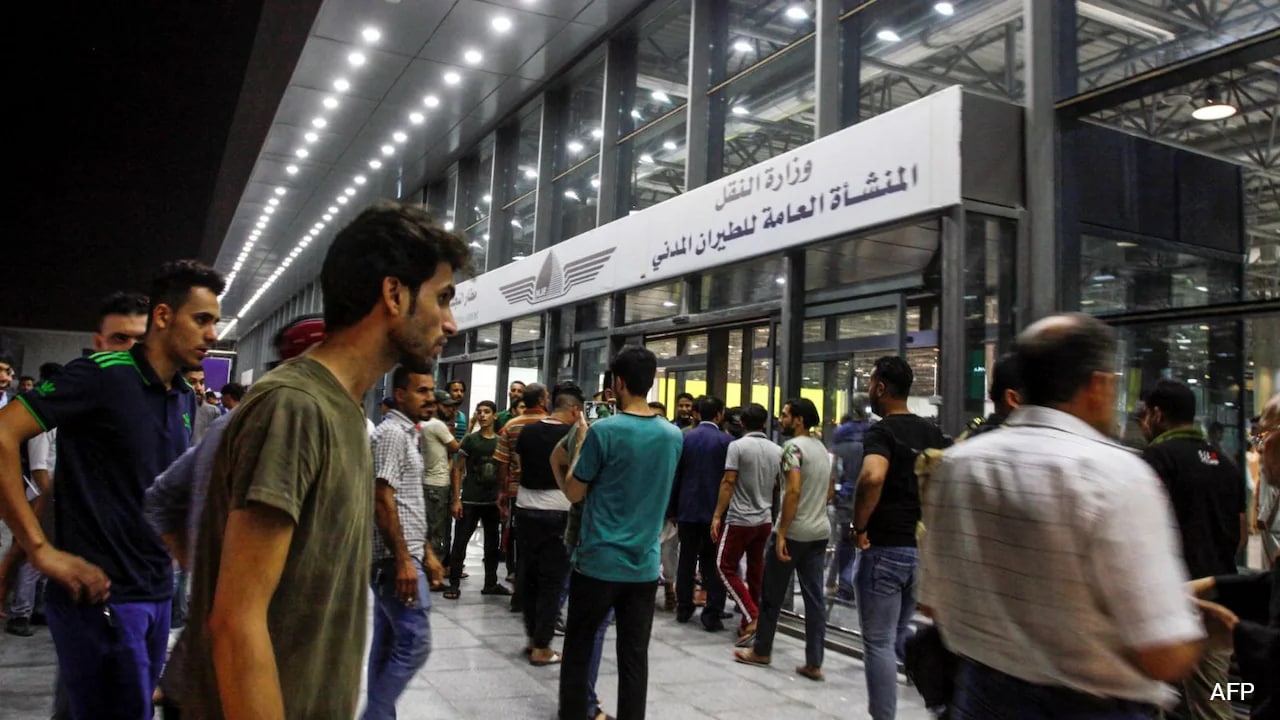
For Baghdad, Basra, and Najaf, the math was punishingly simple. No sovereign administration in the region can maintain operations if its central bank loses access to New York correspondent accounts. When a chartered aircraft carrying Iran's national soccer team was abruptly denied permission to land at Basra International Airport, it signaled more than a mere sporting inconvenience. It demonstrated that secondary financial measures have successfully converted commercial airspace into a minefield where neighborly accommodation can no longer survive against Washington's enforcement arm.
The cascading closures across Iraqi airports did not happen in a vacuum. Long before tarmac access was blocked in southern Iraq, hubs in the United Arab Emirates, Oman, and the Caucasus pulled back their welcome mats. Yet Iraq occupied a uniquely exposed position. Decades of economic entanglement, shared pilgrimage routes, and dense family networks meant that aviation links between Tehran and Iraqi cities served as vital capillaries for civilian travel.
When the Basra refusal occurred, it became blindingly clear that Washington's threat of extraterritorial penalties had overridden local political balancing acts. Airport directors and civil aviation authorities in Baghdad realized that servicing blacklisted operators like Mahan Air, Caspian Air, or Meraj Air was an existential threat to their own commercial viability. Ground handlers, facing the choice between losing Iranian carrier revenue or getting locked out of international banking networks, chose survival.
The consequences of this isolation extend far beyond bureaucratic trade restrictions. Millions of travelers who once relied on rapid regional hops are now forced onto grueling overland transit corridors. Cross-border checkpoints are seeing unprecedented congestion as families, merchants, and religious pilgrims substitute cheap airline tickets with twelve-hour bus journeys across rugged terrain.
This friction carries an intentional economic design. By systematically dismantling Iran's civil aviation footprint abroad, the enforcement strategy starves the country's transportation sector of foreign currency earnings and spare parts access. Yet the policy also creates dangerous regional friction. Hardline factions within Tehran have repeatedly signaled that if their commercial fleet is grounded by foreign compliance, regional aviation security as a whole could face retaliatory turbulence.
For regional aviation authorities caught in the crossfire, the calculus remains unforgiving. Compliance with American financial oversight is not a matter of political preference; it is the price of admission to global trade. As long as the threat of secondary sanctions remains absolute, the empty air corridors above the Iraqi-Iranian border will serve as a permanent monument to the reach of financial statecraft.


