The heavy scent of old paper and dust always carries a strange weight. In the quiet rooms of an auction house, that smell transforms into something else entirely. It becomes the scent of exposed secrets. We look at historical artifacts and see dollar signs, catalog numbers, and glass display cases. But if you hold a piece of paper written by a person who was trapped by her own fame, the texture changes. It feels warm. It feels dangerously alive.
Every year, thousands of items belonging to the British royal family pass under the hammer. Most of them are dry, ceremonial relics. Silver spoons. Signed portraits. Polite thank-you notes typed by bored secretaries.
Then, every once in a while, something breaks through the polished facade. A artifact appears that tears away the heavy velvet curtains of royalty to reveal the shivering, deeply human soul hiding underneath.
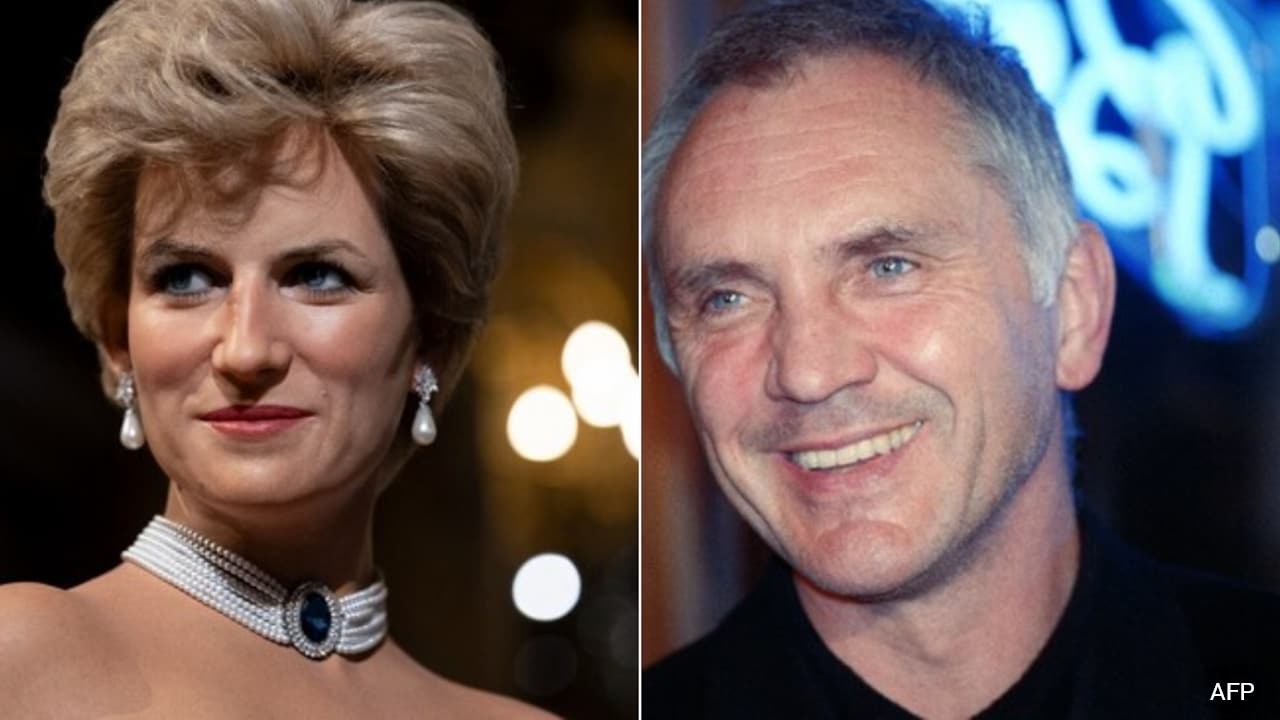
That is exactly what happened when a collection of private letters from Diana, Princess of Wales, was prepared for public sale. Among the standard correspondence was a single, handwritten note addressed to the dashing British actor Terence Stamp. It contained a line so raw, so unexpectedly cheeky, and so intensely human that it instantly collapsed the decades between her life and our present day.
"Why did God invent sex?" she asked him.
It sounds like the setup to a joke. It reads like a flirtatious line passed across a candlelit table. But when you look closer at the context of Diana’s life during that era, the words stop being a mere punchline. They become a window into a profound, aching isolation.
The Man in the Charcoal Suit
To understand the weight of that single sentence, you have to understand the man who received it. Terence Stamp was not just any actor. He was the definitive icon of 1960s British cool. With his piercing blue eyes, sharp jawline, and effortless charisma, he moved through London society like a ghost from a more glamorous era. He was sophisticated. He was safe, yet dangerous.
Consider what it meant for Diana to write to someone like him.
By the early 1990s, the Princess of Wales was living in a gilded cage that was rapidly shrinking. Her marriage to Prince Charles was a public wreck. The palace walls felt less like a fortress of protection and more like a panopticon where every sigh was recorded, analyzed, and weaponized. Trust was a luxury she could no longer afford. Her friends were choosing sides. Her staff were leaking stories to the tabloids.
In that environment, writing a letter becomes an act of immense bravery—or immense desperation.
When Diana sat down at her desk, picking up her favorite fountain pen, she wasn’t writing a historical document for an auction catalog. She was a woman in her early thirties, trapped in a loveless world, reaching out to someone who represented freedom. Stamp was an outsider who knew how to navigate the inside. He was a man of the world.
The letter, dated from Kensington Palace, starts with the kind of playful energy that Diana rarely got to display in public. She thanked him for a book he had sent her, a text on meditation and Eastern philosophy. Then came the question about intelligent design and human desire.
It was a brilliant flash of her trademark wit. Diana loved to shock, but she also loved to connect. By asking a question so taboo for a member of the royal family, she was stripping away her title. She wasn't HRH the Princess of Wales in that sentence. She was just Diana.
The Architecture of a Royal Scandal
People often wonder why the public remains utterly obsessed with Diana’s private correspondence. The answer lies in our collective desire to see behind the mask. We live in an era of curated perfection, where every celebrity interaction is managed by an army of publicists. Diana lived in a similar ecosystem, yet her human impulses constantly cracked the concrete of royal protocol.
Imagine the physical reality of that moment.
The heavy cream-colored paper. The distinctive royal letterhead stamped at the top. The elegant, looping cursive handwriting that millions of people around the world could recognize at a glance. Now imagine the contrast of that high-society stationary paired with a cheeky, existential question about intimacy.
The auction house staff who cataloged the collection described the air in the room shifting when they uncovered the note. It wasn't just another piece of paper. It was a physical manifestation of a woman’s internal voice. The collection also included warmer, more traditional notes, including one where she invited Stamp to lunch, playfully telling him to bring his own balance and calm to the palace.
But the "sex" letter is the one that lingers.
It reminds us that the grand narratives of history—the collapse of royal marriages, the constitutional crises, the media wars—are built on a foundation of small, quiet moments. A woman sitting alone in a massive palace room, looking out at the gray London rain, wondering why human beings are wired the way they are.
The Price of Privacy
There is an inherent discomfort in the sale of these items. We are, after all, looking at mail that was never intended for our eyes. When Terence Stamp preserved these letters, he likely did so out of affection and historical awareness. When they enter the open market, they become commodities.
The auction market for royal memorabilia operates on a strange alchemy. The value isn't determined by the quality of the paper or the age of the ink. It is determined by the proximity to tragedy. The closer an item gets to the raw, unvarnished truth of Diana's emotional suffering, the higher the price tag climbs.
This brings us to a uncomfortable truth about our relationship with icons. We claim to love them for their perfection, but we pay fortunes to witness their vulnerability.
The bidders who raise their paddles for these letters aren't just buying an autograph. They are buying a piece of a myth. They want to hold a fragment of the woman who shook the British monarchy to its core just by being herself. They want to own a sliver of that rebellious spirit that refused to be entirely crushed by the weight of tradition.
The Echo in the Silence
The real power of the letter doesn’t lie in whatever answer Terence Stamp might have given. We don’t even know if he answered it at all, or if the question was left hanging in the air like a piece of unfinished music.
The power lies in the echo.
When you strip away the titles, the palaces, the paparazzi, and the historical significance, you are left with a universal human experience. The desire to be understood. The need to break through the polite boredom of daily life and say something real, something shocking, something true.
The ink on the page has faded slightly over the decades. The paper has aged. The woman who held the pen is gone, preserved forever in the amber of our cultural memory as a tragic figure of unmatched grace.
But in that one sentence, she isn't a tragic figure. She isn't a victim of the media or a casualty of the crown. She is sharp, funny, alive, and fiercely questioning the universe. The gavel will fall. The letter will be sold to the highest bidder. It will disappear into a private vault or a museum display case. Yet the question remains, written in loops and curves on royal paper, a brilliant spark of mischief left behind in the dark.