Silence.
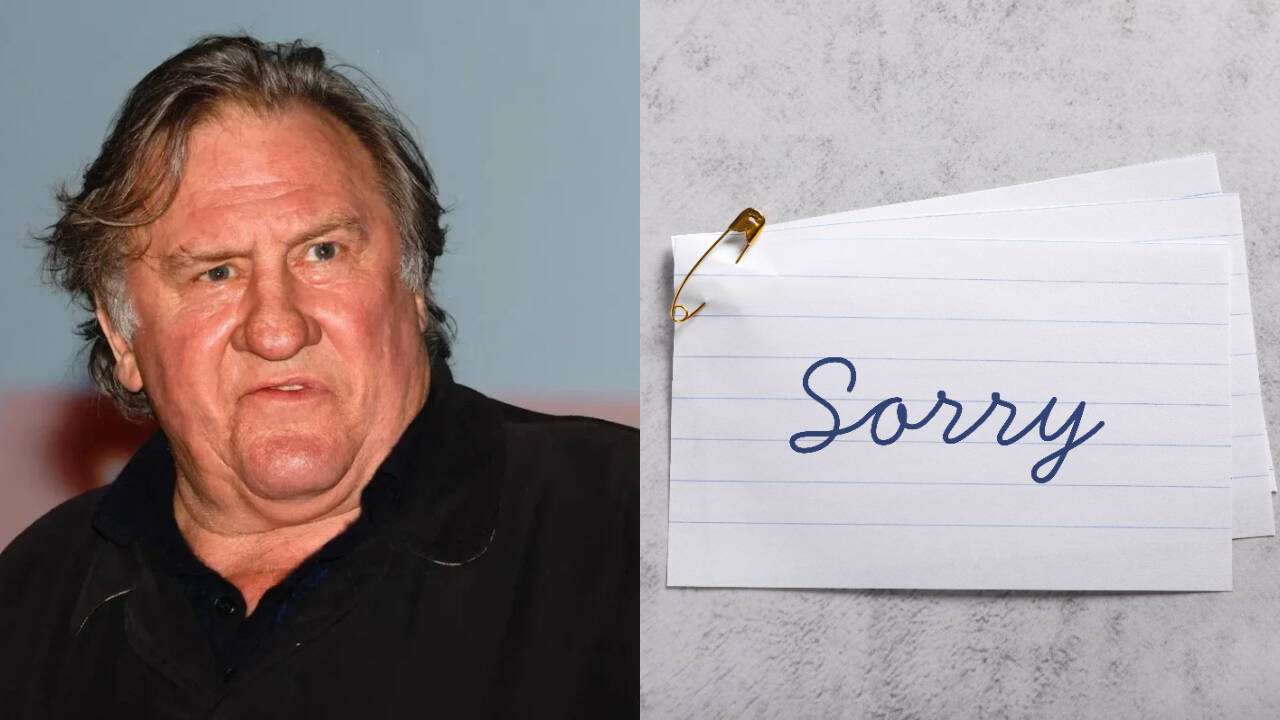
In a Parisian courtroom, silence is never empty, because it carries the thick, suffocating weight of marble, oak, and centuries of institutional memory that have long protected the powerful from the consequences of their own appetites. For decades, Gérard Depardieu was not merely an actor in France; he was a monument, an untouchable force of nature whose sheer physical and cultural mass seemed to bend the rules of gravity around anyone standing too close to him on a film set. When news broke that the seventy-seven-year-old icon had finally dropped his appeal and issued a formal apology to the victims in his sexual assault case, the headlines treated it like the final line of a standard legal wire. Don't forget to check out our recent coverage on this related article.
They missed the real story.
To understand why a man who spent years roaring his innocence suddenly chose to fold his cards, you have to look past the legal filings and step onto the cold concrete floor of a soundstage at five in the morning. That is where the invisible economy of cinema actually operates, far away from the red carpets of Cannes and the velvet ropes of the Champs-Élysées. If you want more about the context of this, Wall Street Journal provides an excellent summary.
The Architecture of an Untouchable Man
Imagine, as a hypothetical composite drawn from dozens of real testimonies across the French film industry, a twenty-six-year-old assistant set dresser named Clara. She is holding a clipboard, her fingers stiff from the morning chill, trying to tape down a loose power cable before the lead actor arrives. In this scenario, she has three months on a temporary contract, no union protection strong enough to guarantee her next gig, and a rent payment due in Belleville on the first of the month.
When the star walks onto that set, he brings the financing with him. Without his name on the poster, the bank loans evaporate, the distributors pull out, and eighty crew members lose their livelihoods by lunchtime.
Think about what that economic reality does to human behavior. It creates a localized gravitational field where every joke, every crude remark, and every wandering hand is absorbed by the people around him as just another cost of doing business. For over forty years, Depardieu operated inside that exact bubble, protected by a cultural mythology that confused artistic genius with moral exemption.
I have spent years reporting from the edges of media and entertainment rooms where power tilts violently in one direction, and the most striking thing is never the loud explosion of abuse; it is the quiet, suffocating consensus of everyone else in the room staring at their shoes. You learn very quickly to read the micro-expressions of junior staffers who force a laugh when a titan crosses a line, because their silence is the currency they pay to keep their careers alive.
During his 2025 trial in Paris, the prosecution laid bare what happened behind that curtain during the 2021 filming of Les Volets Verts (The Green Shutters). Two women—a fifty-four-year-old set dresser and a thirty-four-year-old assistant director—described a working environment where physical boundaries simply ceased to exist. They testified to being trapped, groped, and subjected to relentless, explicit verbal barrages while dozens of colleagues watched or looked away.
In May 2025, the Paris criminal court found Depardieu guilty of sexually assaulting both women, handing down an eighteen-month suspended prison sentence, ordering him to pay thousands of euros in compensation, and placing his name on the national sex offender registry. At the time, his legal team did what powerful defense teams always do when cornered. They announced an immediate appeal, treating the conviction as a temporary misunderstanding by judges who failed to appreciate the rough-and-tumble poetry of old-school French cinema.
Why the Appeal Vanished
So why walk away now?
When an appellant drops a challenge in the French appellate system, they are not experiencing a sudden, cinematic awakening on the road to Damascus; they are looking at an actuarial table of diminishing returns. By abandoning his appeal, Depardieu accepted the May 2025 conviction as final, locking his name into the national registry and closing the door on any legal exoneration.
Consider what happens next when a high-profile defendant forces a second trial. An appeal in France is not a narrow review of technical errors; it is a complete retrial of the facts, meaning every witness, every text message, and every humiliating detail gets dragged back into the blinding fluorescent light of the courtroom for another round of global headlines. Even worse, appellate judges hold the authority to increase a sentence if they believe the defendant is wasting the court's time with a baseless challenge.
There is also the grinding physical reality of time. Approaching eighty, visibly frail during his court appearances, and facing separate, even heavier legal jeopardy—including a referral to stand trial over allegations of rape and sexual assault brought by actress Charlotte Arnould in 2018—Depardieu was fighting a war on multiple fronts with a shrinking army.
His defense had relied heavily on the idea that his behavior was merely "Gallic ribaldry," a relic of a more liberated, less prudish era that modern sensibilities had unfairly criminalized. That argument collapsed because the law makes a crystal-clear distinction between clumsy flirting and non-consensual physical battery. You do not accidentally trap a woman between your legs on a film set because you grew up in the 1970s.
The Anatomy of a Late Apology
Then came the apology.
In the world of crisis management, an apology delivered after a dropped appeal occupies a strange, morally ambiguous territory. For the two women from Les Volets Verts, hearing the man who once dismissed their accounts as lies finally utter words of contrition carries undeniable weight. Validation matters. When you spend years being called a liar, a gold-digger, or an enemy of French culture simply for demanding that your body remain your own property at work, having the state and the perpetrator acknowledge the truth shifts the ground beneath your feet.
Yet an apology issued at the very end of the road, once every escape hatch has been welded shut, tastes very different from remorse offered freely when a man still holds all the cards.
To understand the difference, picture a bank vault. For decades, accountability in the entertainment industry was locked inside a vault requiring three separate keys: the courage of a victim willing to burn their career, the willingness of bystanders to break their silence, and a legal system willing to treat a national treasure like an ordinary citizen. For most of Depardieu's career, at least two of those keys were missing.
Even after the 2025 conviction, segments of the French cultural establishment clung to the old mythology, writing open letters that framed the legal reckoning as a witch hunt against a sacred monster of cinema. As a metaphor, that phrase—monstre sacré—tells you everything you need to know about how France insulated its icons. In French theater and film, a sacred monster is someone whose talent is so vast that society agrees to forgive their monstrosity in exchange for their art.
The bargain only works as long as the monster keeps producing gold at the box office. Once the financing dries up, once insurers refuse to underwrite a production with his name on the call sheet, and once younger directors realize that casting him is professional suicide, the sacredness evaporates overnight. What is left behind is just an old man sitting in a wooden chair, listening to a clerk read out the terms of his suspended sentence.
What Changes on Monday Morning
People often ask whether a single celebrity conviction actually changes anything for the millions of ordinary workers who will never step onto a Parisian film set. It is a fair question, and frankly, anyone who claims that one verdict cures a systemic disease is selling you a fairy tale.
Power does not surrender territory willingly; it merely changes its camouflage.
What shifts after a moment like this is not human nature, but the risk calculation of the enablers standing three feet away from the abuse. Producers, line managers, studio executives, and department heads have spent years pretending they did not see what was happening behind the lighting rigs because intervening threatened the shooting schedule. Now, every production company in Europe has looked at the wreckage of Les Volets Verts and realized that looking the other way carries a catastrophic price tag.
When a crew member reports harassment today, the line producer is no longer just weighing the comfort of an assistant against the ego of a star. They are weighing the cost of a legal disaster, the loss of public funding from bodies like France's National Centre for Cinema, and the permanent stain on their own professional reputation.
I still think about the thousands of quiet conversations that never made it into court transcripts—the whispered warnings passed from one female technician to another in the makeup trailer before a shoot began, mapping out which hallways to avoid and which doors never to close. That informal survival network existed because the official rules were a joke. When a titan drops his appeal and apologizes, it does not erase the nights those women spent wondering if speaking up would end their lives in the industry, nor does it magically heal the psychological scar tissue left behind by years of institutional gaslighting.
It does, however, strip away the excuse that nobody knew better.
The stage lights on Gérard Depardieu's career have finally gone dark, leaving behind a quiet, unadorned room where the only thing left on the floor is the tape marking where he used to stand.