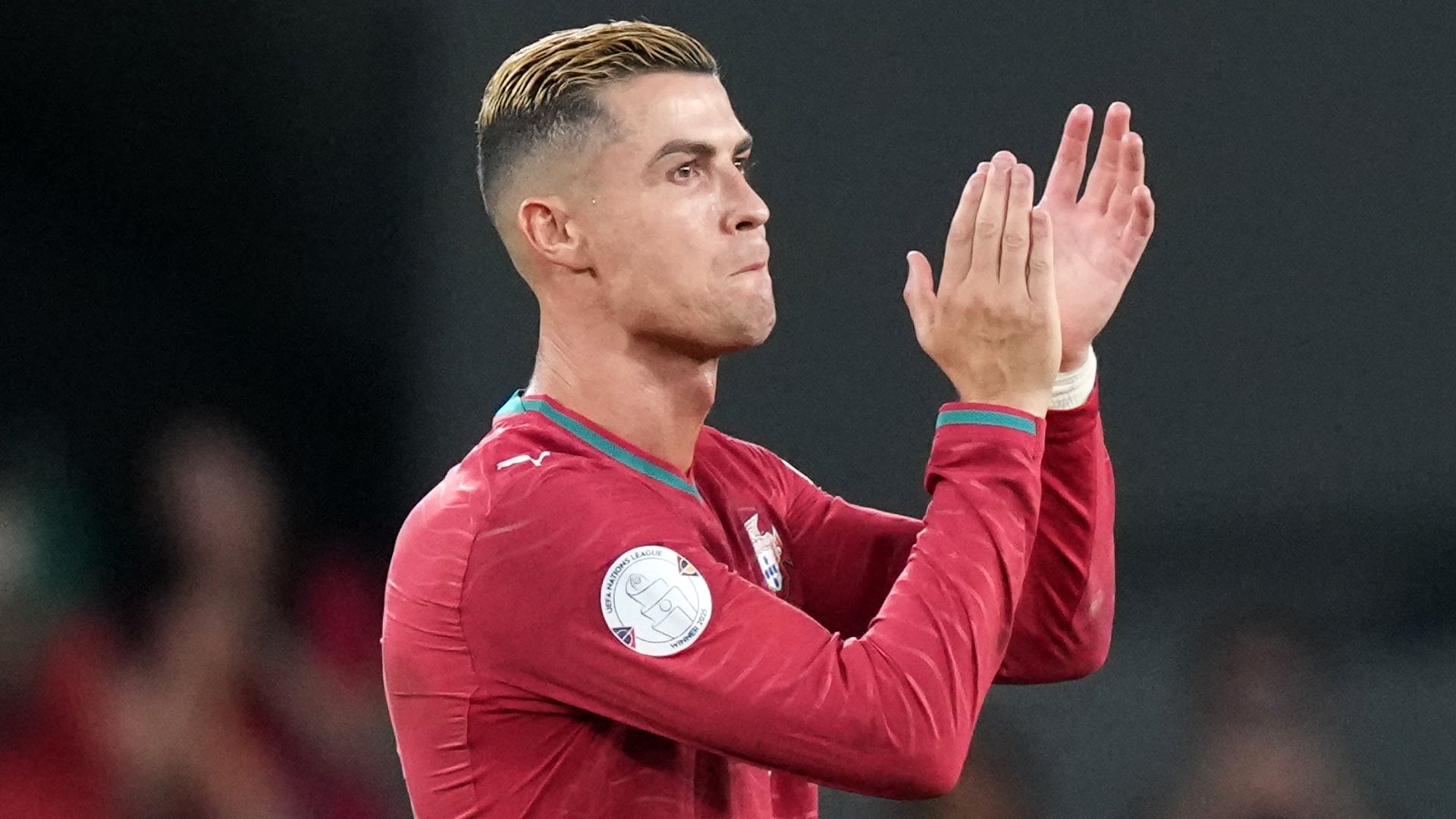
Silence.
That is the first thing you notice when a king takes off his crown for the last time, not the roar of seventy thousand throats in a concrete bowl, nor the frantic clicking of camera shutters along the touchline, but the sudden, suffocating vacuum that settles over a living room three thousand miles away when the television screen fades to black.
Consider a hypothetical scene that played out in millions of households across the Atlantic and beyond when the news broke. Imagine Mateo, a forty-two-year-old carpenter in Porto, sitting on the edge of a worn leather sofa with a cold mug of coffee in his calloused hands. For twenty-three years—since the summer of 2003, when a spindly teenager with frosted tips and crooked teeth first stepped onto the grass in Chaves against Kazakhstan—Mateo’s life has been measured not in calendar years, but in tournaments. He remembers where he was during the tears of Euro 2004, the solitary defiance of the 2006 World Cup, the limping sideline coaching in Paris in 2016, and the cold night in Al Khor when the dream nearly died in a tunnel. To Mateo, and to millions who never kicked a ball professionally in their lives, Cristiano Ronaldo was never merely an athlete wearing a red shirt. He was a metronome for mortality. As long as the number seven kept running, kept leaping three feet into the thin air, kept demanding the ball in the eighty-ninth minute with the manic certainty of a man who refused to read his own birth certificate, time itself seemed negotiable.
Now, the metronome has stopped. Cristiano Ronaldo has retired from international football, closing the book on the most prolific, exhausting, and polarizing national team career the sport has ever witnessed.
If you look only at the cold ledger of history, the announcement reads like a monument carved in granite. Over two hundred international appearances—more than any man who has ever laced up boots for his country. Over one hundred and thirty international goals, a tally so absurdly distant from the mortals chasing him that it resembles a typographical error rather than an athletic record. A European Championship in 2016 that broke a century of Portuguese heartbreak, followed by the inaugural Nations League title in 2019. These are the verified coordinates of greatness, the undeniable mathematics that will sit atop trivia sheets long after everyone reading this is gone.
Yet numbers are terrible storytellers. They tell you how many times a ball crossed a white line, but they cannot explain why a grown man in Porto feels a strange, hollow ache in his ribs when he realizes he will never again hear the stadium announcer draw out that familiar surname before kickoff.
The Architecture of Obsession
To understand what actually ended when Ronaldo hung up his Portuguese shirt, you have to strip away the gloss of modern sports marketing and look at the raw, uncomfortable psychology that drove him. We live in an era that preaches balance, vulnerability, and graceful exits, yet Ronaldo built an empire on the exact opposite impulse. He treated international football like a medieval siege. Every camp, every qualifying match against a minnow in a half-empty stadium in Eastern Europe, every friendly in the pouring rain was approached with the desperate intensity of a man fighting for his first professional contract.
I remember standing near the tunnel at the Estádio da Luz years ago during a routine World Cup qualifier—the kind of match most superstars treat as a cardio session before returning to their clubs. While younger teammates laughed and swapped jokes during warmups, Ronaldo stood ten yards apart, jaw clenched so tightly a muscle twitched beneath his cheekbone, staring at the turf as if the grass itself had insulted his family. Watching him up close was slightly terrifying. There was nothing effortless about it. Genius in football is usually sold to us as poetry—think of Zinedine Zidane pirouetting through midfield or Lionel Messi gliding past defenders like water around stones. Ronaldo was never water. He was a battering ram swung by a man who refused to admit his arms were tired.
Think of his international career not as a highlight reel, but as a structural engineering project built on shifting sand. When he debuted under Luiz Felipe Scolari in August 2003, Portugal was a nation of romantic underachievers—a country that produced elegant technicians like Luís Figo and Rui Costa, played gorgeous, intricate football, and invariably found a poetic way to lose when the pressure peaked. Ronaldo arrived from Madeira with an accent that Lisbon elites mocked and an ambition that made veterans uncomfortable. He did not want to lose beautifully. He wanted to win ugly, win late, win alone if necessary.
That friction is the secret engine behind his longevity. Over two decades, he outlasted four distinct generations of Portuguese talent. He played alongside men born in the early 1970s and mentored boys born after he had already won his first Ballon d'Or. Think about the sheer psychological elasticity required to remain the focal point of a dressing room while the music, the slang, the tactical systems, and the very physics of the game mutated around you. In 2004, he was a touchline winger beating fullbacks with step-overs; by 2014, he was an explosive inside forward terrorizing counter-attacks; by his late thirties and beyond, he had stripped his game down to its barest, most ruthless essentials—timing, spatial geometry, and an almost supernatural ability to lose a defender in the six-yard box.
The Heavy Cost of Refusing to Fade
There is a question people quietly ask in barber shops and sports bars whenever an icon finally steps away: Did he stay too long?
It is an honest question, and pretending the answer is simple would be a lie. The final chapters of Ronaldo’s international story were messy, loud, and deeply human. We saw the public friction in Qatar in 2022 when Fernando Santos benched him for the knockout rounds—a sight that felt almost sacrilegious, like watching a king forced to sit in the back row of his own coronation. We saw the frustration of Euro 2024 in Germany, where the shots flew high into the stands, where the free kicks struck the wall, where tears spilled down his cheeks after a saved extra-time penalty against Slovenia before he stepped up moments later to bury his spot-kick in the shootout.
Critics looked at those moments and saw vanity. They saw an aging titan obstructing the path of brilliant younger players like Rafael Leão, Bruno Fernandes, Vitinha, and João Neves—a golden generation choked by the gravity of a single star. From a purely tactical standpoint, there were nights when that critique landed with uncomfortable accuracy. Modern international football demands relentless high pressing from the front line, and a forty-year-old striker simply cannot sprint thirty yards every forty seconds for ninety minutes without the engine overheating.
Yet to judge those final years purely through heat maps and pressing metrics is to fundamentally misunderstand human nature. Imagine spending twenty years as the sole pillar holding up a roof. Every time the ceiling cracks, everyone looks at you. Every time the storm hits, you are expected to stand outside in the wind. Now imagine someone taps you on the shoulder and says, Thank you, we have better pillars now, go sit inside. You do not simply smile, fold your hands, and surrender the identity that kept you alive since you were nineteen years old. The very obsession that allowed Ronaldo to score a hat-trick against Spain in Sochi in 2018, or to drag Portugal past Sweden in a 2013 playoff, is the exact same obsession that made it agonizing for him to let go. You cannot order a tiger to be ferocious on Saturday and docile on Sunday. The flaw and the miracle are welded together.
What Portugal Inherits Now
Strip away the sentiment, and a stark reality confronts the Portuguese national team tomorrow morning. For the first time in nearly a quarter-century, a manager will walk into the tactical room at Cidade do Futebol in Oeiras and draw up a starting eleven without writing the name Ronaldo at the top of the sheet.
On paper, Portugal should flourish. Few nations on earth boast a deeper reservoir of technical midfielders and dynamic wide players. Without the gravitational pull of a single dominant personality, the ball will move faster. Responsibility will spread across six or seven pairs of shoulders rather than funneling obsessively toward one penalty-box target. Younger forwards will no longer feel the invisible pressure to look up and pass to the veteran out of deference rather than taking the shot themselves.
And yet, liberation carries its own quiet terror.
When the game is tied in the eighty-seventh minute of a World Cup quarterfinal, when the legs turn to lead and the stadium noise becomes a physical weight pressing down on young chests, who demands the ball? For twenty-three years, Portugal possessed an emotional insurance policy. Even when Ronaldo played poorly, his mere presence on the pitch altered the nervous systems of opposing defenders. Center-backs drifted three yards deeper than their coach instructed. Goalkeepers hesitated on crosses. Opponents spent mental energy worrying about him that should have been spent organizing their shape. You cannot replace that aura with a tactical diagram. Aura is earned through thousands of hours of terrifying opponents until fear becomes muscle memory.
That is the hidden vacuum Portugal must now navigate. They are trading an overwhelming, occasionally suffocating certainty for boundless, unpredictable freedom. Some nights, that freedom will look like liberation—fluid, joyful, unburdened football. On other nights, when the rain is falling and the goal looks the size of a postage stamp, they will look toward the penalty spot and realize nobody is coming to save them anymore.
The Mirror We Held Up to Ourselves
Why does the retirement of a footballer—even one as monumental as this—trigger such genuine grief in people who will never share a dinner table with him?
I have thought about this a great deal over the years, especially as the athletes I grew up idolizing began vanishing one by one from the Sunday broadcasts. When we watch someone like Ronaldo defy biological gravity for two decades, we are not really cheering for him. We are cheering for a loophole in our own mortality. Every time he outjumped a defender fifteen years his junior, every time he silenced a hostile crowd with that familiar mid-air spin and roaring Siu, a tiny voice inside the spectator whispered: Maybe getting older doesn't have to mean getting smaller. Maybe the fire doesn't have to go out.
Watching him walk away forces us to close that loophole. It confronts us with the brutal, democratic truth that time spares no one—not the billionaire with cryogenic chambers and personal nutritionists, not the kid from Santo António who turned sheer willpower into an art form, and certainly not the rest of us watching from our couches.
Think back to Mateo, our hypothetical carpenter in Porto, sitting in his quiet living room with his cold coffee. Tomorrow morning, he will wake up at six, put on his work boots, and drive to a job site just as he has done for twenty years. The world will keep spinning. Another teenager with bright eyes and fast feet will pull on the red jersey of Portugal, run out onto the grass at the Estádio Nacional, and begin the long, impossible climb up the mountain. The crowd will learn a new song. The highlight reels will find a new hero.
Still, on a crisp autumn evening in Lisbon, when the floodlights hum to life over an empty pitch and the wind carries the salt air off the Tagus River, a pair of boots sits neatly beside a locker door, waiting for no one at all.