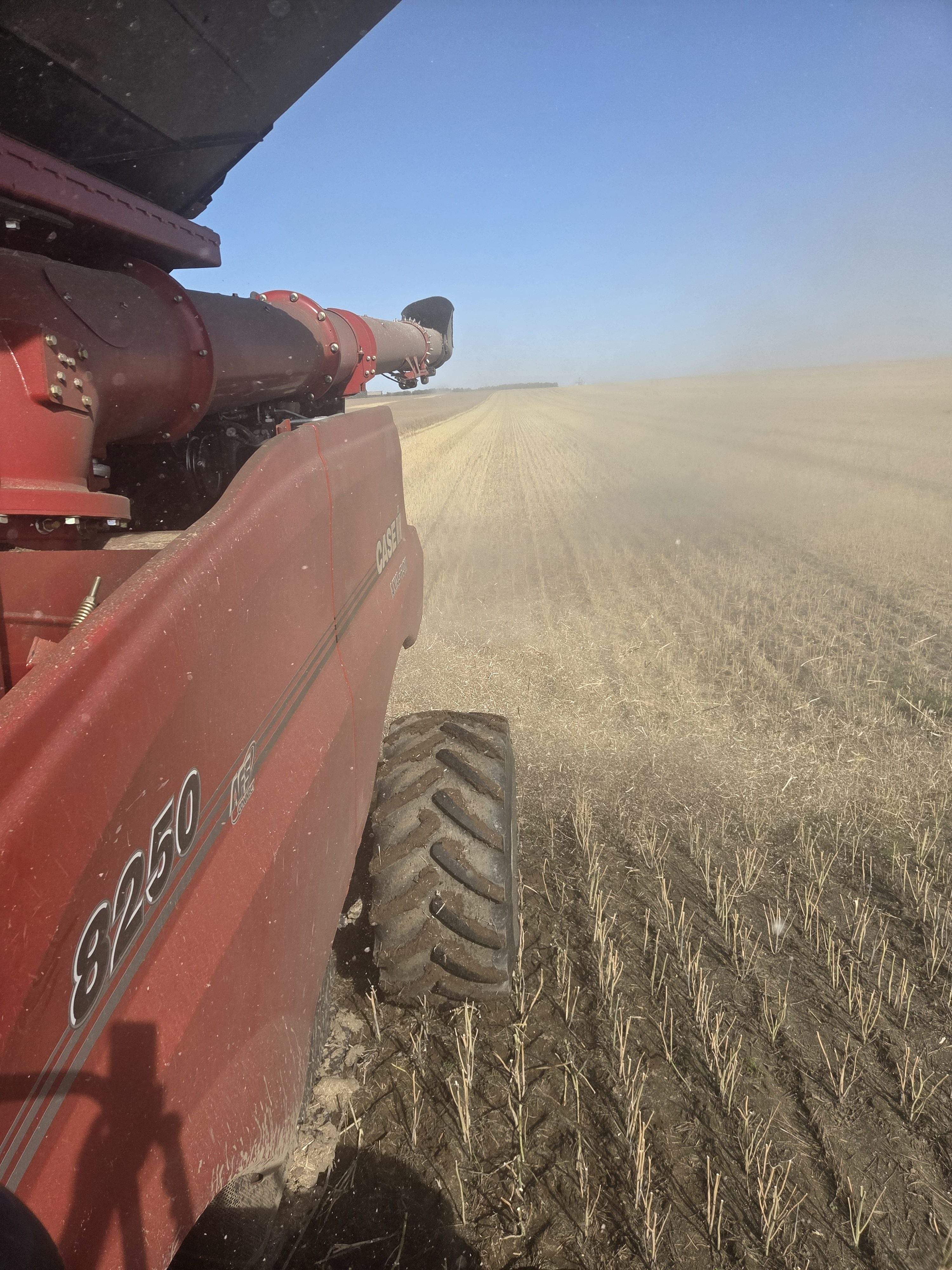
Every autumn, the commentary tracks a predictable loop of hand-wringing. Grain buyers panic. Economists type frantic warnings about margin compression. The standard narrative claims that rising input bills, persistent rail bottlenecks, and equipment delays spell doom for Saskatchewan producers. Headlines scream about harvest bottlenecks, soaring diesel prices, and fertilizer sticker shock as if the prairies are sliding into terminal economic decline.
This consensus is lazy, cowardly, and fundamentally wrong. For an alternative view, see: this related article.
I have spent decades watching operators panic over cyclical operational pain while missing the structural shift happening underneath their feet. Higher harvest costs are not a crisis. They are a brutal, necessary purge of structural inefficiency. For too long, cheap capital and subsidized status quo thinking allowed mediocre operations to limp along, artificially suppressing productivity gains. When costs spike, the weak get squeezed out, and the operators who treat agriculture as an industrial manufacturing business rather than a lifestyle hobby finally win.
Let us dismantle the panic. Further coverage on the subject has been provided by The Motley Fool.
The Myth of the Cheap Harvest
The entire grievance industry surrounding harvest logistics is built on nostalgia for an era that no one should want back. When fuel was dirt cheap, labor was abundant, and machinery could be run into the ground without precise telematics, farms could afford to be sloppy. Every delayed combine or stalled hopper car was absorbed by fat profit margins.
That margin buffer is gone. Good.
When input expenses climb, capital stops hiding. Producers are forced to look at their operations with the cold eye of an auditor. That old John Deere sitting in the back forty needing twenty thousand dollars in hydraulic work? It stops being a sentimental fixture and becomes scrap metal. That casual approach to grain storage timing? Replaced by precision inventory management.
Higher expenses act as a forcing function for modernization. When a farmer tells me that twenty-dollar diesel is breaking their business, my response is simple: your business model was broken long before fuel prices ticked upward. You were running on borrowed time and cheap inputs, mistaking inflation resistance for actual operational excellence.
Logistics Failures Are Just Poor Planning Disguised as Bad Luck
Let us address the perennial complaint about railway delays and elevator tie-ups. Every year, harvest hits peak velocity, the rail networks slow down, and producers run to the media complaining about blocked grain movement.
Stop blaming the railways.
If your cash flow depends on CN and CPKC moving your canola to port precisely within a three-week window during peak global export rushes, you do not have an agricultural business. You have a prayer circle. Professional operators treat transport bottlenecks as a known, fixed variable of doing business in a landlocked province two thousand kilometers from tidewater. They build localized storage, diversify delivery windows, and lock in futures contracts that account for basis widening.
When a novice producer complains about elevator wait times, they are admitting they failed to build adequate on-farm buffer capacity. They are renting space in someone else's system and throwing a tantrum when the lobby gets crowded. The market does not reward entitlement. It rewards operators who internalize risk instead of outsourcing it to local grain buyers and public-relations campaigns.
The Productivity Paradox
The conventional take views cost inflation as a margin destroyer. Look at the numbers from a macro perspective and the reality flips.
High-cost environments drive capital expenditure toward automation and yield optimization. When manual labor becomes prohibitively expensive or scarce during harvest windows, autonomous grain carts, high-capacity drying systems, and advanced telemetry stop being luxury toys for wealthy hobby farms and turn into baseline survival tools.
I have watched mid-sized grain operations in the Saskatchewan grain belt automate their blending and drying operations over the past three cycles simply because hiring seasonal combine operators became too expensive. The result? Their dockage rates plummeted, their protein management improved, and their overall throughput per man-hour doubled. The cost spike forced a technological leap that twenty years of cheap diesel never could have inspired.
Inflation is the enemy of the lazy and the best friend of the relentless.
What the PAA Queries Get Wrong
People typing questions into search engines about Saskatchewan harvest delays are looking for a scapegoat. They want to know who to blame—the carbon tax, the rail monopolies, the equipment dealers, or the weather.
The question itself is flawed. Asking who is to ruin your harvest margins treats farming like a victim sport. The correct question is: how do you structure an asset base that remains profitable even when logistics fail and diesel doubles?
You do it by treating every bushel of wheat or canola as a manufactured component. You track cost of production down to the cent per acre, not by guesswork or rough estimates at the coffee shop, but through rigorous enterprise accounting. If your cost per bushel is thirty percent higher than your regional competitor down the road who is quietly upgrading their machinery while you complain on local radio, the problem is not the macroeconomic climate. The problem is you.
Stop Subsidizing Inefficiency
Governments love stepping in with emergency stabilization payments every time input costs spike or an early frost hits the northern wheat belt. This is economic poison.
Every time a failing operation gets bailed out or subsidized through high-cost cycles, the market delays the necessary consolidation that makes Canadian agriculture a global powerhouse. Scale and sophistication are the only shields against margin compression. When inefficient farms are allowed to fail or get bought out by sophisticated, capitalized operators who know how to manage working capital, the entire sector becomes more resilient against global shocks.
You cannot protect every marginal acre from economic gravity. Trying to do so only drags down the average performance of the entire ecosystem.
The Unspoken Advantage
Saskatchewan has some of the best arable land and highest-protein wheat potential on the planet. That advantage does not give anyone a divine right to profit while operating inefficiently.
The producers who are whining about harvest costs today are the ones who refused to adopt variable-rate fertilization, avoided investing in on-farm aeration and drying infrastructure, and treated risk management as an optional luxury. They wanted the upside of global grain demand without the discipline of industrial enterprise management.
The reckoning is here, and it is brutally fair.
Stop mourning the loss of cheap farming. It never existed anyway; you were just borrowing against tomorrow's margins to pay for today's comfort. Clean the books, sell the obsolete iron, build your own storage, and learn how to manage basis risk like a professional.
Or sell your land to someone who knows how to farm in the twenty-first century.


