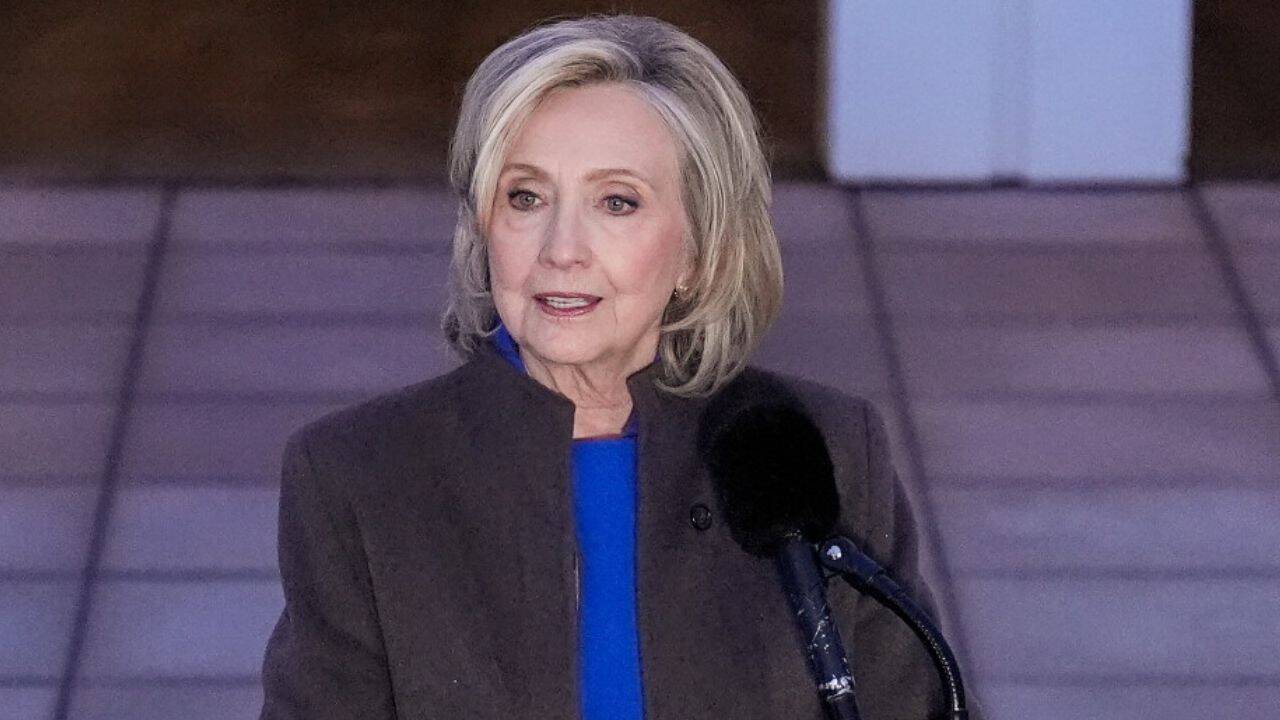
Hillary Clinton recently floated a comfortable diplomatic fantasy. Her pitch goes something like this: Donald Trump can stroll back into the Oval Office, tap India and China on the shoulder, and use their economic weight to corral Tehran into a grand bargain. The premise assumes Beijing and New Delhi act as cooperative branch managers of Washington’s foreign policy franchise, eager to clean up a Middle Eastern mess just because a Western statesman asked nicely.
It is a remarkably cozy way to view global power. It is also entirely detached from reality.
I have spent years watching diplomats nod politely at international summits while their home ministries actively sabotage the very deals being negotiated. The lazy consensus among establishment foreign policy circles is that major energy importers like China and India possess an inherent veto over Iranian belligerence because they buy the oil. That logic confuses commercial dependency with political control.
Beijing does not want peace in the Persian Gulf. Beijing wants a permanent, discounted gas station that is too isolated to invoice in dollars.
The Fatal Flaw in the Asian Brokerage Theory
Let us dismantle the core assumption of the Clinton thesis. The argument suggests that because China and India rely on West Asian hydrocarbons, they hold massive leverage over the clerical regime in Tehran.
This gets the power dynamic precisely backward.
When a regime faces maximum pressure sanctions, its survival depends entirely on finding non-Western buyers. China becomes the monopsony buyer of last resort. Under those conditions, Beijing does not dictate terms to Tehran; Tehran dictates terms to Beijing, knowing full well that China cannot afford a sudden supply shock or a complete collapse of the regime into a Western-aligned orbit.
India plays a different game entirely, caught in a perpetual strategic triangle. New Delhi needs Iranian transit corridors—specifically the Chabahar port—to bypass Pakistan and reach Central Asia and Afghanistan. But India also needs advanced defense hardware and economic integration with the United States and the Gulf monarchies. Dragging New Delhi into mediating a direct confrontation between Washington and Tehran turns Indian foreign policy into an expensive hostage situation.
Washington cannot outsource its adversarial management to capitals whose primary geopolitical objective is multi-alignment. Asking China to help America stabilize the Middle East is like asking an arsonist to manage the municipal water supply. They profit directly from the flames.
Decoding the Realpolitik of Asian Energy Ties
To understand why this diplomatic shortcut fails, we must look at how crude actually moves when sanctions bite.
- The Shadow Fleet Reality: Iranian oil rarely moves on flagged tankers subject to Western insurance rules. It flows through a dark network of maritime deception, ship-to-ship transfers off the coast of Malaysia, and paperwork laundering that turns Persian Gulf crude into Malaysian blend.
- The Currency Weaponization Trap: China settles these energy purchases in yuan. This deepens the internationalization of Beijing's currency while directly insulating Tehran from dollar-denominated financial plumbing. Every barrel bought under these terms weakens the long-term efficacy of American economic statecraft.
- The Strategic Diversion: Beijing values the Iranian standoff because it consumes billions of dollars of American military bandwidth and diplomatic capital in the Middle East, keeping Washington perpetually distracted from the Indo-Pacific theater.
If you are running foreign policy in Beijing, the current crisis is not a problem to be solved. It is a strategic containment buffer. Why would they help Trump resolve it?
The Dangerous Allure of Cheap Diplomatic Shortcuts
We love simple narratives because complexity requires uncomfortable choices. The idea that a charismatic American president can subcontract containment to rising Asian giants saves Washington from having to do the hard, gritty work of long-term deterrence or domestic energy independence.
I have seen corporate boards blow millions pursuing easy fixes provided by consultants who did not understand the underlying balance sheet. Governments do the exact same thing on a trillion-dollar scale. They reach for proxy solutions because the alternative—accepting that some geopolitical friction is permanent and unresolvable through standard diplomatic toolkits—is politically exhausting.
The truth is stark. India will buy whatever oil is cheapest. China will buy whatever influence is cheapest. Neither of them is going to spend political capital browbeating the Islamic Republic into a compliance framework that aligns with American security goals.
Stop waiting for foreign capitals to do Washington's laundry. The next time someone tells you a third-party superpower is going to step in and mediate a clean exit from the Iran crisis, check their motives. They are either selling a book or trying to distract you from the fact that there is no exit left.