You're sitting on the tarmac at Charles de Gaulle, seatbelt buckled, waiting for pushback. Then the cabin lights flicker on, the pilot’s voice cracks over the intercom with an awkward pause, and suddenly you're deplaning onto a windswept runway surrounded by flashing blue lights.
Nobody is hurt. There is no device. Yet your vacation just evaporated because an anonymous troll behind a VPN sent a three-line email to an airport switchboard.
Across Europe, hoax bomb threats targeting commercial flights have turned from rare anomalies into a relentless operational headache. From Paris and Brussels to Dublin, Prague, and Berlin, wave after wave of false alarms has forced emergency landings, terminal evacuations, and hours-long delays. Airlines are bleeding cash. Police bomb squads are stretched thin. And travelers? They're stuck sleeping on terminal floors with zero clarity on who pays for their missed connections.
If you're flying across Europe anytime soon, you need to understand why this is happening, how aviation security actually responds behind the scenes, and what rights you actually have when a fake threat ruins your itinerary.
How a Single Email Grounds an Entire Terminal
Most passengers assume a bomb threat involves some dramatic, movie-style phone call traced in real time. Reality is way more mundane—and way easier to exploit.
Modern aviation hoaxes almost always arrive via encrypted email services, disposable web forms, or spoofed internet phone numbers. A single actor sitting in a bedroom hundreds of miles away can blast identical threats to ten regional airports in under sixty seconds.
Aviation security protocols don't allow for guesswork. Under international civil aviation standards set by the International Civil Aviation Organization (ICAO) and enforced locally by bodies like the European Union Aviation Safety Agency (EASA), every threat must be treated as credible until proven otherwise. Authorities run a rapid threat assessment, categorizing alerts into specific, non-specific, or hoax tiers based on intelligence markers. Even when an email looks like obvious spam, local police and airport security rarely take the gamble of ignoring it when hundreds of lives sit inside an aluminum tube at 35,000 feet.
The chain reaction is brutal:
- Airspace diversions: If a plane is already airborne, air traffic control immediately vectors it to the nearest suitable runway, often escorted by military fighter jets—a routine sight over France, Belgium, and Germany during recent spikes.
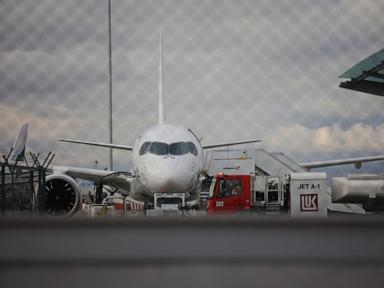
- Remote stand isolation: Once on the ground, the aircraft isn't allowed near the main terminal. Pilots taxi to a remote isolation bay far from other gates.
- Emergency evacuation: Depending on the threat level, passengers either exit via airstairs onto buses or go down the inflatable slides, leaving every single carry-on bag behind.
- Full sweep: Bomb-sniffing dogs and explosive ordnance disposal teams inspect every inch of the fuselage, cargo hold, and luggage. That process alone takes three to five hours minimum.
One fake message doesn't just delay one plane. Because European short-haul aircraft fly four to six legs a day, grounding a single Airbus A320 in Lyon at 10 AM strands passengers in Madrid, London, and Frankfurt by dinner time.
Why Europe Is Seeing So Many Aviation Hoaxes
This isn't random bad luck. Security analysts and European law enforcement agencies point to three overlapping drivers behind the surge.
First, geopolitical tension has turned civil aviation into an easy psychological target. Following Russia’s invasion of Ukraine and escalating conflicts in the Middle East, Europe’s security posture shifted dramatically. Hacktivist groups and state-aligned agitators discovered they don't need physical access to disrupt Western infrastructure. Causing panic at major transport hubs achieves the exact same goal—wasting state resources and eroding public confidence—at virtually zero cost.
Second, copycat behavior spreads fast online. In October 2023, France experienced more than a hundred bomb alerts across regional airports in a single week, forcing evacuations at Lille, Lyon, Nantes, Nice, Toulouse, and Beauvais. French Transport Minister Clément Beaune publicly called out the perpetrators as "little jokers" and "idiots," noting that most were young individuals seeking attention or trying to disrupt schedules after seeing news coverage of earlier evacuations.
Third, the barrier to entry is basically nonexistent. Free encrypted email providers, Tor routing, and cheap burner VoIP apps mask digital footprints effectively enough that local police departments can't trace the culprit in five minutes. By the time Europol or national cybercrime units subpoena server logs across international jurisdictions, the travel chaos has already happened.
What Actually Happens Behind the Scenes When a Threat Hits
Having worked closely with aviation operations teams during major European disruptions, I can tell you the biggest misconception passengers have is thinking airlines control the timeline. They don't. The moment a security alert is declared, the airline loses authority over its own aircraft.
Command transfers immediately to national police, airport security directors, and civil aviation authorities. Even if the captain believes the threat is bogus, they cannot push back from the gate or open the doors without explicit clearance from ground security commanders.
Inside the terminal, the confusion you experience at the gate usually stems from a strict information firewall. Security officials deliberately withhold details from gate agents so they don't tip off potential accomplices waiting in the concourse or trigger a stampede toward narrow escalators. That’s why staff keep repeating vague lines about "operational reasons" or "security checks" while armored police walk past the windows.
It feels frustrating. Honestly, it feels insulting when you're standing in line with a crying toddler and no water. Yet from a crowd-control standpoint, keeping forty thousand people calm inside a glass terminal beats having them trample each other trying to reach the exits.
Your Rights Under EU261 When a Hoax Cancels Your Flight
Here is where travelers get burned. Most Europeans know about EU Regulation 261/2004 (and its post-Brexit UK equivalent, UK261), which forces airlines to pay up to €600 in cash compensation for severe delays and cancellations.
A hoax bomb threat triggers a massive legal loophole.
Under EU261, airlines do not have to pay financial compensation if a delay or cancellation is caused by "extraordinary circumstances" outside their control. Security alerts, airspace closures, and police-ordered evacuations fall squarely into that bucket. If your flight from Dublin to Amsterdam gets grounded for six hours because someone called in a fake threat, Ryanair or KLM owes you exactly €0 in statutory delay compensation.
However—and airlines conveniently forget to emphasize this—your right to care still applies.
Even during extraordinary circumstances, European law legally requires the operating airline to provide:
- Meals and refreshments proportional to your waiting time (usually once delays pass two hours for short-haul flights).
- Hotel accommodation if the security sweep forces an overnight delay, plus transport between the airport and the hotel.
- Two free phone calls or emails so you can update family or rebook ground arrangements.
- Re-routing or a full refund if your flight is canceled outright or delayed past five hours and you choose not to travel.
Don't wait around for an airline representative to hand out meal vouchers when three flights dump six hundred passengers into the same arrivals hall. Buy reasonable food and water yourself, keep itemized paper receipts (not just credit card slips), and submit them directly through the airline's expense portal afterward. Skip the airport bar—airlines routinely reject claims for alcohol, luxury meals, or five-star hotels when cheaper options exist nearby.
Do Perpetrators Ever Get Caught?
People love assuming these trolls get away clean because they use VPNs. That's only half true.
When kids send clumsy threats from home Wi-Fi or poorly configured burner accounts, police catch them surprisingly fast. During the 2023 wave in France, authorities arrested dozens of suspects within days—many of them teenagers or young adults who underestimated how aggressively counter-terrorism prosecutors treat aviation hoaxes.
Under French law, calling in a fake bomb threat carries up to two years in prison and a €30,000 fine, rising to three years and €45,000 if it involves hate speech or targeted harassment. In the UK, communicating false information about a bomb under Section 51 of the Criminal Law Act 1977 carries up to seven years behind bars. Courts across Europe have also started ordering convicted hoaxers to reimburse airlines and airport authorities for fuel dumped during emergency diversions, overtime for bomb squads, and passenger hotel bills—sums that easily cross €100,000 for a single diverted widebody jet.
The harder cases involve coordinated overseas networks operating out of jurisdictions that refuse intelligence cooperation with European police. Those investigations drag on for months, and prosecutors rarely recover damages from anonymous accounts hosted outside European reach.
How to Protect Your Trip Before You Fly
You can't stop someone from emailing a fake threat to Heathrow or Schiphol. You can, however, stop a single airport lockdown from wrecking your entire trip.
- Never book tight self-transfers on separate tickets. If you buy a cheap Ryanair leg to Milan and a separate Lufthansa ticket onward to Tokyo, a four-hour security evacuation in Milan means you lose your long-haul ticket with zero protection. Book connecting flights on a single reservation so the airline has to rebook you for free.
- Keep essential meds, chargers, and a spare shirt in a small under-seat bag. When an aircraft evacuates onto a remote tarmac during a security alert, checked luggage stays locked in the hold until bomb dogs clear every suitcase. Sometimes you won't see your checked bag for 48 hours.
- Check travel insurance fine print for "civil unrest" and "security delays." Standard basic policies cover missed departures due to transport strikes, yet some cheap tiers exclude security lockdowns unless you buy a travel disruption add-on.
- Download your airline’s app before leaving home. When an evacuation empties a terminal, physical customer service desks instantly clog with hundreds of panicking flyers. Rebooking through the app's automated disruption tool gets you onto the next available seat while everyone else is still standing in line.
Pack your essentials in your personal item, keep your receipts if a lockdown strands you overnight, and book single-ticket connections whenever you're flying through major European hubs.