Rain hits the glass of Central at six in the morning with a steady, rhythmic percussion that sounds remarkably like a metronome. Below the mist, ferries slip between Kowloon and Hong Kong Island, slicing dark water while cranes along the harbor rest their steel necks. From a distance, the city looks like a machine that never sleeps, a gleaming monument to commerce built on granite slopes and reclaimed sea. Yet anyone who has walked through the humid canyons of Des Voeux Road during a global downturn knows a quieter truth. The anxiety here does not arrive with sirens. It arrives in pauses. A pause in an export order from Europe. A pause in a venture capital term sheet. A pause in a young graduate's decision to sign a two-year lease in Wan Chai.
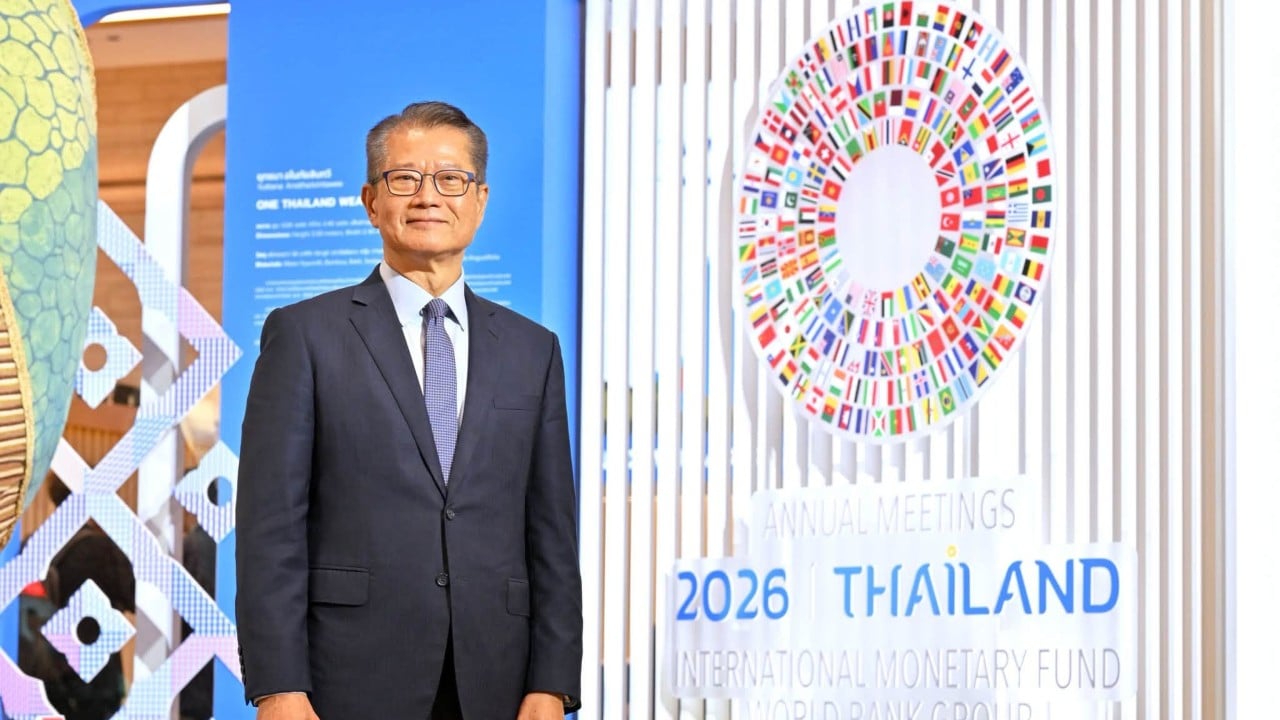
When Financial Secretary Paul Chan expresses optimism about Hong Kong's economic growth despite a broader global slowdown, headlines tend to treat the remark like a weather forecast spoken through a megaphone. Numbers get tossed around. Forecasts get trimmed or nudged upward. Readers skim past the quotes because official optimism often feels like armor worn by people who do not have to negotiate rent or price a bowl of wonton noodles.
Optimism.
It sounds almost fragile in a city built on speed and volatility. To understand why someone holding the treasury keys might look at a cooling world economy and still see room to expand, we have to look past press releases and into the nerve endings of how this place actually breathes. I have spent years watching markets wobble from glass towers and street-level cha chaan tengs alike, feeling the collective holding of breath when interest rates climb or shipping lanes choke. Sometimes the numbers look grim on a spreadsheet while the pulse in the streets tells a more complicated story.
To make sense of these forces without getting lost in balance-sheet fog, I am going to use a hypothetical scenario to trace how a single shift in global demand ripples through daily life. Imagine a mid-sized logistics and supply-chain coordinator—let's call her Mei-Ling—working out of a cramped office in Kwun Tong. Her company helps move specialty electronics and consumer goods from regional factories through Hong Kong to buyers across Asia, the Middle East, and beyond. When global growth slows, her inbox changes tone before any official statistic reflects it. Buyers ask for smaller batches. Payment terms stretch from thirty days to sixty. A shipment bound for a European retailer gets delayed because consumer spending there has softened.
Mei-Ling knows the cold math of her margins. If freight volumes dip by twelve percent and warehouse costs stay stubborn, her firm cannot simply sit still and wait for global conditions to magically brighten. She has to hunt for new trade corridors, renegotiate supplier contracts, and figure out which client relationships are worth fighting for. Her optimism, if she allows herself any, is not blind cheerleading. It is gritty, tactical stubbornness—the belief that a well-connected hub can bend without snapping when distant markets catch a cold.
That is the crucial distinction missing from most dry economic coverage. Official optimism about economic growth is rarely a promise that nothing will hurt. More often, it is a reading of structural resilience, capital flows, policy buffers, and regional diversification against a backdrop where other engines are sputtering. When a finance chief points to steady fundamentals, visitor recovery, financial market activity, or new growth drivers despite sluggish global demand, the real question for everyday people is not whether the speech sounds upbeat. The real question is whether those tailwinds reach the people paying the bills.
Where Optimism Meets the Street
Walk out of an air-conditioned MTR station in Causeway Bay on a sticky afternoon and you can feel the tension between macro forecasts and micro realities. Shopfronts turn over with startling speed. A boutique that promised artisanal ceramics six months ago might already be papered over with a leasing notice, while two doors down, a tea shop with a line out the door hums with energy. Hong Kong has always been a place of creative destruction, where survival depends on reading currents faster than the next person.
Here is a metaphor to keep in mind as we weigh global headwinds against local momentum: think of Hong Kong's economy not as a single heavy ocean liner, but as a fleet of nimble hydrofoils riding across choppy swells. When the swell is big enough, every boat pitches. Yet a hydrofoil designed to skim over turbulence handles rough water differently than a vessel that plows straight through every wave. Hong Kong's open economy is deeply exposed to external shocks—trade friction, high borrowing costs, shifting supply chains—because it does not have a vast domestic agricultural or manufacturing hinterland to hide behind. Openness is its superpower and its vulnerability all at once.
Let's be honest about how confusing and unsettling this can feel. Even seasoned analysts sometimes disagree on which signals matter most right now. One report highlights resilient financial services, capital market depth, or growing ties with regional partners and emerging markets. Another points to cautious households, shifting retail habits, and intense competition from neighboring hubs. When experts pull in different directions, an ordinary worker or small business owner is left wondering: Should I expand, hold cash, switch industries, or stay put?
Admitting that uncertainty is part of earning trust. A global slowdown is not an abstract textbook chapter; it shows up in whether a company freezes hiring, whether a family delays buying a flat, or whether a local cafe owner decides to test a new neighborhood. When Paul Chan or any policymaker strikes a constructive note on economic growth, people naturally test that claim against what they see with their own eyes. If the street feels quiet while the forecast sounds sunny, skepticism isn't cynicism. It's self-defense.
The Invisible Stakes Behind Every Forecast
Why do government projections and economic outlooks carry so much weight in a place like Hong Kong? Because expectations shape behavior. Confidence is contagious, and so is fear. If businesses believe growth can hold up despite a global slowdown, they are more likely to invest in equipment, hire staff, and sign multi-year leases. If everyone expects a deep freeze, everyone pulls back at once, turning a mild slowdown into a self-inflicted stall.
Consider what happens next when a city tries to pivot during softer global conditions:
- Capital flows look for stability and yield. Even when global growth cools, investors still need places to deploy money, manage risk, and access regional opportunities. A deep financial hub with established legal and regulatory architecture remains a magnet for wealth management, cross-border transactions, and corporate treasuries.
- Trade routes bend rather than break. When traditional Western demand cools or faces friction, supply chains look for alternative markets across Asia and the Global South. Hong Kong's historic role as a super-connector lives or dies by how quickly its businesses adapt to those shifting currents.
- Domestic confidence rests on jobs and wages. Macroeconomic expansion means little to a household if real income feels squeezed or entry-level roles feel scarce. Turning headline growth into broad-based livelihood gains is always the hardest part of any recovery.
Returning to our hypothetical logistics coordinator, Mei-Ling, helps show how these invisible stakes play out on a Tuesday afternoon. Suppose a major client in North America cuts back orders due to sluggish retail sales at home. Around the same time, a manufacturer in mainland China is looking for efficient ways to route goods to Southeast Asia or the Middle East, and an international firm wants regional financial and supply-chain oversight in one place. Mei-Ling spends her evenings mapping shipping schedules, comparing air versus sea rates, and talking with partners who are also looking for new footing.
She isn't waiting for a miracle. She is stitching together opportunity out of friction. In economies like Hong Kong's, that kind of hustle happens thousands of times a day—quietly, unglamorously, far from television cameras. When policymakers express optimism about economic growth amid a global slowdown, what they are often betting on—or trying to reinforce—is precisely this capacity to keep trading, adapting, and attracting activity when other parts of the world hit the brakes.
History Does Not Repeat, But It Rhymes Loudly
Anyone who has lived through Hong Kong's economic cycles knows that this city has a long memory for storms. Over the decades, it has weathered Asian financial turmoil, pandemics, property swings, interest-rate surges, and sudden shifts in global trade. Each time, pundits have declared the end of an era, and each time, the city has reconfigured itself in ways nobody predicted from a spreadsheet alone.
Yet past survival is never a free pass for the future. The world economy in the mid-2020s is shaped by forces that test every trading hub in fresh ways—fragmented supply chains, technological competition, higher-for-longer financial adjustments, and changing consumer habits. A global slowdown today doesn't look identical to past downturns. Competition among regional financial and commercial centers is sharper than ever, and businesses scrutinize costs with ruthless precision.
That is why healthy optimism always comes paired with realism. Saying the economy can grow despite a global slowdown is one thing; making sure growth is broad, innovative, and resilient enough to withstand surprises is another. Small and medium-sized enterprises feel pressure from financing costs and shifting foot traffic. Young professionals weigh career paths across borders. Property owners and renters alike feel the push and pull of interest rates and demand.
Still, there is something striking about a city that refuses to surrender its forward lean. Walk along the waterfront at dusk as neon and LEDs flicker to life across the harbor, and you see an unmistakable instinct at work. People here are used to reading wind shifts. They know how to trim sails, adjust course, and keep moving while others wait for calm weather that may take months—or years—to arrive.
The mist settles back over Victoria Peak as night deepens, softening the sharp edges of skyscrapers into silhouettes. Somewhere in a high-rise, analysts are updating models; somewhere in a ground-floor shop, an owner is tallying receipts and planning tomorrow's menu. Economic growth is never just a line on a chart. It is a shared wager on human energy, adaptability, and nerve—and in a slow world, the cities that keep moving are the ones everyone watches.