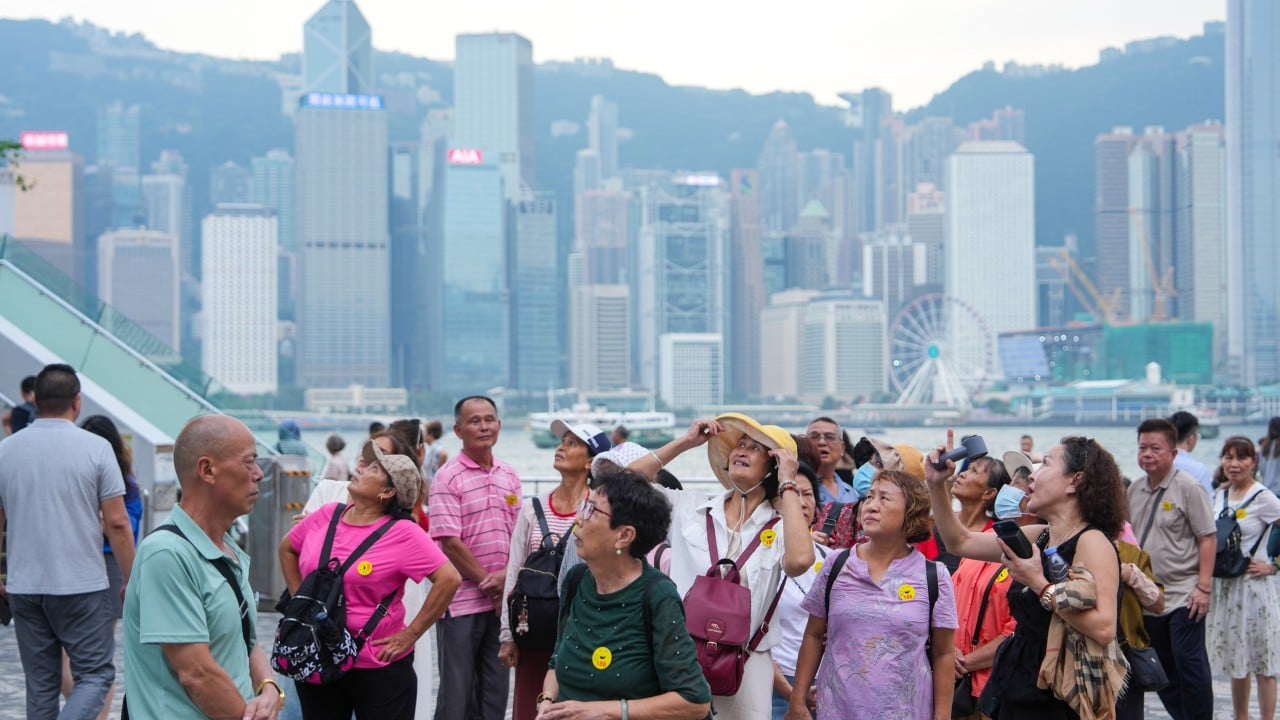
Walk down the Tsim Sha Tsui promenade on a late August evening, and you will notice something that felt entirely impossible a few years ago. The air hums with a dense, multilingual crowd of families, couples, and solo travelers clicking photos of the neon-drenched Victoria Harbour. It is loud. It is crowded. And frankly, it is the undeniable proof that Hong Kong has completely shaken off its prolonged tourism slump.
Provisional figures released by the Hong Kong Tourism Board confirm that the city recorded 5.46 million visitor arrivals in August, marking a 6 percent year-on-year increase. More importantly, this number represents the highest single monthly total since the pandemic. For the first eight months of the year, total arrivals climbed to 36.67 million, tracking roughly 11 percent ahead of the previous year. If you liked this article, you should check out: this related article.
If you still think Hong Kong is struggling to attract global travelers, you are looking at outdated data. But raw volume only tells half the story. The real shift happening right now is about why people are boarding flights to the city and how the local tourism sector is fundamentally changing its playbook.
The Numbers Behind the August Surge
Breaking down the August data gives you a much clearer picture of who is actually filling up the city's hotels. Mainland China remains the dominant source market by a wide margin, accounting for 4.56 million of those August arrivals—an 8 percent jump compared to the same month last year. For another perspective on this development, check out the recent coverage from AFAR.
Yet, the more fascinating trend is happening outside familiar regional corridors. Long-haul markets staged a massive comeback, bringing in nearly 289,000 visitors in August alone, which translates to an impressive 18 percent year-on-year gain. Travelers from emerging international markets also climbed by 10 percent.
At the same time, short-haul markets across parts of Asia experienced a slight dip, largely constrained by localized flight capacity issues, fuel surcharges, and aggressive competition from neighboring regional hotspots. But the sheer strength of mainland and long-haul segments easily offset those regional shortfalls, pushing the monthly metrics into record-breaking territory.
Why the Old Shopping Trip Model is Dead
For decades, the standard pitch for visiting Hong Kong was simple: cheap electronics, luxury shopping malls, and endless dim sum. That formula stopped working.
Travel Industry Council representatives have pointed out repeatedly that today's travelers want actual engagement rather than mindless retail marathons. Spending now follows genuine experiences, major cultural exhibitions, and high-profile entertainment events.
The city's tourism planners clearly got the memo. August worked because the calendar was aggressively stacked with events that pull specific audiences who stay longer, spend more, and explore deeper into neighborhoods beyond the traditional tourist traps. The West Kowloon Cultural District, anchored by world-class institutions like M+ and the Hong Kong Palace Museum, has matured into a massive drawcard that pulls arts enthusiasts who might never have booked a ticket ten years ago.
Furthermore, the dining scene has evolved dramatically. While classic cha chaan tengs and local dai pai dongs still rule the culinary soul of the city, independent cocktail bars and boundary-pushing fine dining concepts have turned Hong Kong into one of the most exciting epicurean capitals on the planet.
What to Expect If You Are Planning a Trip Right Now
If you are packing your bags for an upcoming trip, keep a few operational realities in mind.
First, flight capacity to the region is recovering, but certain routes remain tighter than they used to be. Booking early isn't just a polite suggestion anymore; it is basic arithmetic if you want to avoid inflated last-minute airfares.
Second, hotel occupancy rates are hovering around a healthy 87 percent, meaning prime accommodations in central locations like Central, Sheung Wan, or Tsim Sha Tsui book out fast when major conventions or mega-events are in town.
Third, don't just stick to the harborfront. Take the Star Ferry across to Wan Chai, wander through the historic alleyways of Sheung Wan, or take a quick ferry trip out to the outlying islands like Cheung Chau to see how the local community lives outside the concrete canyons.
Hong Kong is moving at its own frantic, neon-lit pace once again. The post-pandemic chapter is officially over, and the city has firmly reclaimed its rhythm.