Salt on the lips tastes different when it carries the copper tang of fear.
Stand at the edge of the docks in Mykolaiv just before dawn. The water does not lap gently against the hull; it slaps, cold and impatient, mirroring a sky bruised the color of a fresh wound. Down here, commerce and catastrophe share the same breath. Grain elevators tower like concrete monoliths against the gray, holding the literal bread of distant nations inside their bellies. Or at least, they used to.
Before the alarms began to shriek.
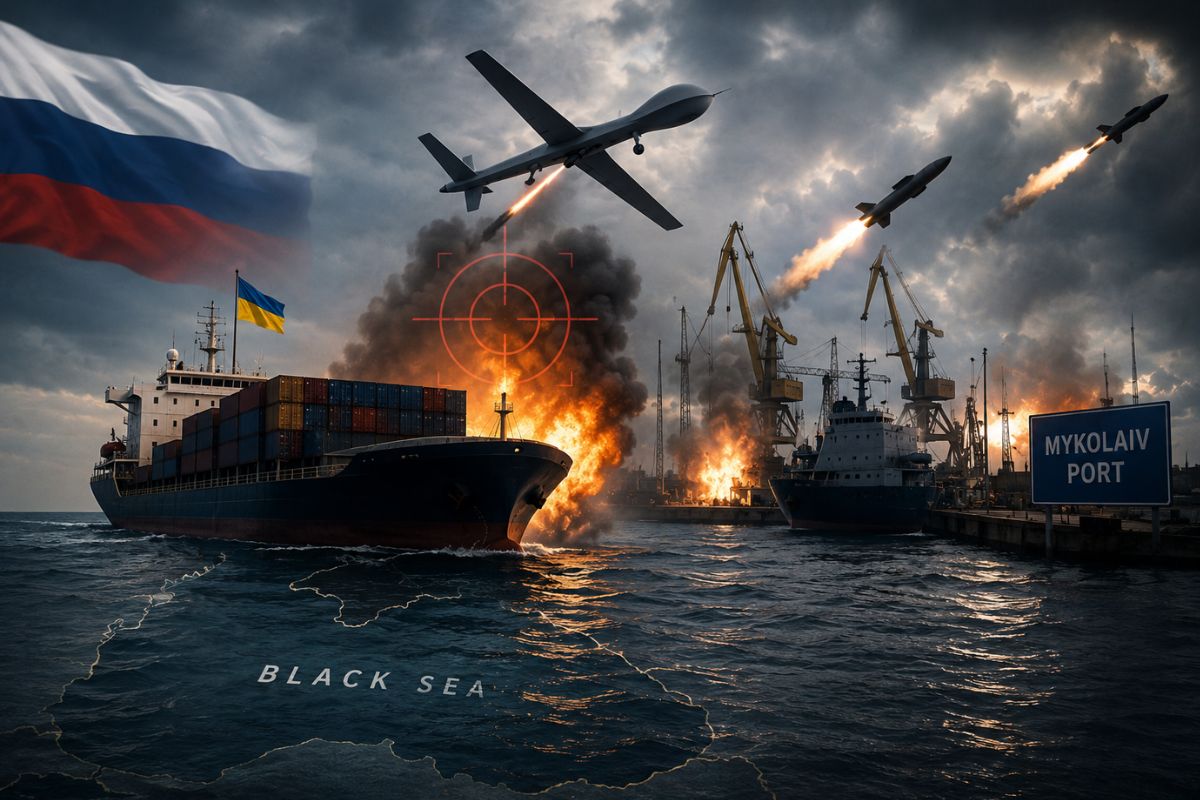
Russia did not just strike targets on a map. It struck the pulse of a coastline that feeds millions. Two Ukrainian vessels sat quietly in the Black Sea, cradling cargo and crew, carrying the mundane rhythm of maritime trade that keeps grocery shelves stocked thousands of miles away. Then came the sudden flash. Then the roar that tore through the salt-heavy air. Then the thick, greasy black smoke that choked out the morning light, painting the Mykolaiv port in the darkest shades of ruin.
Consider the mechanics of isolation.
War in the modern age is rarely just fought in muddy trenches with rifles raised. It happens quietly on radar screens in dim rooms, and violently on the open water where steel meets fire. When missiles tear into maritime vessels, they are not merely destroying hulls and engines. They are severing veins. Every ship crippled in the Black Sea is a chokehold on global food security. Every dock blown to jagged shards of concrete in Mykolaiv is a silent message written in shrapnel.
Dusk falls differently over a targeted harbor.
I remember talking to a dockworker—let us call him Oleh, though his calloused hands and tired eyes belong to a thousand men who refuse to leave the water behind. Oleh watched the cranes freeze mid-lift months ago, their long steel necks drooping like wounded birds. He told me something that sticks in the throat long after the conversation ends.
"People think a port is about ships," Oleh had said, wiping grease from his forehead with the back of a worn sleeve. "It is not. A port is about waiting. Waiting for cargo. Waiting for pay. Waiting for tomorrow to arrive without a siren waking your children."
Today, the waiting in Mykolaiv has grown heavier.
The strikes on the port infrastructure ripple outward in widening circles of economic shock. Grain prices spike in supermarkets half a world away. Ships reroute, burning extra fuel, losing precious days, playing a high-stakes game of naval roulette with waters that have turned into minefields of hostility. The Black Sea, once a bustling aquatic highway of grain, oil, and shared horizons, has transformed into a theatre of invisible peril.
Look closer at the statistics that get buried beneath dry headlines. They are not numbers. They are heartbeats. Dozens of vessels trapped, millions of tons of agricultural exports delayed or destroyed, and entire coastal communities forced to live with the constant, grinding anxiety of the next incoming projectile. The strategy is clear, even if the justifications offered by aggressors are hollow. Starve the economy. Break the spirit. Make the sea itself too terrifying to cross.
Yet, defiance wears strange guises here.
It looks like port engineers working through the night under flickering emergency lights to patch a ruptured fuel line. It looks like sailors checking their compasses with steady hands, knowing the risks, choosing to sail anyway because stopping means surrendering. The human element refuses to be quantified by tonnage or missile payloads.
The horizon clears slowly, stubbornly, refusing to stay swallowed by soot.
As the wind shifts, blowing the smoke away from the Mykolaiv docks and out toward the open expanse of the Black Sea, the skeleton of a charred pier stands exposed against the pale water. The silence that follows an explosion is never peaceful. It is loaded with the weight of what was lost, and the stubborn, unyielding breath of those who remain to rebuild the broken pieces of the shore.