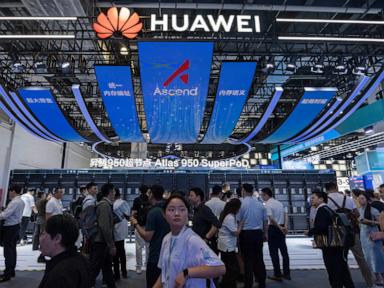
Everyone said US export curbs would permanently lock Chinese tech out of the artificial intelligence race. They were wrong. Huawei just dropped a massive engineering pivot, launching a sprawling ecosystem of custom chips and high-performance clusters that bypass traditional manufacturing bottlenecks. While Wall Street obsessed over single-chip performance benchmarks, Huawei solved a much bigger engineering puzzle. They built a complete, vertically integrated infrastructure stack.
The Shift From Raw Specs to System Scale
If you look only at individual processor speeds, you miss the entire strategy. Nvidia's dominance hasn't survived purely on raw silicon muscle; it thrives because of CUDA and tightly coupled superclusters. Huawei studied that exact playbook. Instead of trying to match every single-thread metric of Western hardware under tight manufacturing limits, Huawei engineered a massive multi-die design philosophy.
By deploying proprietary UnifiedBus technology, the company connects thousands of smaller processors into unified supernodes and SuperPods. These sprawling clusters can scale up to one million interconnected processors. You don't need a single monolithic chip when your networking architecture lets a hundred thousand units think as one.
Solving the Software Lock-In
Hardware is only half the battle. For years, software developers avoided non-Nvidia hardware because rewriting machine learning code for custom silicon is an absolute nightmare. Huawei tackled this head-on by building out its CANN software ecosystem and aligning tightly with domestic open-source frameworks like DeepSeek.
When massive domestic AI operations deploy hundreds of thousands of Ascend processors for large-scale training and inference, the developer ecosystem shifts overnight. Captive domestic demand provides the exact financial oxygen needed to fund iterative R&D at scale, turning initial software friction into a streamlined alternative.
What This Means for Global Tech Markets
The global semiconductor rivalry has officially graduated from a simple component race into a full-stack geopolitical tug-of-war. Huawei isn't just supplying local data centers; it's actively exporting its hardware-software stack to international partners across Asia and the Middle East.
Decoupling is proving far more complicated than policymakers anticipated. When restricted markets are forced to innovate around bottlenecks, they don't slow down—they build parallel ecosystems. Nvidia remains a titan, but the days of uncontested global monopoly are officially over. The future belongs to whoever controls the entire architecture, from the silicon die up to the cluster network.