The air in eastern Congo tastes of iron and damp earth. If you have ever stood in the market square of Beni or watched the mist roll off the Virunga mountains, you know the weight of the silence that settles when a community holds its breath. Disease does not arrive with a fanfare. It slips in through the floorboards. A sudden spike in fever. A neighbor who stops walking to the fields. Then, the heavy, devastating clamp of isolation.
We talk about outbreaks in numbers. We track the curves, the infection rates, the geographic spread mapped out in red ink on sterile briefing slides. But numbers do not capture the sound of a marketplace emptying out by noon. They do not show you what happens to a mother who must choose between walking five miles to find dwindling food supplies or staying inside to protect her family from a silent, invisible contagion. For a different perspective, read: this related article.
When Ebola strikes eastern Congo, it does not act alone. It brings a shadow. That shadow is hunger.
The Anatomy of an Invisible Chain
Consider what happens next when a single district goes under quarantine. Further insight regarding this has been shared by Medical News Today.
The mechanics of survival in this region are fragile, built on daily labor and local trade. A farmer tills a small plot of cassava or beans. He takes his harvest to the regional depot. Someone else buys it, transports it on the back of a battered truck, and sells it in a bustling street market.
Then, the virus is detected.
Checkpoints go up. Roads close. Fear paralyzes the trade routes. The farmer cannot reach his field because movement restrictions trap him at home. Even if he could harvest, the trucks have stopped running. The traders have fled. The market stalls sit empty, their wooden roofs baking under the equatorial sun.
This is the hidden crisis warned of by leaders at the United Nations World Food Programme. The disease attacks the body, but the response—necessary as it is to halt transmission—cuts off the lifeblood of the local economy. Food insecurity surges not because the earth has suddenly stopped producing, but because the human pathways connecting the food to the mouth have been snapped.
When Safety Becomes a Sentence
Fear is a powerful architect. It builds walls faster than any government can erect hospitals.
Imagine a hypothetical merchant named Bahati, whose small stall has fed his extended family for a decade. When the first confirmed cases of Ebola appear three villages away, Bahati’s customers vanish. People stop gathering. Cash stops changing hands. Within a week, the savings he used to buy bulk flour are gone. Within two weeks, his children are eating one small meal a day—mostly boiled roots with little nutritional value.
Bahati is not infected with the virus. He is healthy. Yet he is starving.
This is the paradox of epidemic control in zones already fractured by conflict and economic instability. To save a village from a ninety percent mortality rate, quarantine is deployed. Yet that very quarantine isolates vulnerable families from humanitarian aid corridors, agricultural inputs, and emergency food distributions.
The math is brutal. You lock down an area to stop a pathogen. In doing so, you inadvertently lock out sustenance.
The Weight of Malnutrition
We often misunderstand how malnutrition interacts with infectious disease. They are not separate tragedies operating in parallel lanes. They are collaborators.
A body hollowed out by chronic hunger loses its armor. When the immune system is starved of basic proteins and micronutrients, it cannot fight off opportunistic infections. Children suffering from acute malnutrition are far more susceptible to complications, rendering them vulnerable not just to the primary epidemic, but to a cascade of secondary health failures.
Furthermore, the mental toll is staggering. To live under the constant, humming threat of a hemorrhagic fever while your stomach aches from emptiness alters a community's psychological landscape. Trust frays. Rumors spread through alleyways like brushfire. People begin to hide their sick relatives because they fear the treatment centers mean permanent separation, or because they believe the clinics themselves are cursed.
When desperation takes root, logic is the first casualty.
Rebuilding the Broken Bridges
How do you feed a population that is simultaneously fleeing an invisible killer and running out of dry rations?
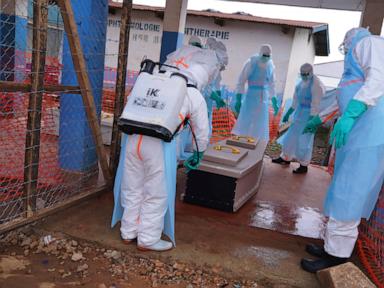
The answer requires a delicate, dangerous dance. It demands humanitarian organizations that are willing to walk directly into the red zones, carrying sacks of grain alongside personal protective equipment. It requires local leaders—teachers, elders, youth organizers—who can look terrified citizens in the eye and explain that help has arrived, that the food is safe, and that the community has not been forgotten by the wider world.
During previous outbreaks in the region, the most successful interventions were those that integrated food distribution directly with health screening. If people knew they would receive emergency rations of rice, beans, and vegetable oil upon visiting a checkpoint or a health center, the instinct to hide from authorities diminished. Survival requires calories just as urgently as it requires antibodies.
Yet, resources are perpetually stretched thin. Global attention shifts quickly. A new headline breaks, a different crisis captures the world’s fleeting gaze, and eastern Congo is left to manage its overlapping catastrophes in the shadows.
The Lasting Echo
The sun sets fast near the equator. One moment the valleys are bathed in a harsh, golden glare, and the next, darkness swallows the horizon whole.
In those quiet hours, away from the international press conferences and the distant policy debates, families in Kivu and Ituri sit together in the dark. They listen to the rustle of the banana leaves outside their doors. They wonder if tomorrow will bring a doctor or a truck carrying grain. They calculate how many days their remaining handful of maize will last.
Ebola leaves behind survivors bearing deep physical and emotional scars. But the hunger it triggers leaves a different mark—one carried quietly by children whose growth is stunted, by farmers who lost a season, by an entire region forced to fight a war on two fronts.
The fever eventually breaks. The red flags come down from the roadblocks. The trucks begin to crawl back along the dusty roads. But the debt owed to those who weathered the storm in silence remains unpaid long after the last patient leaves the treatment ward.