In the quiet, predawn hours of a Thursday morning, the phone lines between Washington and Jerusalem buzzed with a tension that maps can never quite capture.
On one end of the secure line sat Pete Hegseth, the newly minted American Defense Secretary, carrying the blunt mandate of President Donald Trump. Just days earlier, Trump had delivered a characteristic, no-nonsense directive to Israeli Prime Minister Benjamin Netanyahu: withdraw your troops from Lebanon and Syria. They don’t want you there. You should redeploy.
On the other end was Israel’s Defence Minister, Israel Katz. His response was not a compromise. It was a line drawn in the sand.
Katz made it clear that Israel has no intention of packed bags. Instead, the country is digging in, maintaining its military footprint across three distinct, deeply volatile "security zones" carved out inside Lebanon, Syria, and the Gaza Strip.
"We have never asked the United States to act in our place along our borders," Katz said, according to his office.
It is a striking phrase. On the surface, it sounds like an assertion of self-reliance, a declaration of sovereign strength. But look closer, and the statement reveals a much deeper, more agonizing reality. It is a confession of a nation trapped in a perpetual defensive crouch, unable to trust the promises of diplomats, the agreements of superpowers, or the borders drawn on paper.
To understand what this means, we have to look past the bureaucratic language of "security zones" and "buffer strips." We have to look at what these zones actually look like on the ground, where abstract military strategy collides with human lives.
The Six-Mile Strip
Imagine a farmer in southern Lebanon. Let’s call him Hussein.
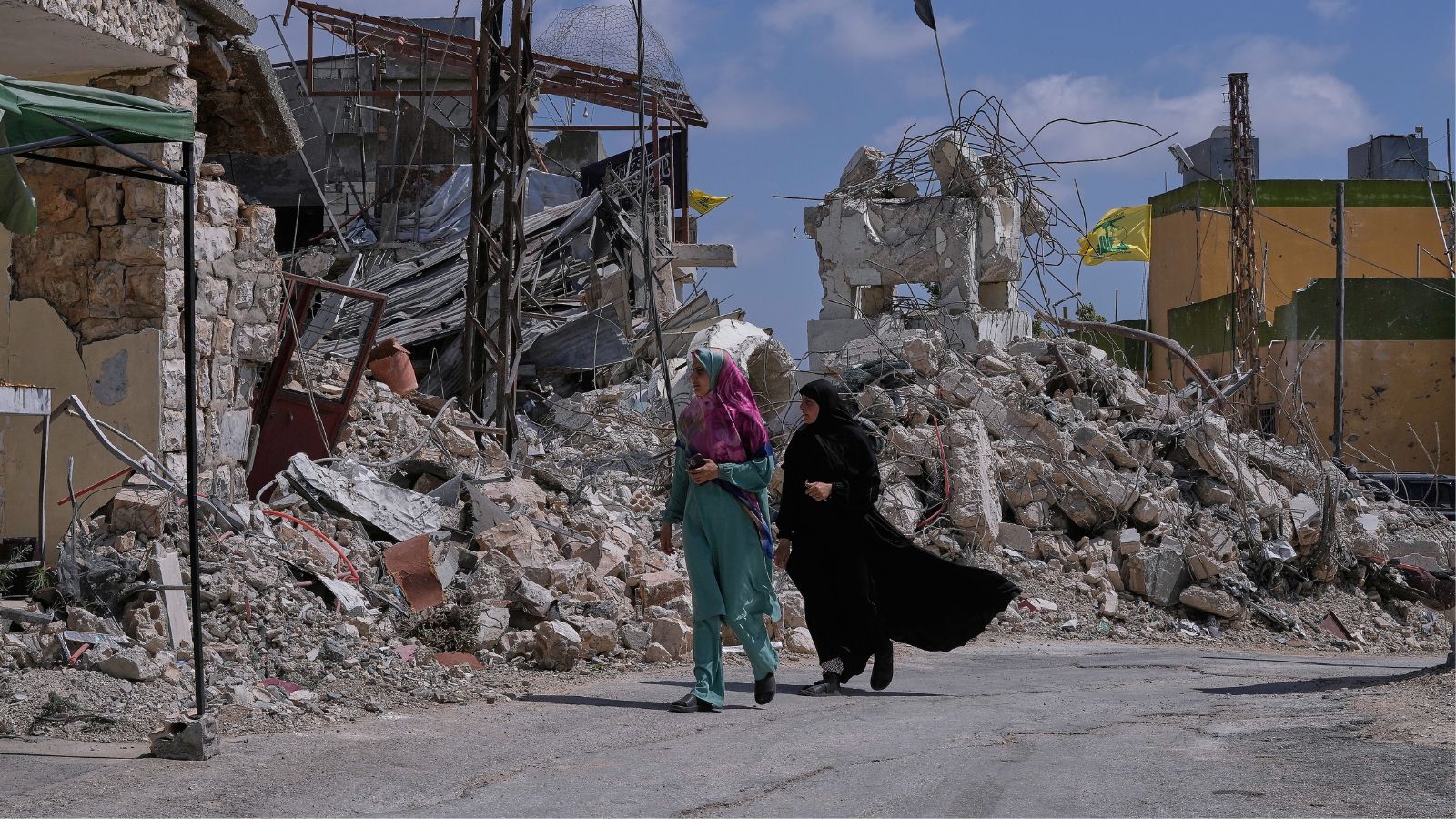
Hussein’s family has tended to the olive groves of his village for generations. The soil is dry, rocky, and stubborn, but it is theirs. Today, however, Hussein cannot walk his fields. His grove lies within a ten-kilometer strip of land—roughly six miles—that the Israeli military has designated as its northern "security zone".
To the military strategist in Tel Aviv, this six-mile strip is a mathematical necessity. It is a physical buffer designed to push Hezbollah’s anti-tank missiles and rocket launchers just far enough away that they cannot target the civilian homes of northern Israel. It is a shield.
But to Hussein, and to thousands of Lebanese civilians like him, that same shield is an occupies-your-backyard reality.
For months, negotiators have been meeting in Rome, trying to hammer out an end to the hostilities that erupted when Hezbollah dragged Lebanon into the wider war. They just wrapped up their fifth round of talks. The American-backed plan was supposed to be simple: a phased Israeli withdrawal, starting with two small "pilot zones".
But Katz’s late-night call to Hegseth effectively threw a wrench into those gears. By declaring that Israel will remain in its self-declared security zone, the diplomatic path forward has suddenly become incredibly narrow and treacherous.
The security of one family has become the displacement of another.
The Phantom Frontier
If the southern Lebanon zone is a shield, the deployment in Syria is a shadow.
After the dramatic collapse of Bashar al-Assad's regime in December 2024, the political landscape of Syria fractured into a chaotic mosaic. Sensing an immediate vacuum, Israeli forces crossed into the United Nations-patrolled buffer zone on the Golan Heights. They didn’t stop there. Over the subsequent months, Israeli troops pushed deeper into Syrian territory, conducting raids and maintaining a persistent presence in the south.
The goal, Israeli planners say, is to prevent hostile jihadist factions or Iranian-backed remnants from establishing a launching pad right on Israel's northeastern flank.
But Syria is a sovereign nation, even in its broken, post-Assad state. To the rest of the world, and specifically to Washington, Israel’s deep footprint in Syria is a spark plug in a room full of gasoline vapors. President Trump’s warning that the deployment is "fueling tensions" is not without merit.
The deeper you march into a neighbor's territory to secure your own house, the more you look like the aggressor to the outside world. It is the paradox of preventive defense. You occupy land to prevent a war, only to find that the occupation itself becomes the primary justification for the next one.
The Perimeter of Gaza
Then, there is Gaza.
Here, the "security zone" is not a temporary buffer; it is a permanent seal. Israeli forces currently control approximately 60 percent of the Gaza Strip, maintaining an absolute lock on the territory's external borders with both Israel and Egypt.
For the millions of Palestinians crowded into the remaining slivers of land, this means living in an enclave where every exit, every shipment of food, and every drop of fuel is monitored by a foreign military. The defense establishment in Israel views this total control as the only reliable way to guarantee that an atrocity like the October 7 attacks can never be mounted from the strip again.
But military control over a civilian population is a hungry beast. It requires endless manpower, billions of dollars, and an agonizingly high moral toll.
Can you truly build a secure future when the foundation of that security is the permanent containment of your neighbors?
The Gravity of the Status Quo
It is easy to get lost in the geopolitical chess match. We analyze Trump’s isolationist "America First" instinct, which chafes at foreign entanglements and demands quick resolutions. We dissect Israel's stubborn refusal to outsource its survival to international peacekeepers who have historically proven ineffective.
But the real tragedy of the "security zone" policy is its permanence.
These zones are almost never temporary. They have a habit of hardening into de facto borders. What begins as an emergency measure to protect a community ends up as a multi-decade occupation that drains the resources of the protector and breeds generations of resentment in the protected.
Israel's message to the Pentagon is clear: we will do whatever it takes, unilaterally, to keep our people safe.
But as the borders of Israel expand outward into Lebanon, Syria, and Gaza, the physical distance between enemies may grow wider. The psychological distance, however, shrinks to nothing. When your security zone is your neighbor's front yard, the war is never far away.