The notification popped up on a Tuesday afternoon, flashing against the glare of a kitchen window in Phoenix, Arizona. For Joy Harvick, like millions of others scrolling through their feeds in the frantic, hyper-charged final weeks of the 2024 election cycle, the proposition seemed wildly, almost impossibly simple.
Sign a petition. Support the First and Second Amendments. Stand a chance to win one million dollars. Every single day, a random name would be drawn from a pool of swing-state voters.
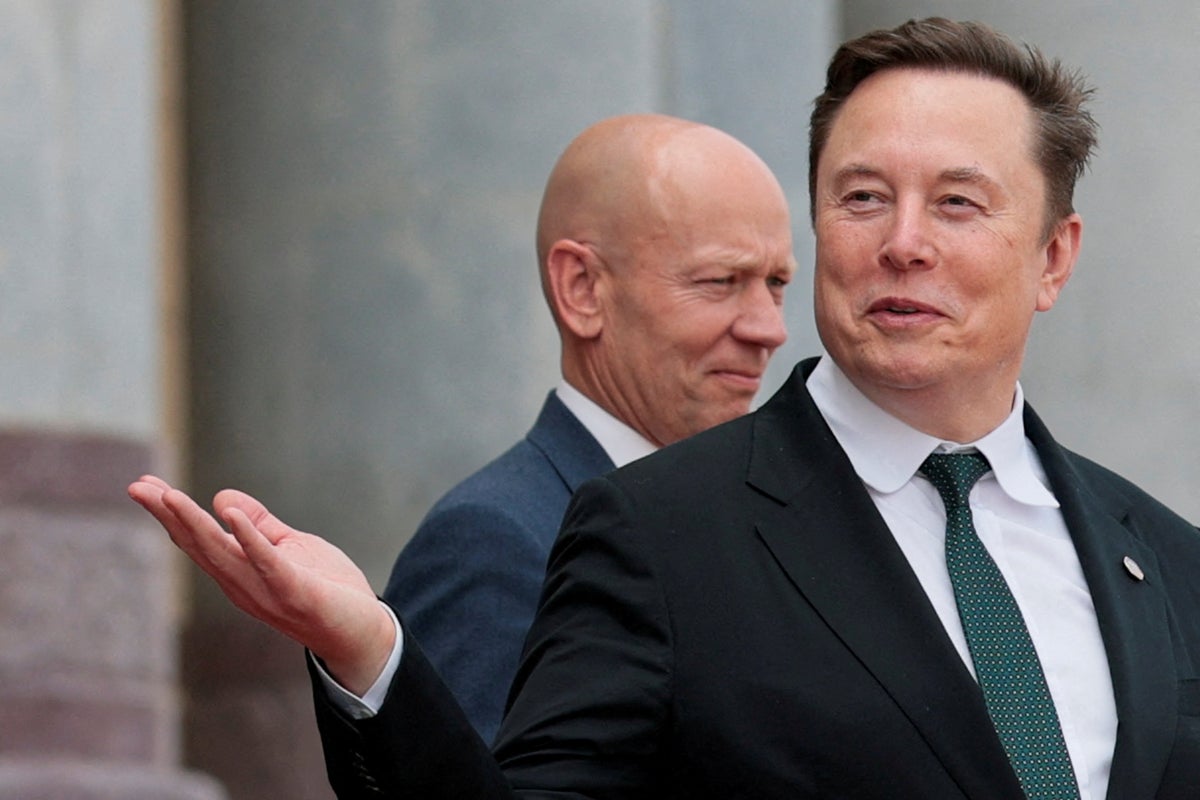
It felt like a modern digital lottery with the ultimate populist benefactor: Elon Musk. The world’s wealthiest man was crisscrossing Pennsylvania and other battleground states, holding town halls, flashing massive oversized checks, and promising that anyone who signed his America PAC petition could be transformed into an overnight millionaire by pure, blind luck.
Joy signed. So did Jacqueline McAferty, another Arizona resident looking at the mounting bills of daily life and thinking, Why not me?
They gave their names. They handed over their emails. They verified their home addresses, their phone numbers, and their voter registration status. They hitting submit, trusting that their data was entering a grand, transparent raffle machine where every citizen had an equal, random shot at the golden ticket.
But the machine wasn’t random. The wheel was never spinning.
Now, a federal judge in Austin, Texas, has ordered Elon Musk to step away from his rocket launchpads and artificial intelligence labs, sit in a deposition room, and testify under oath. The high-stakes legal battle exposes a deeply human story about the value of personal identity in the digital age, and what happens when the mechanics of a political ground game are wrapped in the glittering packaging of an internet sweepstakes.
The Architecture of Surprise
To understand how we arrived at a federal court order, look at what was happening behind the curtain while the public watched the spectacle of ecstatic winners holding giant checks on stage.
The illusion began to fray almost immediately in courtrooms across the country. During a preliminary legal skirmish in Philadelphia, just hours before Election Day, attorneys representing Musk and his political action committee dropped a disclosure that left prosecutors stunned. The recipients of the $1 million prizes were not chosen by chance. They were never plucked from a digital hat.
Instead, America PAC had used the petition data as a massive, highly targeted job application.
Consider how the operation actually worked, a process later detailed by the PAC's leadership. Staffers didn't run a randomized algorithm. They combed through the incoming flood of personal information. They checked social media profiles. They looked for specific backgrounds, compelling personal stories, and political leanings. They targeted individuals who would make excellent, highly persuasive spokespeople for the PAC’s mission. The "winners" were pre-selected, vetted, and flew in to receive a fee-for-service contract. They were being paid to perform a role, not winning a game of chance.
Even Musk’s own inner circle was caught off guard by the billionaire's public framing of the program. In a February 2026 deposition, America PAC Director Christopher Young admitted under oath that he was "surprised" by the specific words Musk chose to pitch the giveaway to the public. Young testified that the live-stage rhetoric was not the way the program had been structured or discussed with legal counsel.
For the everyday voters who signed up, that distinction is everything. It is the boundary line between a legitimate promotional campaign and a calculated deception.
The True Cost of Free
When something online is free, the old adage goes, you are the product. In the realm of modern political campaigning, your personal identifying information is the highest-value currency in existence.
A name and a verified physical address in a swing state like Arizona or Wisconsin is worth its weight in gold to political strategist groups. It allows campaigns to build hyper-specific psychological profiles, target voters with surgical precision, and build massive databases for future mobilization.
The core of the class-action lawsuits brought by Harvick and McAferty rests on this hidden transaction. U.S. Magistrate Judge Susan Hightower recently recommended that Musk and America PAC must face federal claims that they intentionally tricked voters into handing over their highly valuable personal data under false pretenses. While the judge recommended dismissing a separate breach of contract claim, the heavy accusation of fraud remains squarely on the table.
The legal system is now forced to grapple with a profound ethical question: Did a billionaire use the psychological lever of life-changing wealth to extract valuable data from citizens who would have otherwise kept their privacy intact?
Imagine a hypothetical voter—let’s call him Robert, a father working two jobs in suburban Philadelphia. Robert doesn't usually sign online petitions. He values his privacy and hates the relentless barrage of political spam texts. But a one-in-a-million shot at never having to worry about his mortgage again changes the calculus. He surrenders his data because the perceived reward justifies the risk.
If the reward is a mirage—if his odds were always exactly zero because he didn't fit the specific demographic profile of a media-savvy spokesperson—the transaction becomes predatory. The data was taken, but the lottery ticket he bought with his privacy was blank from the start.
The Vulnerability of Trust
Losing a legal fight over a political campaign is one thing; answering questions under oath about consumer fraud is an entirely different arena for an executive who oversees publicly traded companies and multi-billion-dollar government defense contracts.
The defense mounted by Musk’s legal team relies heavily on semantic distinctions. They argue that "random" doesn't necessarily mean an equal statistical chance for every participant. They claim the process of selecting individuals from a broader pool still retained an element of randomness, even if the final selection required heavy human vetting and ideological alignment.
But the law often looks at how words are understood by an ordinary person on the street. When a public figure stands on a stage and tells an audience that a million dollars will be awarded randomly to someone who signs a line, the average mind does not visualize a corporate HR department reviewing social media histories to find a polished brand ambassador.
The upcoming deposition will force a rare moment of direct accountability. Musk will have to explain, line by line, the chasm between the populist spectacle broadcast to millions of screens and the cold, analytical data-harvesting machine operating in the background.
The true stakes of this courtroom drama extend far beyond the $1 million checks or the fate of a single political action committee. It exposes our collective vulnerability in a digital ecosystem where attention is bought, data is mined, and the line between public philanthropy and corporate extraction is hopelessly blurred.
We want to believe in the sudden turn of luck. We want to believe that the billionaire on the stage is looking out into the crowd, ready to change an ordinary life on a whim. That desire to believe is a deeply human trait, born of hope, financial pressure, and the enduring myth of the lucky break. It is a fragile kind of trust. And once it is dismantled in a federal deposition room, piece by piece, it is a piece of currency that no amount of billions can ever buy back.