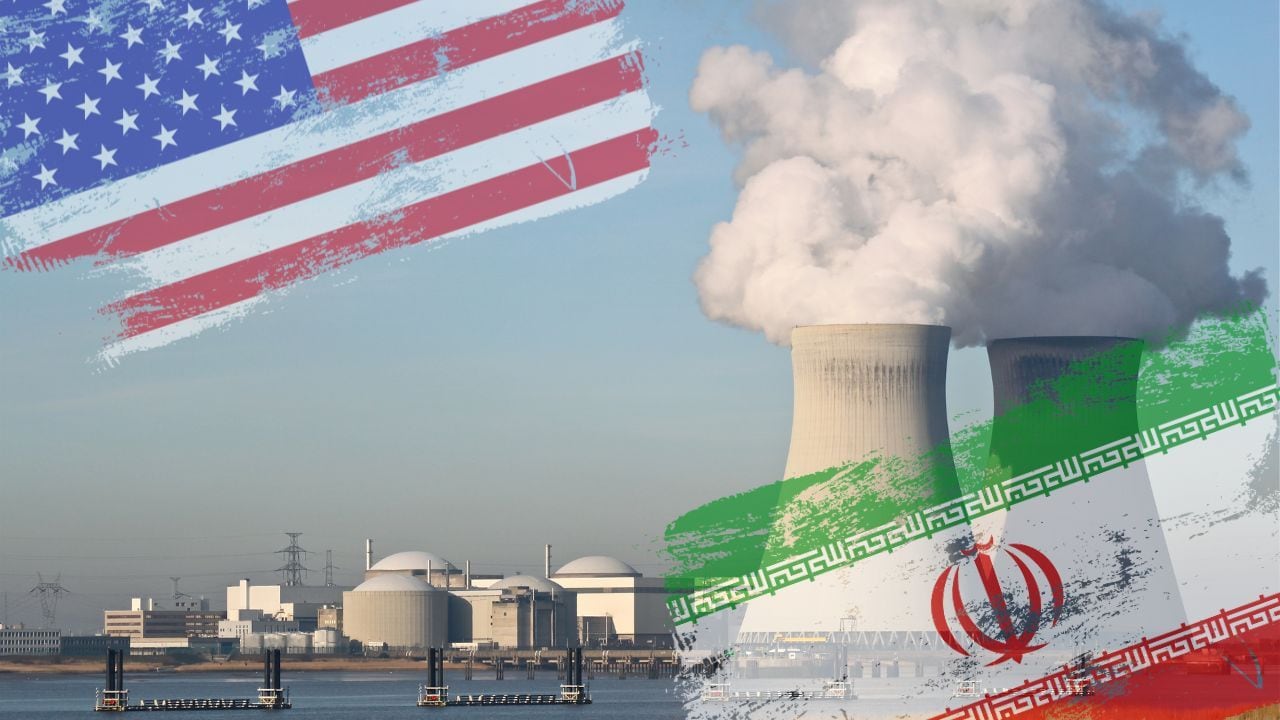
The interim peace agreement brokered in Islamabad between the United States and Iran is not a diplomatic breakthrough. It is a tactical pause by two bloodied adversaries who have stared into the abyss of total war and realized neither could afford the next step. While the newly announced memorandum of understanding promises to halt the 2026 Iran war, lift the crippling U.S. naval blockade, and reopen the choked veins of global commerce in the Strait of Hormuz, the fundamental issue remains untouched. Iran is a threshold nuclear state, and no amount of high-stakes theater in Pakistan will change the reality that Tehran has the knowledge, the material, and the existential motive to assemble a nuclear weapon at a moment of its choosing.
To understand why this interim deal is built on sand, one must look past the triumphalist rhetoric coming out of both Washington and Tehran. The architecture of the current crisis was not built overnight. It is the direct consequence of a multi-decade chess match that escalated into open kinetic warfare following the death of Supreme Leader Ali Khamenei during joint U.S.-Israeli airstrikes. By treating the Islamabad talks as a genuine resolution rather than a temporary management strategy, Western analysts are misreading the core drivers of Iranian strategy.
The Strategic Failure of Kinetic Non-Proliferation
For years, Washington and Jerusalem operated under the assumption that severe military pressure and targeted assassinations could permanently derail Iran's nuclear ambitions. The devastating strikes launched against Iranian nuclear installations and command structures provided a stark lesson in the limits of raw military power.
The strikes succeeded in destroying physical infrastructure, flattening centrifuges at Natanz, and throwing the regime into political chaos. Yet, the underlying problem remained completely unaddressed. You cannot bomb knowledge.
Iran's nuclear program is no longer an import-dependent enterprise that can be disabled by cutting off a foreign supply chain. It is an indigenous scientific ecosystem. The technical expertise required to enrich uranium, manage the fuel cycle, and design weapon components is thoroughly distributed across a generation of Iranian scientists, academic institutions, and decentralized military syndicates.
Furthermore, the physical destruction of above-ground facilities merely accelerated Tehran’s reliance on deeply buried, hardened sites like Fordow. Built deep inside a mountain, these facilities are largely impervious to conventional air campaigns. When the International Atomic Energy Agency verified that Iran possessed more than 400 kilograms of uranium enriched to 60% purity, the technical debate over "breakout time" effectively ended. Iran had already crossed the Rubicon. The transformation of a civilian energy program into a latent weapons capability was complete.
The Leverage Paradox of the Naval Blockade
When the U.S. imposed a total naval blockade on Iranian ports, the objective was straightforward: choke off the regime's remaining oil revenue, crash the rial, and force an absolute capitulation on the nuclear issue. The policy certainly inflicted immense economic misery, sparking widespread domestic protests and crippling domestic industries. But as a tool of diplomatic coercion, the blockade suffered from a fatal design flaw. It left the Iranian regime with nothing left to lose.
Faced with economic strangulation, Tehran turned to its most potent asymmetric weapon: the capability to close the Strait of Hormuz. By mining the world’s most critical maritime chokepoint and deploying fast-attack swarm boats, Iran effectively held a fifth of the global oil supply hostage. The resulting energy shock and downward pressure on global growth projections did not just hurt Tehran; they sent shockwaves through Western financial markets and strained alliances from Europe to Asia.
Global Energy Chokepoint: The Strait of Hormuz
+-------------------------------------------------------+
|  Accountable for nearly 20% of global petroleum flow   |
|  Directly vulnerable to Iranian asymmetric warfare    |
|  The economic gravity well forcing U.S. diplomacy     |
+-------------------------------------------------------+
This dynamic explains the core architecture of the Islamabad memorandum. The primary terms do not represent a nuclear solution; they represent a transaction of pure necessity.
- The U.S. Concession: Immediate lifting of the naval blockade on Iranian shipping and ports.
- The Iranian Concession: Reopening the Strait of Hormuz and guaranteeing safe maritime navigation.
- The Deferred Reality: Postponing all substantive negotiations regarding the nuclear program to a second phase.
By separating the immediate commercial emergency from the nuclear standoff, both sides managed to save face. The U.S. can claim it restored global energy security without firing another shot, while Iran can boast that its resistance broke the Western blockade without surrendering its strategic deterrent.
Why Down-Blending is a Diplomatic Mirage
The true battleground of the upcoming phase of negotiations will center on the fate of Iran's highly enriched uranium stockpile. U.S. officials have made it clear that their ultimate objective is the complete removal or destruction of Iran's 60% enriched material. Tehran’s counter-proposal is a process known as down-blending, where highly enriched material is mixed with natural or depleted uranium to reduce its enrichment level back down to reactor-grade percentages.
From a technical standpoint, down-blending sounds like a reasonable compromise. In reality, it is a reversible shell game. Material that has been down-blended can be re-enriched to weapons-grade levels in a fraction of the time it took to produce the initial batch. The infrastructure, the cascade configurations, and the mathematical blueprints remain fully intact.
"For Tehran, the only preferred solution for its highly enriched uranium stockpile is down-blending the material." — Abbas Araghchi, Iranian Foreign Minister
This stance reveals the enduring objective of Iranian diplomacy: preserving the infrastructure of latency. By fighting to keep its material inside the country in a down-blended state rather than exporting it, Iran retains its ability to rapidly ramp enrichment back up to 90% whenever a political or security crisis demands it.
The Irrelevance of the Zero-Enrichment Standard
The fundamental flaw in Western policy toward Iran has been the insistence on a "zero-enrichment" standard. This demand, revived during the initial rounds of the 2025 and 2026 talks, requires Iran to completely dismantle its enrichment capabilities and rely entirely on foreign fuel imports for its civilian reactors. While desirable in an ideal world, this position ignores the deep structural realities of the Iranian state.
The nuclear program is deeply intertwined with Iranian nationalist identity. It is not merely a project of the clerical elite; it is viewed across the political spectrum as a symbol of modern scientific sovereignty and a safeguard against foreign-backed regime change. The historical memory of the 1953 coup remains a potent psychological driver of the state's security doctrine.
When European powers triggered the "snapback" mechanism to reinstate legacy UN sanctions, they expected a systemic collapse of Iranian resolve. Instead, they triggered a predictable domestic consolidation. The state responded by building its third enrichment facility, demonstrating that external pressure invariably yields a more defiant nuclear posture. Any diplomatic strategy that treats domestic enrichment as a negotiable luxury rather than a non-negotiable pillar of Iranian statehood is bound to collapse under the weight of its own assumptions.
The Unresolved Regional Undercurrents
No nuclear agreement with Iran can survive in a geopolitical vacuum. The Islamabad framework attempts to isolate the nuclear file from the broader regional conflicts that continuously threaten to boil over. This isolation is artificial and unsustainable.
The Iranian security apparatus views its regional network of aligned groups—stretching through Iraq, Syria, and into Lebanon—not as secondary bargaining chips, but as its primary line of forward defense. During the early days of the April ceasefire, the entire diplomatic apparatus nearly collapsed when massive operations continued on the Lebanese front. The warning from Iranian national security circles was explicit: without restraining action across all theatres, any localized pause is meaningless.
The U.S. demand that Iran completely cease funding and arming these regional entities as a precondition for permanent sanctions relief ignores the fundamental asymmetric balance of power in the Middle East. Deprived of conventional military parity, Iran relies on these alliances to project power and deter a conventional invasion. Expecting Tehran to dismantle this network in exchange for transactional economic benefits is a profound miscalculation of how the regime calculates its own survival.
The Fractured Decision-Making Apparatus in Tehran
The ultimate wild card in the post-Khamenei era is the internal fragmentation of the Iranian state itself. The political landscape in Tehran is no longer governed by a singular, absolute authority capable of enforcing unpopular compromises. The Supreme National Security Council is deeply divided between pragmatic elements within the diplomatic corps and ideological hardliners entrenched within the security organs.
These internal fissures explain the erratic nature of recent negotiations. While diplomats signal that an agreement has never been closer, conservative factions publicly warn against trusting Western guarantees, pointing to the unilateral withdrawal from previous accords as proof of American duplicity. This domestic instability means that even if a digital signature is affixed to a new memorandum of understanding, the long-term implementation of its terms remains highly volatile. A government that must constantly look over its shoulder at domestic rivals is poorly positioned to execute the painful, verifiable concessions required for a durable peace.
The Islamabad Accord is not the beginning of the end of the Iranian nuclear crisis. It is merely the opening act of a highly volatile transition period. The fundamental contradiction remains: Washington requires a complete, irreversible rollback of Iran's nuclear capability, while Tehran regards its latent nuclear status as an unalterable reality of its national survival. Until that core divergence is addressed, any signed document is simply a stay of execution.