The short-lived ceasefire in the Persian Gulf did not hold because neither Washington nor Tehran addressed the structural friction underlying their four-month-old war. When the Panama-flagged tanker Kiku was struck by an Iranian drone in the early hours of Saturday morning, it signaled the formal expiration of a two-week truce that was built on diplomatic quicksand. The subsequent US airstrikes on Iranian radar installations and drone depots, followed immediately by Islamic Revolutionary Guard Corps missile barrages against American positions in Kuwait and Bahrain, have pushed the region back to the absolute brink of total conflict. This is not a sudden miscalculation but the logical consequence of a broken deterrence strategy.
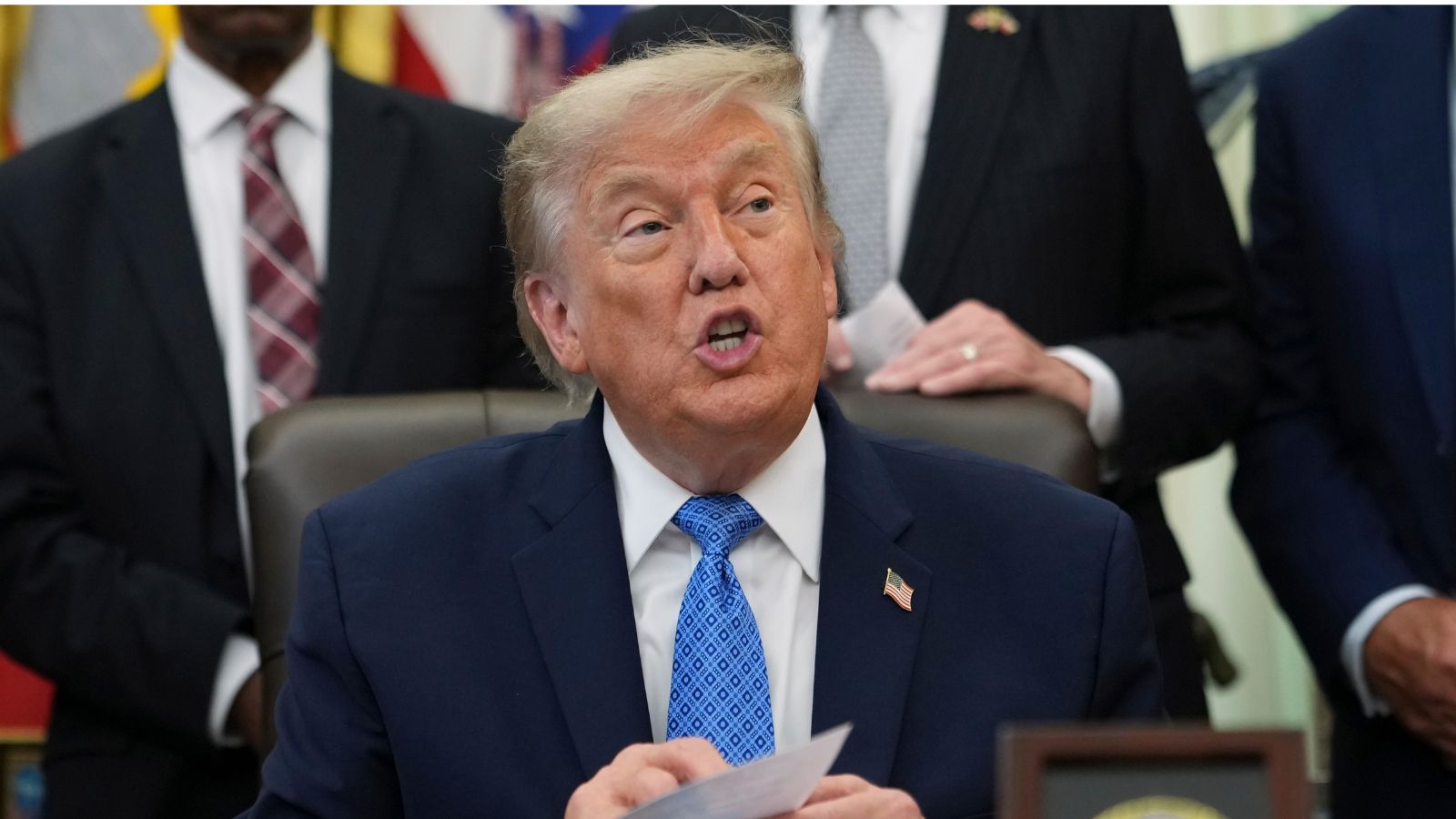
Political theater has overtaken tactical reality. On Truth Social, Donald Trump stated that American forces might be forced to militarily complete the job, warning that the Islamic Republic of Iran would cease to exist if hostilities continue to escalate. Hours later, the naval command of the Revolutionary Guard fired back, promising that American regional bases would face hell in the coming days. This escalatory rhetoric obscures a much more complex and dangerous strategic deadlock that cannot be resolved by standard shock-and-awe tactics or simple maritime policing. In similar developments, take a look at: The Geopolitics of the Blue Horizon: Quantifying India's Strategic Maritime Alignment with Small Island Developing States.
The Fourteen Day Ceasefire and Why It Failed
Temporary truces fail when they treat the symptoms of maritime conflict rather than the core strategic objectives of the combatants. The interim agreement signed earlier this month was designed to pause hostilities, yet it left the primary mechanism of friction untouched. Iran retains its deep-seated imperative to demonstrate that it can close the Strait of Hormuz at will. Washington remains equally committed to proving that it can enforce absolute freedom of navigation through the world's most sensitive oil artery.
The breakdown began systematically. On Thursday, an Iranian loitering munition struck the Singapore-registered cargo ship Ever Lovely. The United States responded with localized strikes on Friday, which triggered the subsequent Iranian hit on the Kiku, a vessel carrying more than two million barrels of crude oil. By Sunday morning, US Central Command confirmed that its aircraft had pounded Iranian missile storage facilities and coastal radar positions near Sirik. USA Today has provided coverage on this important issue in great detail.
This sequence reveals that the ceasefire was never a peace agreement. It was merely a tactical pause used by both sides to resupply, re-target, and re-evaluate their positions. Tehran used the fourteen days to recalibrate its mobile missile launchers along the southern coast. Washington utilized the quiet period to adjust its naval architecture, moving assets into defensive postures that ultimately failed to deter the weekend's strikes.
The Logistics of Gulf Chokepoints and Asymmetric Strikes
Naval dominance is no longer guaranteed by the sheer size of a fleet. The waters of the Persian Gulf are narrow, shallow, and congested, turning traditional aircraft carrier strike groups into massive targets rather than invulnerable tools of power projection. Iran understands this geographic reality perfectly and has spent three decades refining an asymmetric doctrine designed to exploit it.
The recent attacks on Al Asad Air Base in Kuwait and the double strike on Bahrain, home to the US Navy’s Fifth Fleet, demonstrate a coordinated command structure. The Revolutionary Guard did not rely on heavy conventional forces. Instead, they deployed a combination of low-cost ballistic missiles and swarms of cheap, low-altitude drones.
- Coastal Radar Infrastructure: The installations targeted by the US military near Sirik are critical nodes that monitor the entire entrance to the Gulf. By blinding these systems, the US hoped to restrict Iran's ability to target commercial shipping.
- Mobile Drone Swarms: These systems bypass traditional air defense grids by flying below radar horizons and utilizing pre-programmed waypoint navigation, rendering expensive interceptor missiles economically unsustainable over a prolonged campaign.
- Fast Inshore Attack Craft: These small, heavily armed boats operate out of hidden rocky inlets along the Iranian coastline, ready to harass shipping lanes at a moment's notice.
The financial asymmetry of this conflict is staggering. A single drone costing less than twenty thousand dollars requires a multi-million-dollar air defense missile to destroy. When Iran launches these assets in large numbers, it drains western defense stockpiles while simultaneously driving global maritime insurance rates to prohibitive levels.
The Rhetoric of Annihilation versus Regional Reality
The language coming out of the White House and Tehran suggests an all-out war of elimination is imminent, but the physical constraints on the ground dictate a different outcome. Trump’s warning that Iran could cease to exist is a classic exercise in maximum pressure signaling. It assumes that the threat of overwhelming destruction will force the clerical regime to accept a fifteen-point peace plan that amounts to political capitulation.
Tehran view things through a completely different historical lens. The leadership of the Revolutionary Guard believes that Washington lacks the domestic political will to sustain a massive land war in the Middle East. They view American threats as bluster designed to satisfy domestic audiences. Consequently, when the White House warns of absolute destruction, Iran responds by striking American regional partners, proving that any attempt to destroy the regime will result in the economic ruin of the entire Gulf.
The targeting of Bahrain is a clear message to the regional energy exporters. By causing sirens to wail twice overnight at the home of the Fifth Fleet, Iran proved that no square inch of the southern Gulf coast is safe from its missile arsenal. This directly undermines the security guarantees that Washington has provided to its regional allies for decades.
The Failure of Current Deterrence Models
The current crisis proves that the traditional model of deterrence is fundamentally broken when applied to an asymmetric actor. The United States has repeatedly launched retaliatory strikes against radar stations and storage warehouses, believing that increasing the cost of aggression will force Iran to stop. This approach assumes a rational economic actor.
For the Revolutionary Guard, the strategic value of maintaining leverage over the Strait of Hormuz far outweighs the material cost of losing a few radar sites or drone warehouses. They can rebuild these facilities rapidly. The components for their drone and missile programs are largely decentralized, manufactured in small, hidden workshops spread across the rugged interior of the country rather than in massive, easily targetable industrial complexes.
[US Maritime Patrols] ---> Attempts to protect shipping
       ^
       | (Triggers retaliation)
       v
[Iranian Asymmetric Units] ---> Deploy low-cost drone swarms
       ^
       | (Absorbs conventional strikes)
       v
[US Conventional Airstrikes] ---> Destroys fixed coastal infrastructure
Western strategic planners have long misjudged this structural resilience. A single conventional strike might degrade a specific capability for forty-eight hours, but it does not alter the underlying political willingness to fight. As long as Iran perceives that its survival is tied to its ability to threaten global energy supplies, it will continue to absorb these strikes and strike back.
The Economic Consequences of a Closed Strait
The global economy cannot tolerate a prolonged conflict in the Gulf, a reality that both sides understand and exploit. The Strait of Hormuz sees the passage of roughly one-fifth of the world's total petroleum consumption every single day. Even a temporary disruption in this flow triggers an immediate spike in global oil prices, impacting everything from transport costs to industrial manufacturing across Europe and Asia.
The attack on the Kiku was a calculated demonstration of this economic leverage. By hitting a vessel carrying two million barrels of crude, Iran signaled that it can turn the primary shipping lanes into a graveyard for commercial tankers. The United Nations has already halted the escort of ships through the region following these attacks, leaving commercial operators to navigate a war zone entirely on their own.
Insurance companies have responded by declaring the entire Persian Gulf a high-risk zone, raising premiums to levels that make commercial shipping financially unviable for smaller operators. This economic blockade does not require Iran to sink dozens of ships. It merely requires them to create enough instability to make the journey too expensive to insure.
The Impasse of Diplomatic Options
Negotiations have collapsed because the minimum requirements for both sides are mutually exclusive. The Trump administration demands a complete cessation of Iran's regional missile program and a permanent end to its nuclear ambitions. Tehran views its missile stockpile as its only effective deterrent against an invasion and will never negotiate it away.
The White House statement that diplomatic efforts have collapsed and forced the transition to the next phase of policy indicates a shift toward active containment and continuous military engagement. This means the region is transitioning away from a state of conditional peace and entering a period of perpetual attrition.
There is no easy exit ramp from this cycle. Every action taken by the United States to protect shipping is interpreted by Iran as a hostile act, requiring a defensive counter-strike. Every counter-strike by Iran is viewed by Washington as an unprovoked violation of maritime law, demanding further military retaliation. The two-week ceasefire was not a failure of diplomacy; it was a demonstration that diplomacy has run out of space to operate. The conflict will now be dictated entirely by the iron logic of military exchange along the southern coast of Iran.