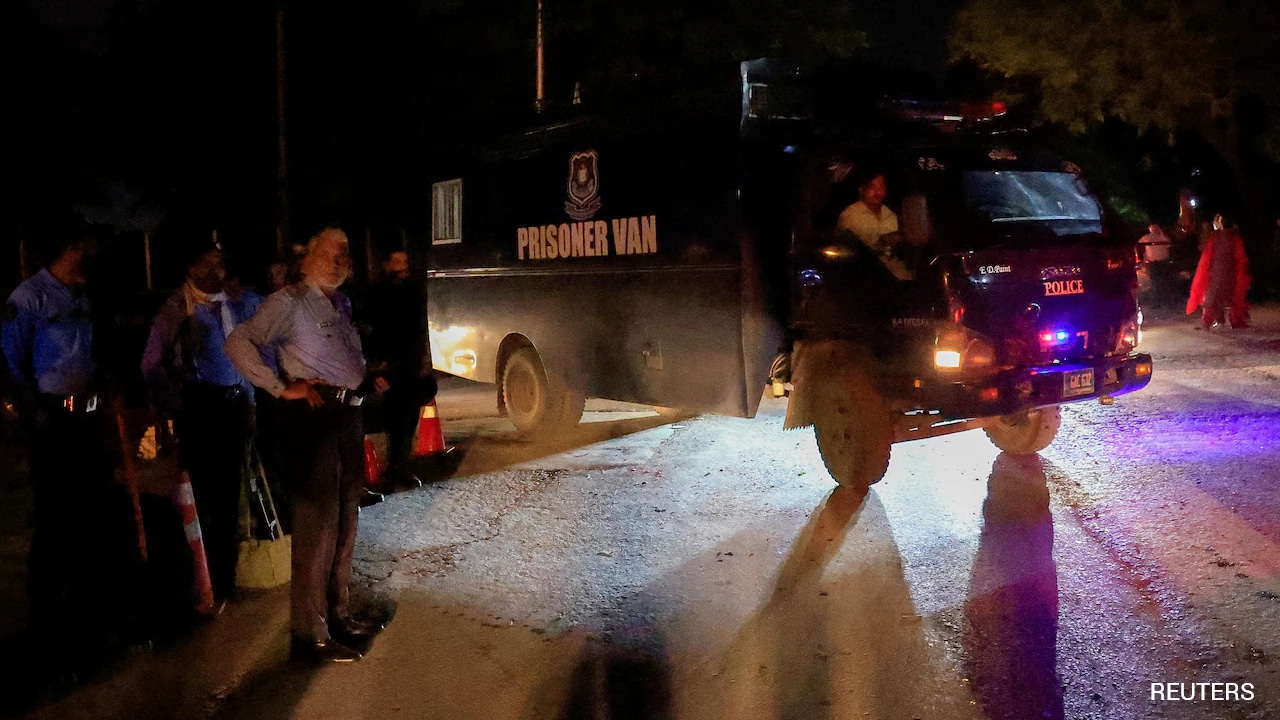
Imran Khan, the incarcerated former prime minister of Pakistan, was rushed to a medical facility from Adiala Jail following persistent legal pressure and intensifying political friction between his Pakistan Tehreek-e-Insaf party and the military-backed administration. This medical transfer highlights the volatile intersection of judicial proceedings, prison conditions, and state control in South Asia's nuclear-armed republic.
The Anatomy of Institutional Detention
For months, legal teams and family members have raised alarms about the physical toll of solitary confinement on the aging politician. The state insists that medical protocols are strictly followed, framing every hospital visit as routine health maintenance. Yet, outside the prison gates, a different narrative takes root. Every movement of an ambulance from Adiala Jail triggers immediate street mobilization, digital blackouts, and frantic speculation across newsrooms.
Detention in Pakistan has a long, storied history of transforming political figures into martyrs. Zulfikar Ali Bhutto walked a similar path decades ago. Nawaz Sharif experienced medical exiles and imprisonment before striking back through shifting political winds. Imran Khan's strategy relies on keeping his base mobilized through legal defiance, even while confined to a cell. Every hospital trip serves a dual purpose: it tests the state's capacity to manage public sympathy and forces international human rights monitors to scrutinize domestic prison standards.
The Information Blackout and Public Reaction
Controlling the narrative around a high-profile prisoner requires more than physical walls. State regulators frequently throttle internet speeds and restrict television broadcasts whenever Khan's name dominates headlines. This information vacuum breeds rumor. Supporters assume the worst regarding his health, while state media paints a picture of comfort and compliance.
The psychological warfare playing out in courtrooms matches the physical friction on the streets. Judges issue rulings under heavy guard. Defense lawyers report intimidation, restricted access, and truncated trial procedures. When an inmate of Khan's stature requires emergency medical attention, the incident exposes the fragility of the entire judicial framework. The state cannot afford his death in custody, yet keeping him alive and active poses an ongoing challenge to institutional authority.
The Broader Geopolitical Ripple Effects
Washington, London, and international financial institutions watch these developments with quiet anxiety. Pakistan remains heavily reliant on external bailouts to service its crushing sovereign debt. Western capitals prefer regional stability above all else, but prolonged democratic erosion and the mass arrest of opposition lawmakers complicate diplomatic relations. Foreign investors demand predictability. A country consumed by street protests, judicial overreach, and prison hospitalizations offers none.
Military leadership continues to pull the underlying levers of governance through a civilian proxy administration. Their calculus is straightforward: neutralize Khan's political threat without creating an uncontrollable civil uprising. So far, the strategy has held through brute administrative force and targeted disqualifications. But prison walls cannot permanently contain a mass movement that views the current order as illegitimate.
When the hospital doors close behind Imran Khan, the immediate crisis subsides, but the underlying structural rot remains untouched. The judiciary stands compromised, the economy limps from one stabilization package to the next, and millions of citizens feel disenfranchised. The ambulance returns to the prison yard, carrying a former prime minister back to confinement, while the country waits for the next flashpoint in a cycle that shows no signs of breaking.