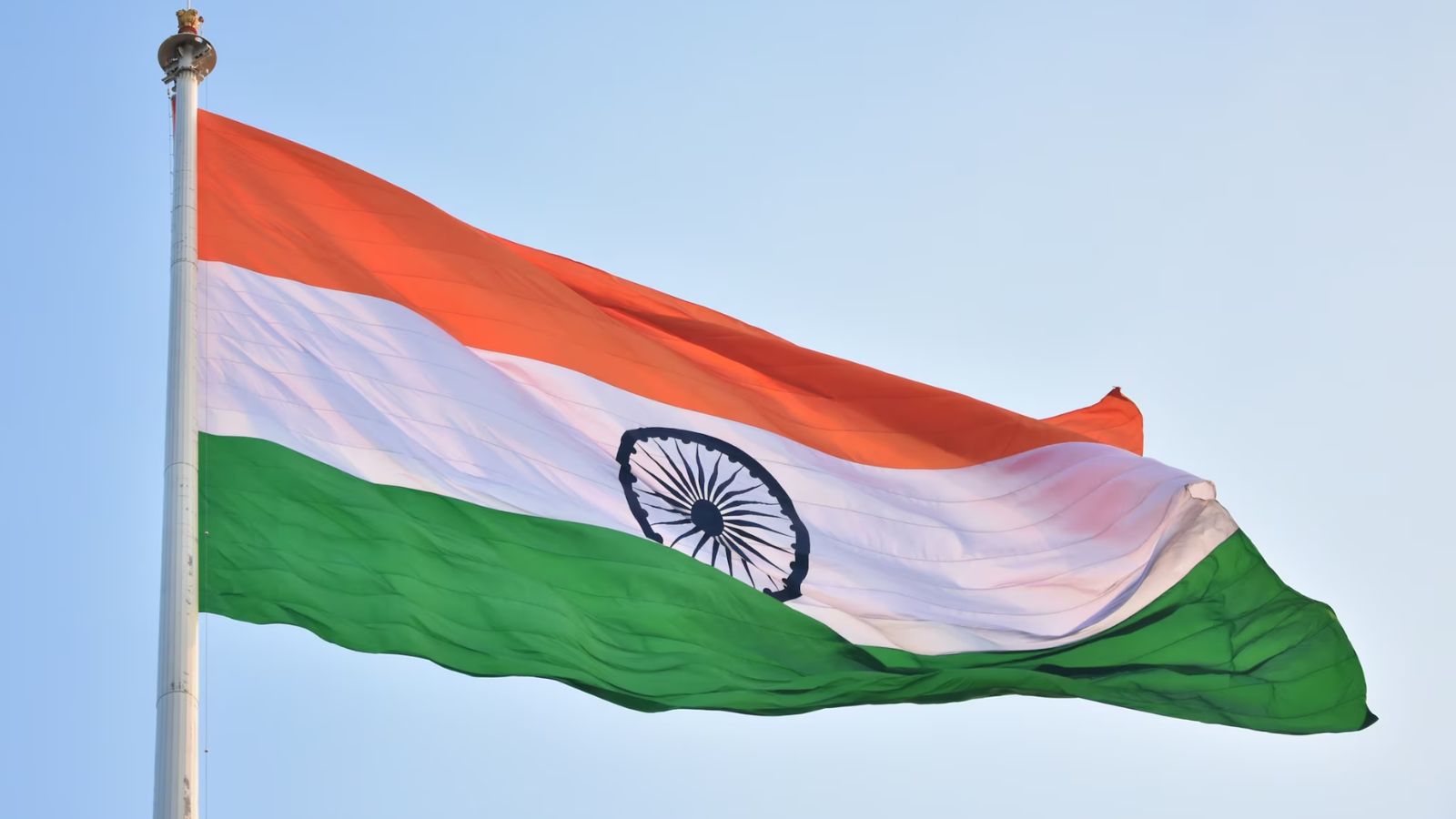
India officially sits as the third most powerful nation in the Asia-Pacific region in the Asia Power Index 2026, trailing only the United States and China while edging out Japan. While New Delhi celebrates the bronze medal in the annual Lowy Institute assessment, a closer inspection of the underlying metrics reveals a glaring contradiction. India possesses immense raw resources, massive demographic momentum, and undeniable future potential, yet its actual diplomatic and economic influence across the region lags far behind its sheer size.
The headline ranking acts as a convenient talking point for politicians, though it masks a profound structural vulnerability. Power in the Indo-Pacific is not merely a calculation of GDP, population, or military hardware sitting in domestic ports. Real power is the capacity to shape the behavior of other states. On that specific front, New Delhi is punching well below its weight.
The Top 10 Most Powerful Countries in Asia 2026
Before dissecting the mechanics of New Delhi's position, it helps to examine the exact hierarchy established by the 2026 rankings. The Lowy Institute evaluates 27 countries and territories across eight distinct thematic measures, balancing raw resources against actual regional influence.
| Rank | Country | Power Tier | Core Strategic Advantage |
|---|---|---|---|
| 1 | United States | Superpower | Defense networks and military capability |
| 2 | China | Superpower | Economic relationships and diplomatic influence |
| 3 | India | Major Power | Future resources and demographic scale |
| 4 | Japan | Middle Power | Economic capability and cultural influence |
| 5 | Australia | Middle Power | Defense networks and diplomatic resilience |
| 6 | Russia | Middle Power | Military capability and energy resources |
| 7 | South Korea | Middle Power | Economic capability and technological edge |
| 8 | Singapore | Middle Power | Economic relationships and diplomatic agility |
| 9 | Indonesia | Middle Power | Diplomatic influence in Southeast Asia |
| 10 | Thailand | Middle Power | Regional connectivity and tourism resilience |
The gap at the very top remains an unbridgeable chasm for the rest of the continent. The United States and China occupy a tier of their own, locked in a bipolar struggle where scores regularly hover above the 70-point mark out of 100. India, despite holding the third spot, operates in a completely different weight class, typically scoring in the high 30s or low 40s. Calling India a superpower based on this third-place finish is a fundamental misreading of the data. It is the undisputed leader of the second tier, sitting comfortably ahead of middle powers like Japan and Australia, yet still miles away from Beijing and Washington.
The Illusion of Raw Scale
Watch how pundits talk about India's rise, and you will hear the same tired metrics repeated endlessly. The world's largest population. The fastest-growing major economy. A nuclear-armed military with over a million active personnel.
None of that is false. All of it is incomplete.
The Asia Power Index separates resources (what a country has) from influence (what a country does with what it has). This distinction is where India's narrative hits a brick wall. When the index measures Future Resources—projecting economic, military, and demographic trajectories out to 2035 and beyond—India looks like an unstoppable juggernaut. Its median age hovers under 30, contrasting sharply with the rapid demographic aging crippling China, Japan, and South Korea. While Beijing faces a shrinking workforce and a looming pension crisis, New Delhi adds millions of young workers to its economy every single year.
Yet raw demographic potential does not automatically translate into geopolitical muscle. A massive youth population is only an asset if those young people are educated, healthy, and productively employed. If an economy fails to generate sufficient manufacturing and high-value service jobs, a demographic dividend quickly mutates into a demographic liability.
Furthermore, domestic economic growth does not automatically buy regional loyalty. India's economy remains heavily inward-looking compared to the export-driven machines of East Asia. While China serves as the primary trading partner for nearly every nation in the Indo-Pacific, India's trade footprint with Southeast Asia remains remarkably modest. You cannot coerce, incentivize, or shape the policy of neighboring capitals when your bilateral trade volumes are a fraction of your rival's.
The Power Gap Explained
To understand why India's third-place ranking feels hollow to veteran diplomats, you have to look at a specific metric within the index known as the Power Gap.
This metric compares a country's expected influence based on its available resources against its actual observed influence in the region. Countries like Singapore, Australia, and Japan consistently post positive Power Gap scores. They punch above their weight, extracting maximum diplomatic and economic utility out of limited geographic or demographic footprints through smart alliances, deep trade integration, and institutional leadership.
India consistently posts one of the worst negative Power Gap scores in the entire index.
Consider a hypothetical scenario involving a mid-sized Southeast Asian nation weighing its infrastructure options. Beijing offers a state-backed financing package, rapid construction timelines, and immediate integration into Chinese supply chains, albeit with heavy debt strings attached. Washington offers security guarantees, high-end technology transfers, and access to the world's largest consumer market. What does New Delhi offer? Often, it offers warm historical rhetoric, complex bureaucratic hurdles, and infrastructure projects that stall for years due to domestic red tape and capital constraints.
The numbers back up this operational friction. India's decision years ago to walk away from the Regional Comprehensive Economic Partnership (RCEP) continues to haunt its regional standing. By opting out of the world's largest free trade bloc to protect domestic industries and farmers, New Delhi voluntarily ceded the rule-making architecture of Asian trade to China. You cannot lead a region whose primary economic club you refuse to join.
Military Might Versus Expeditionary Reality
Military capability is another pillar propping up India's bronze medal, yet the granular details tell a complicated story. On paper, the Indian Armed Forces boast formidable numbers, advanced missile systems, aircraft carriers, and a battle-hardened infantry.
Look at where those assets are deployed, however, and the limits of India's reach become obvious. New Delhi is locked in a permanent, high-altitude standoff along the Line of Actual Control with China in the Himalayas, while simultaneously managing a volatile border with Pakistan. These continental threats consume the lion's share of India's defense budget, strategic bandwidth, and political attention.
Money spent maintaining tens of thousands of troops in freezing mountain terrain is money not spent building a blue-water navy capable of projecting sustained power into the South China Sea or the broader Pacific. While the Indian Navy has significantly upgraded its capabilities in the Indian Ocean Region—conducting vital anti-piracy operations and monitoring Chinese submarine activity—its capacity to alter the military balance in East Asia remains minimal. Washington projects power globally. Beijing projects power across the entire Western Pacific. New Delhi projects power primarily within its immediate neighborhood.
How Japan and Australia Still Outmaneuver New Delhi
Slipping behind India into fourth place does not render Japan irrelevant. In fact, Tokyo's structural position highlights precisely what New Delhi lacks.
Japan suffers from severe demographic decline and sluggish GDP growth, which naturally drags down its scores in the Economic Capability and Future Resources categories. That mathematical reality is the primary reason India overtook Japan in the overall standings. Yet when you examine Economic Relationships, Defense Networks, and Cultural Influence, Japan remains an indispensable heavyweight.
Japanese foreign direct investment built the industrial backbone of Southeast Asia over the last four decades. Tokyo commands deep trust across ASEAN capitals, functioning as a reliable provider of high-quality infrastructure and maritime security assistance without carrying the historical baggage of Chinese coercion or the unpredictability of American domestic politics.
Australia, sitting at fifth, demonstrates a similar mastery of middle-power statecraft. Canberra lacks India's population and landmass, yet its deep integration into the AUKUS security pact, the Quad, and regional intelligence networks gives it outsized influence over regional security architecture. Both Tokyo and Canberra understand that modern power relies heavily on network centrality—being the indispensable node through which capital, intelligence, and security guarantees flow. India, long wedded to its doctrine of strategic autonomy and multi-alignment, often resists the deep, binding institutional commitments that generate true network power.
The Diplomatic Tightrope of Multi-Alignment
New Delhi's foreign policy establishment prides itself on strategic autonomy, a modern evolution of its Cold War non-alignment stance. In practice, this means refusing to enter formal military alliances while maintaining transactional partnerships with competing power blocs.
India buys advanced weaponry and discounted crude oil from Russia, participates in the Quad security dialogue alongside the United States, Japan, and Australia, and simultaneously sits at the table with China and Russia in BRICS and the Shanghai Cooperation Organisation.
This diplomatic agility allows India to extract concessions from multiple sides without being dragged into someone else's war. When Western nations demanded New Delhi condemn Moscow's invasion of Ukraine and join sanctions regimes, Indian diplomats flatly refused, prioritizing their own energy security and historical defense ties.
Yet multi-alignment carries a steep hidden cost when it comes to the Asia Power Index. Allies share top-tier military technology, integrate supply chains, and coordinate diplomatic pressure during crises. Partners, by contrast, keep each other at arm's length. Because Washington knows India will never formally ally with the United States in a conflict over Taiwan, there is an inherent ceiling on the trust and technological integration Washington is willing to offer. Similarly, smaller Asian nations watching India hedge on major geopolitical crises hesitate to view New Delhi as a reliable security guarantor. If India will not take a definitive stand on major violations of international norms, smaller states doubt New Delhi will stick its neck out for them when Beijing applies pressure.
The Economic Engine Needs More Than Domestic Consumption
For India to close its negative Power Gap and turn its third-place ranking into genuine regional dominance, the transformation must begin at home with aggressive economic reform.
Right now, India's growth is heavily propelled by domestic consumption and public infrastructure spending. While building highways, ports, and digital payment rails at home is vital, domestic construction does not build external leverage. Regional power requires becoming an indispensable link in global manufacturing supply chains.
Multinational corporations actively looking to de-risk from China under the "China Plus One" strategy represent a generational opportunity for India. Apple's expansion of iPhone assembly in southern India proves that global manufacturing giants can operate at scale within the country. However, isolated success stories in smartphone assembly do not constitute an industrial revolution.
Land acquisition laws remain notoriously difficult to navigate. Labor regulations vary wildly across states. Port turnaround times and logistics costs, while improving, still lag behind competitors like Vietnam and Malaysia. More importantly, India's tariff walls remain among the highest of any major economy. High import tariffs on intermediate components make it vastly more expensive for manufacturers operating in India to assemble goods for export. Until New Delhi lowers trade barriers and integrates deeply into global value chains, Vietnam, Indonesia, and Mexico will continue capturing manufacturing investments that should theoretically flow to India's massive labor pool.
The Verdict on the 2026 Rankings
The Asia Power Index 2026 does not crown India as Asia's next superpower. It serves as an audit of unrealized potential.
Securing the third spot ahead of Japan confirms that the geopolitical center of gravity in Asia is shifting southward and westward. The sheer weight of India's economy and population makes it impossible to ignore in any conversation about the future of the Indo-Pacific. Washington needs New Delhi to balance Beijing. Beijing needs to manage New Delhi to secure its southern flank.
Yet raw weight is not the same as leverage. Until New Delhi dismantles its protectionist trade barriers, reforms its domestic bureaucratic bottlenecks, and converts its massive economic scale into outward-facing trade and investment networks, its third-place trophy remains a promise rather than a reality.
