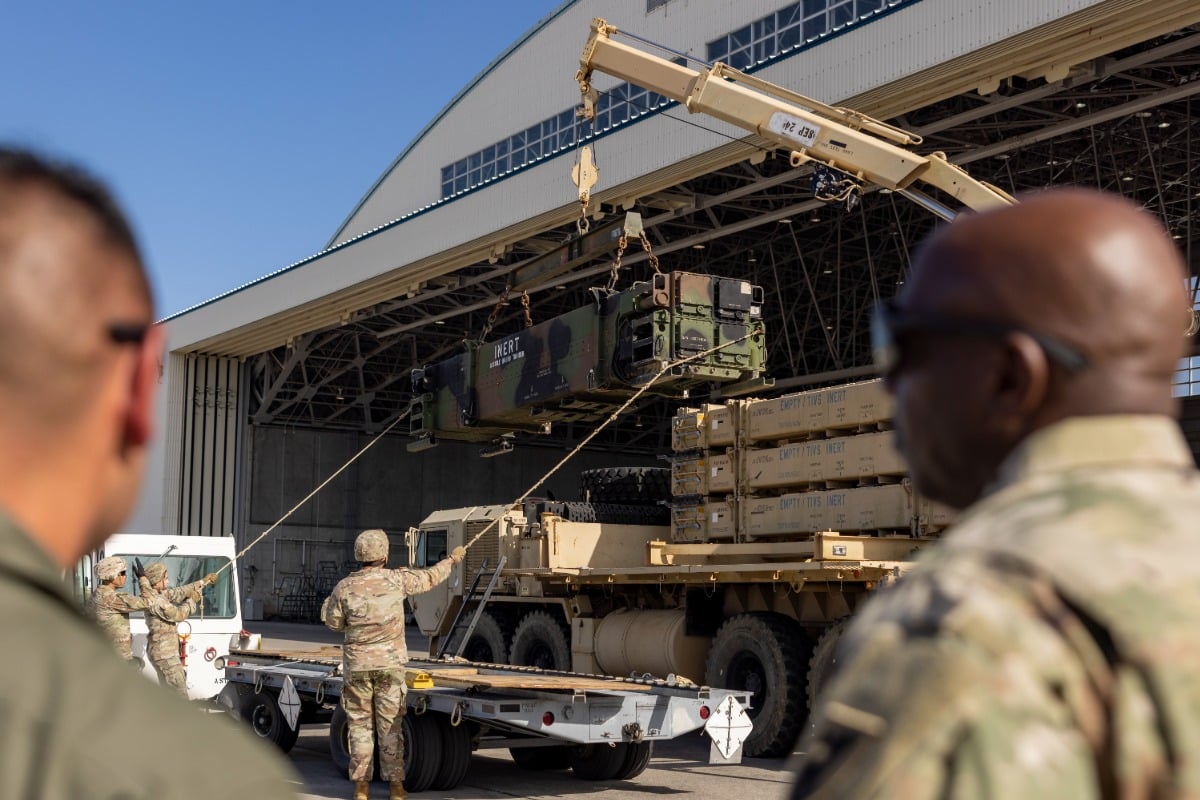
The transatlantic defense industrial base cannot meet current geopolitical demand through production alone; optimization of the existing lifecycle loop is now the baseline requirement for deterrence. The intergovernmental agreement signed at the Ankara NATO Summit by the United States, Germany, the Netherlands, Poland, and Sweden to establish a European maintenance and repair hub for Patriot PAC-3 interceptor missiles shifts the strategic focus from procurement to operational availability. By decentralizing the sustainment architecture for Lockheed Martin's Patriot Missile Segment Enhancement (MSE) and Cost Reduction Initiative (CRI) interceptors, the alliance is attempting to resolve a critical structural bottleneck: the unsustainable transit times and depot-level backlogs inherent in cross-continental logistics.
Evaluating this initiative requires looking past political rhetoric regarding allied solidarity to analyze the underlying industrial engineering and capacity equations. The initiative directly responds to an environment where the consumption of precision guided munitions outpaces manufacturing capacity by orders of magnitude. If you enjoyed this piece, you should look at: this related article.
The Logistics Friction Coefficient
The primary operational constraint of the current European air defense architecture is the total turnaround time required to cycle an interceptor missile from operational deployment through diagnostic recertification or repair, and back to the theater of operations. The existing framework relies heavily on shipping components back to continental United States facilities operated by Lockheed Martin or the U.S. Army industrial base.
[European Operational Theater]
       │
       ▼ (Long-Distance Shipping & Customs)
[U.S. Depot / Lockheed Martin Facility]
       │
       ▼ (Depot-Level Backlog Wait Time)
[Technical Recertification & Component Replacement]
       │
       ▼ (Transatlantic Return Transit)
[European Operational Theater]
This geographic separation introduces a high logistics friction coefficient, driven by three distinct structural variables: For another perspective on this development, see the recent coverage from Forbes.
- Transit Pipeline Inertia: Transporting Class 1, Division 1 explosives across oceans involves stringent regulatory oversight, specialized maritime or aerial transport, and complex customs protocols. This adds weeks of non-operational transit time in both directions.
- Depot-Level Queuing: U.S. domestic sustainment facilities face compounding demands from global operators, creating a single-point failure bottleneck. European hardware waits in the same queue as assets from Indo-Pacific and Middle Eastern theaters.
- Environmental and Shelf-Life Degradation: Interceptor missiles are not static assets. They are complex kinetic systems packed with solid-propellant rocket motors, volatile chemical batteries, and highly sensitive guidance telemetry that degrade over time. The longer an asset spends in transit or storage pipelines, the faster it approaches its mandatory lifecycle limits.
Establishing a centralized, localized European hub removes transatlantic transit from the equation. By executing intermediate and depot-level repairs on the continent, the alliance compresses the logistics loop. This creates an immediate lift in theater readiness without requiring an expansion of the net missile inventory.
The Tri-Pillar Framework of the Sustainment Hub
The transition from a centralized American depot model to a regionalized European ecosystem rests on three operational pillars. Each pillar addresses a specific failure mode in the current NATO defense supply chain.
1. The Regional Velocity Pillar
Under the legacy framework, if a German or Dutch Patriot battery identifies a telemetry error during a routine Built-In Test, the round must be deselected, crated, and prepared for international shipment. The regional velocity pillar shifts the initial diagnostic and advanced repair threshold closer to the tactical edge. Reducing the distance between the deployment site and the repair depot yields a non-linear contraction in total turnaround time. This ensures that assets spending time in the maintenance pipeline are rapidly converted back into mission-capable status.
2. The Transatlantic Capacity Offload Pillar
Lockheed Martin’s domestic production facilities are under unprecedented pressure, evidenced by a $4.7 billion U.S. government contract modification designed to accelerate PAC-3 MSE output. However, adding factory floorspace cannot instantly solve a capacity crisis if the same facilities are simultaneously tasked with upgrading older inventory. The European hub creates a dual-track architecture. The U.S. industrial base can maximize its throughput for raw fabrication and assembly, while the European facility assumes the labor-intensive burden of hardware retrofits, component replacements, and mid-life certifications.
3. The Industrial Technology Transfer Pillar
A recurring friction point in NATO defense acquisition is the United States' historical hesitation to grant foreign manufacturing licenses for high-tier kinetic technology, such as the PAC-3 MSE. The European hub represents a compromise model: an advanced sustainment authorization. While not a full manufacturing license, establishing a high-level repair facility requires transferring specialized test equipment, telemetry software, and advanced engineering processes to European defense contractors. This builds the technical foundation necessary for future co-production initiatives, such as Berlin's recent push for domestic PAC-3 manufacturing rights.
The Geopolitical Cost Function of Co-Production
The selection of the five signatory nations reveals a calculated distribution of industrial capability and geographic exposure. The strategy balances Western European financing and technical infrastructure with Eastern European logistical proximity.
| Signatory Nation | Strategic Role in Hub Architecture | Operational Imperative |
|---|---|---|
| United States | OEM Technology Transfer, Intellectual Property Licensing | Alleviate domestic depot backlogs; scale global capacity. |
| Germany | Industrial Infrastructure, Engineering Base | Integrate with existing domestic air defense production goals. |
| The Netherlands | Capital Injection, Precision Logistics Node | Secure regional air shield continuity for low-countries infrastructure. |
| Sweden | Specialized Aerostructures & Materials Expertise | Secure Baltic air defense integration post-accession. |
| Poland | Eastern Flank Forward Logistics Hub | Minimize physical transit distance from active threat environments. |
Poland’s participation is particularly critical from a theater logistics perspective. As the primary transit corridor for Western military aid flowing into Ukraine, Polish territory serves as the de facto logistics node for the alliance’s eastern frontier. Incorporating Poland into the maintenance framework means that damaged or life-expired systems do not need to move west of the Oder River for basic overhauls. This minimizes exposure to interdiction and reduces transport costs.
However, the strategy contains inherent structural limitations. While Polish Defense Minister Władysław Kosiniak-Kamysz framed the deal as a major leap forward for regional capability, the hub does not solve the underlying materials shortage. A maintenance facility can repair a damaged actuator or swap out a degraded battery, but it cannot synthesize ammonium perchlorate composite propellant or forge specialized radar-absorbent rocket motor casings from scratch. The facility remains tied to global tier-one and tier-two component suppliers.
The Operational Reality of Advanced Interceptor Depots
To understand why a dedicated facility is necessary, one must look at the technical architecture of a PAC-3 MSE interceptor. Unlike older air defense munitions that rely on proximity-fuse fragmentation warheads, the PAC-3 uses hit-to-kill technology. It relies on raw kinetic energy to physically destroy incoming ballistic threats. This requires extreme precision from every onboard system.
[PAC-3 MSE Interceptor Architecture]
 ├── Guidance Section: Ka-Band Active Radar Seeker & Inertial Measurement Units (IMUs)
 ├── Attitude Control Section: Solid Rocket Micro-Motors (ACM) for terminal maneuvering
 ├── Propulsion Section: Dual-Pulse Solid Rocket Motor
 └── Control Actuation System: Steering fins and electromechanical actuators
A standard depot-level maintenance evolution for these assets requires specialized infrastructure that cannot be replicated at standard motor-pool levels:
- Anechoic and RF Testing Chambers: Verifying that the Ka-band active radar seeker can accurately track high-velocity targets requires completely isolated radio frequency environments to simulate terminal engagement profiles.
- X-Ray and Tomography Inspection: Solid rocket motors are prone to internal cracking or propellant separation from the casing due to thermal cycles and transport vibrations. Discovering these internal flaws requires high-energy radiographic inspection systems.
- Cleanroom Electronics Assembly: Repairing or replacing the Attitude Control Section (ACS)—the ring of solid-fuel micro-motors used to adjust the missile's trajectory in its terminal phase—requires high-tier cleanroom environments to prevent particulate contamination from disabling the solid-state micro-valves.
Deploying these specific capabilities to Europe changes the defense economics of the alliance. It transitions European partners from customers buying a black-box asset into active stewards of the technology lifecycle.
Strategic Forecast
This intergovernmental agreement will accelerate the fragmentation of the global defense supply chain into regionalized, self-sustaining industrial clusters. Expect the European Patriot maintenance hub to reach initial operational capability within the next eighteen to twenty-four months, assuming the rapid export of specialized American diagnostic tooling.
The immediate metric of success will not be an increase in total missile inventory, but a measurable reduction in the Days Out of Service (DOOS) metric for European Patriot batteries. Long-term, this hub will serve as the operational model for other complex munitions, including the joint European production of ATACMS tactical missiles by Rheinmetall and Lockheed Martin. The era of relying on a centralized, ocean-protected American industrial base to sustain extended high-intensity conflicts in Europe has ended; regional industrial resilience is now the baseline requirement for continental defense.