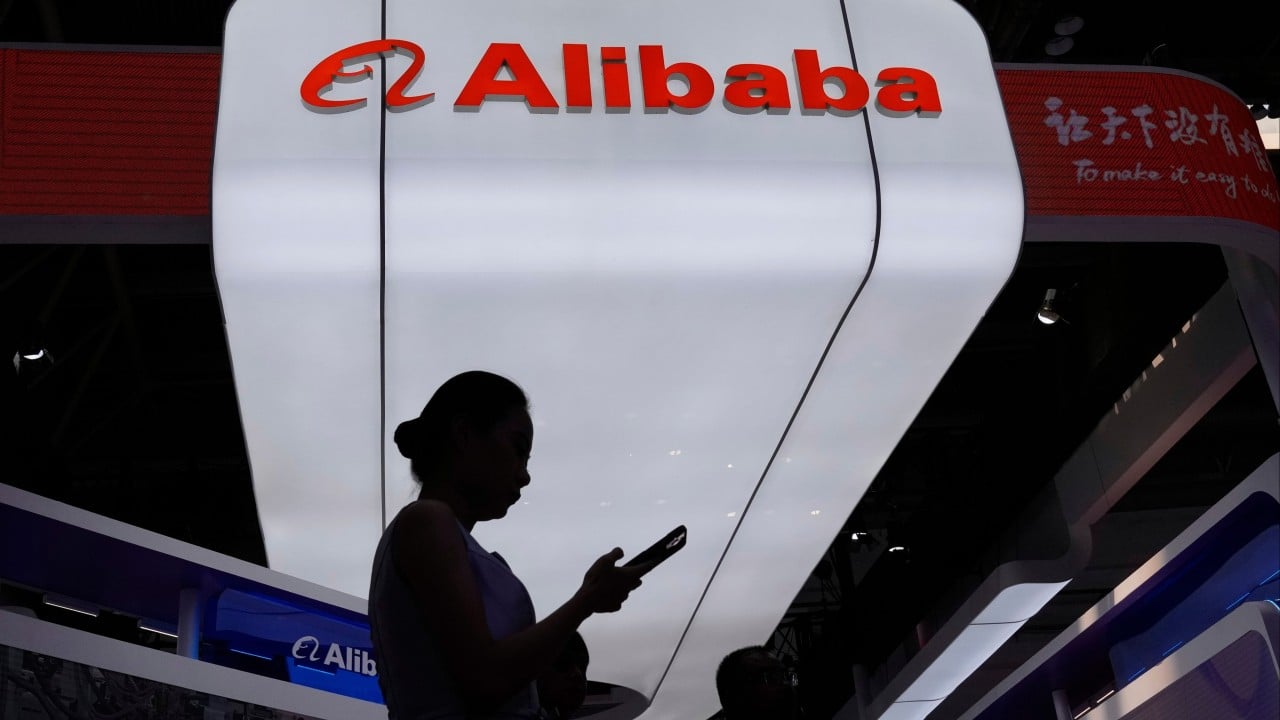
Alibaba Group Holding has secured HK$80 billion, roughly $10.2 billion, through a massive secondary share placement in Hong Kong to bankroll an aggressive expansion of its full-stack artificial intelligence infrastructure. The offering of 710 million shares at HK$112.70 apiece represents the largest primary follow-on offering in the city’s corporate history. Institutional demand was heavy enough to oversubscribe the transaction, prompting the e-commerce titan to expand the total size of the deal. Yet this financial maneuver arrives on the heels of a 75 percent quarterly profit plunge and a massive free-cash outflow, laying bare the punishing fiscal realities of the global technology arms race.
Markets reacted with immediate skepticism. The company's shares tumbled more than 10 percent on the Hong Kong exchange following the announcement, reflecting a deep-seated investor anxiety over capital allocation. High-profile dissenters, including prominent investor Michael Burry, publicly declared they could not endorse the equity dilution, arguing that the firm's return on invested capital will face sustained downward pressure.
The Anatomy of a Massive Capital Burn
To understand why Alibaba is tapping equity markets for ten billion dollars, one must look past the press releases and examine the ledgers. Chief Executive Officer Eddie Wu and his executive team are burning through liquidity at an unprecedented rate. During the April-to-June quarter, net profit dropped to 10.5 billion yuan, roughly $1.6 billion, while the company posted a free-cash outflow of $6.6 billion.
Building proprietary large-language models like the Qwen family and maintaining competitive cloud computing clusters requires an astronomical amount of capital. Silicon isn't cheap. Specialized data centers consume staggering amounts of power and require custom hardware components that command premium prices. Alibaba has already committed to spending more than 380 billion yuan over a multi-year window, divesting non-core assets along the way to keep the cash flowing into its technology pipeline.
This is not a traditional corporate expansion. It is a defensive maneuver designed to secure survival in a market where standing still means absolute obsolescence.
+-------------------------------------------------------------+
|               Alibaba's Financial Trade-Off                 |
+-------------------------------------------------------------+
|  Capital Inflow:   HK$80 Billion ($10.2 Billion) Raised     |
|  Near-Term Cost:   75% Profit Drop & $6.6B Cash Outflow     |
|  Strategic Goal:   Full-Stack AI & Infrastructure Control   |
+-------------------------------------------------------------+
Sovereignty, Sanctions, and the Offshore Wall
The structural architecture of this deal tells a separate story about the geopolitical walls dividing global capital markets. Structured as an offshore transaction and deliberately unregistered under United States securities laws, American institutional and retail investors were barred from participating in the placement.
This bifurcation of liquidity highlights a permanent shift in how Asian technology giants fund their futures. Wall Street can no longer claim a monopoly on backing high-growth market leaders. Sovereign wealth funds and regional institutional heavyweights stepped into the vacuum, snapping up the discounted shares managed by bookrunners including Morgan Stanley, HSBC, UBS, and China International Capital Corp.
By leaning heavily on Hong Kong's financial ecosystem, Alibaba insulates its core capital-raising efforts from shifting regulatory headwinds in Western jurisdictions. At the same time, it binds its financial future tighter to regional backers who are willing to stomach lower short-term margins in exchange for long-term technological sovereignty.
The Payback Horizon Trap
Management has attempted to calm jittery shareholders by shortening the projected payback horizon for these massive infrastructure investments. Executives claim that surging customer demand has pulled the expected return timeline down from three years to roughly two and a half years.
Skepticism remains warranted. Consumer spending within China remains sluggish, placing continuous pressure on Alibaba's core retail engine. When the primary retail business experiences anemic growth, the entire corporate machine relies on cloud computing and artificial intelligence services to pick up the slack. If enterprise adoption of AI tools hits a plateau, or if price wars among cloud providers compress margins further, that two-and-a-half-year projection could stretch out indefinitely.
Every major tech player from Redmond to Shenzhen is playing the exact same high-stakes gamble. The four major American hyperscalers are projected to drop hundreds of billions of dollars into capital expenditures for data centers and chips, and Chinese titans must match that velocity or risk becoming digital colonies of foreign platforms.
Alibaba has secured the capital it needs to stay in the ring for the next phase of the fight. Whether that ten billion dollar injection produces sustainable market dominance or merely dilutes shareholder value into a bottomless infrastructure pit depends entirely on whether commercial demand for artificial intelligence can finally catch up to the bill.