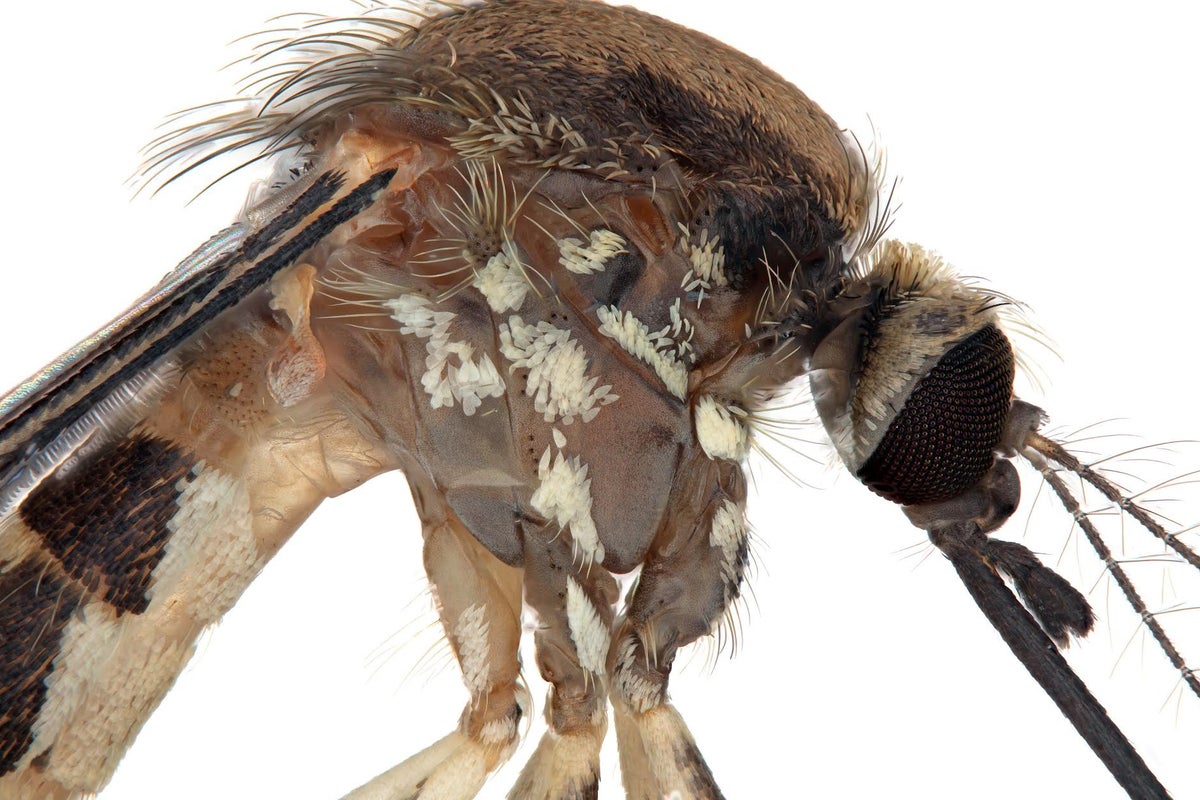
A tiny, unheralded blood-sucker has crossed an international boundary and established residence in the rugged borderlands of Arizona, exposing the persistent blind spots in American vector surveillance.
Formally identified as Aedes amateuri, this mosquito was first documented in the scientific literature only a few years ago, having been described from specimens in northeastern Mexico. Now, field collections verified by University of Florida researchers confirm that the species has migrated into Arizona’s Madrean Sky Islands, turning up in the Santa Rita, Dragoon, and Peloncillo mountain ranges. For the public health apparatus, the arrival of Aedes amateuri is less of an immediate apocalyptic threat and more of an unsettling reminder. We simply do not track the continuous shifts happening in our own backyards until an entomologist happens to pull the right specimen from a trap.
The discovery forces a hard look at how federal, state, and local agencies monitor insect populations. Standard vector control programs across the United States are heavily reactionary. They target known nuisances and vectors like Aedes aegypti or Culex quinquefasciatus during active disease outbreaks, leaving peripheral ecosystems under-sampled and under-funded.
Anatomy of a Border Crossing
The journey of Aedes amateuri into the United States highlights the porous nature of ecological boundaries. Entomological surveys conducted by researchers and network monitoring teams snared the initial specimens during seasonal sampling. DNA barcoding of the mitochondrial cytochrome c oxidase subunit I gene confirmed the genetic match to populations previously cataloged in Nuevo León and Tamaulipas, while also suggesting the species' broader geographic range extends as far south as Honduras.
Pinpointing the exact mechanism of arrival remains an ongoing challenge for field biologists. Two primary hypotheses dominate current discussions within vector ecology circles.
- Range Expansion: Gradual, generational creep northward driven by shifting climatic niches and micro-habitat adaptations in high-elevation sky islands.
- Unnoticed Residency: The species may have occupied the Madrean mountain ranges for decades, hiding in plain sight due to its morphological similarity to native relatives and the sheer lack of intensive trapping in remote terrain.
Distinguishing between a brand-new invasion and a long-overlooked resident is notoriously difficult. Funding for baseline biodiversity surveys has historically been an afterthought, prioritized only after a pathogen jumps from an obscure vector to a human host.
The Data Gap on Vector Competence
Little is definitively known about what Aedes amateuri can carry, and that ambiguity is precisely what frustrates field epidemiologists. While specimens have been documented feeding on humans and large mammals such as white-tailed deer, researchers have yet to establish its vector competence for specific arboviruses.
In the calculus of public health, an unknown vector is a variable that demands caution. Other members of the Aedes subgenus Ochlerotatus are notorious transmitters of pathogens. Yet, assuming every newly discovered immigrant insect is an imminent public health crisis invites panic and misallocates scarce municipal resources. Conversely, dismissing an aggressive biter simply because it lacks a documented rap sheet ignores historical precedent.
Consider the trajectory of other invasive mosquitoes over the past century. Insects do not respect county lines, state boundaries, or federal immigration checkpoints. They move along trade corridors, hide in cargo shipments, and track thermal isotherms upward into higher elevations as regional climates warm. By the time a species is formally recorded in a new country, it has usually established stable, self-sustaining populations capable of weathering local droughts and winter freezes.
The Limits of Reactive Surveillance
Municipal vector control districts face an uphill battle. Most local programs operate on tight budgets funded by property taxes or specialized mosquito control districts that concentrate their efforts where human population density is highest. Subdivisions, municipal parks, and agricultural drainage ditches get heavy trap coverage. Remote sky islands, border corridors, and uninhabited wilderness tracts receive almost none.
This urban-centric monitoring creates a dangerous illusion of containment. Insects evolve and adapt in wild ecosystems long before they ever buzz across a suburban patio. When researchers pull novel species out of remote mountain ranges, it serves as a glaring metric of institutional oversight.
Living with Ecological Fluidity
The appearance of Aedes amateuri in the American Southwest is part of a broader, systemic trend. As global trade networks knot tighter and environmental conditions shift, biological boundaries blur. New species will continue to slip across borders, settling quietly into ecological niches vacated by native fauna or carved out by human alteration of the landscape.
Resolving this vulnerability requires a structural shift in how biological baseline data is funded. Waiting for a mosquito to prove its capacity to vector a devastating pathogen before studying it is an obsolete strategy. True preparedness demands proactive investment in baseline taxonomy and continuous, wide-spectrum ecological surveillance across both urban centers and wilderness margins.
Until funding models catch up to ecological reality, unexpected arrivals will keep catching the machinery of public health off guard. Every mountain range holds secrets that have yet to be cataloged under a microscope.


