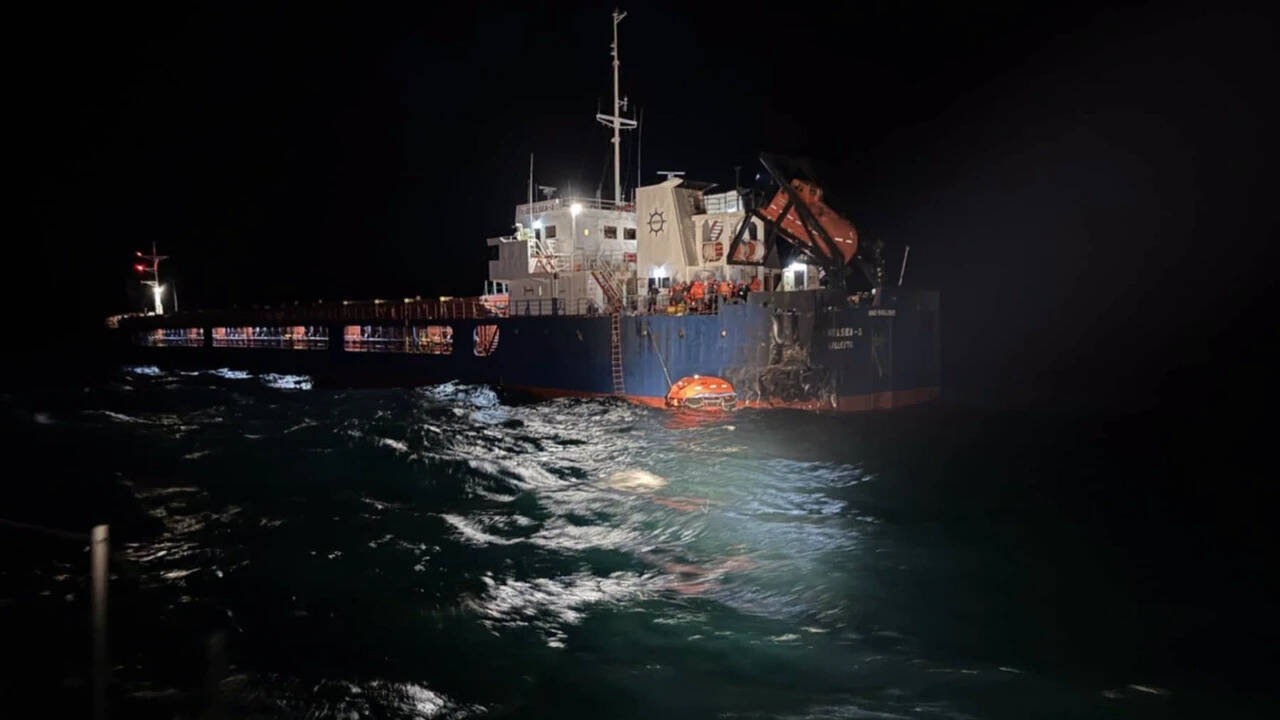
Bulgaria has formally tied recent Black Sea drone ship attacks to Russia while eleven sailors remain missing, exposing how unmanned maritime warfare has turned commercial shipping lanes near the western basin into a high-risk gray zone. For anyone tracking maritime security, the headline is only the surface layer. The real story sits in the mechanics of deniable strikes, the strain on search-and-rescue operations in shifting offshore weather, and the quiet legal paralysis that leaves merchant crews caught between state rivalries and commercial obligations.
I have covered shipping corridors, naval posturing, and maritime risk for more than two decades. When a report frames an incident purely as a flashpoint with a missing-crew tally, experienced analysts look immediately at what is omitted: which vessels were targeted, what telemetry or debris supported attribution, how coastal states like Bulgaria calibrate their public warnings, and why eleven seafarers can vanish without a rapid, indisputable recovery.
Attribution Without a Smoking Gun
Publicly linking Black Sea drone ship attacks to Moscow is a calculated diplomatic step for Sofia. Coastal states along the western Black Sea walk a narrow line between deterrence and escalation. Naming Russia signals that Bulgarian authorities view the threat not as stray ordnance or isolated sabotage, but as part of a deliberate campaign affecting regional waters and maritime trade.
Proving authorship in unmanned naval warfare is notoriously messy. Unlike a manned surface combatant flying a national ensign, an unmanned surface vessel or loitering maritime drone can be assembled from commercial electronics, routed through shifting waypoints, and launched from mobile coastal platforms or support vessels. Even when wreckage washes ashore or is recovered by salvage teams, attributing a strike beyond a reasonable doubt depends on forensic details—guidance modules, propulsion signatures, explosive payloads, and operational patterns—that governments often keep classified to protect intelligence sources.
That gap between diplomatic attribution and public proof creates friction. Insurers, shipowners, and flag states read official statements closely, yet commercial actors still weigh hard operational realities. A formal accusation can stiffen regional resolve, especially within NATO circles, without immediately stopping an attack tomorrow morning.
Consider a hypothetical maritime investigation into an uncrewed strike near a commercial shipping lane. Investigators might recover twisted aluminum plating, lithium battery housings, and satellite communications hardware. None of those parts proves who pulled the trigger on their own, because global supply chains feed both state defense programs and non-state actors. Attribution rests on how those components fit together alongside radar tracks, signals intelligence, and known tactical doctrine.
Why Eleven Sailors Vanish in Open Water
Missing crew numbers hit harder than strategic briefs because they strip away abstraction. Eleven sailors unaccounted for means eleven families waiting for answers while maritime authorities piece together what happened in the dark.
Search and rescue in the Black Sea is rarely simple. Distances from port, unpredictable sea states, limited visibility, and the sheer scale of open water work against fast recovery. When a merchant vessel is struck or disabled by a maritime drone, events can unfold in minutes rather than hours. Fires spread quickly near fuel tanks and cargo holds. Power fails. Communications drop before a distress call carries full coordinates.
Once crew members enter cold water or abandon ship in rough swells, drift calculations become a race against time and current. Surface currents in the Black Sea are shaped by wind stress, freshwater inflow from major rivers, and complex basin circulation. A small error in estimated drift time or initial position can push search grids miles off course.
There is also a practical hazard that slows rescue efforts. If a vessel has been hit by an explosive drone, secondary hazards—unexploded warheads, fuel slicks, structural instability, or the risk of a follow-on strike—force nearby ships and rescue units to approach with caution. Seafarers are trained for bravery, not recklessness, and captains have to balance immediate rescue against endangering a second hull.
The Quiet Mechanics of Unmanned Naval Warfare
Unmanned systems changed naval arithmetic by lowering cost and risk per strike. A drone ship or explosive uncrewed surface vessel does not require a crew aboard to accept casualties, nor does it need the displacement or radar cross-section of a traditional warship.
Cheap does not mean crude. Modern unmanned vessels can carry satellite links, inertial navigation, electro-optical sensors, and substantial warheads while skimming low across the waves. Low freeboard makes them harder to spot visually at night or in choppy seas, and smaller signatures complicate detection for older shipboard radars tuned for larger targets.
Cost Asymmetry at Sea
Naval defense has always wrestled with cost exchange ratios. Firing an expensive interceptor missile at a relatively low-cost unmanned system strains stockpiles and budgets over time. Commercial merchant ships face an even sharper imbalance: they are built for cargo efficiency and crew economy, not layered air or surface defense.
When attackers target or threaten shipping lanes with unmanned platforms, they do not even need a high hit rate to disrupt commerce. A handful of strikes—or credible warnings of them—raises war-risk premiums, forces route adjustments, slows transit times, and keeps crews on edge. Disruption itself is a strategic return.
Navigation, Spoofing, and Electronic Friction
Modern shipping runs on electronic trust. Crews rely on AIS transponders, electronic chart display systems, and satellite navigation to keep safe separation in busy sea lanes. In contested waters, that trust is routinely tested.
Electronic interference, GPS spoofing, and intermittent communications turn routine night watches into high-stakes exercises in seamanship. A vessel whose position data jumps or drops loses an important layer of situational awareness right when visual lookout matters most. Experienced mariners know that when electronics get noisy, you fall back on radar cross-checking, compass bearings, and human eyes—though none of those makes an incoming low-profile drone easy to spot in heavy spray.
Bulgaria's Strategic Squeeze on the Western Coast
Bulgaria occupies a sensitive geographic position along the western Black Sea, close to major maritime routes connecting the Danube delta, regional ports, and the Bosphorus approaches. Any spike in Black Sea drone ship attacks lands uncomfortably close to Bulgarian territorial waters, exclusive economic zone interests, and coastal infrastructure.
Sofia cannot afford to treat unmanned maritime threats as someone else's problem. Drift mines have already posed hazards in previous phases of the conflict, and the arrival of unmanned surface vessels adds a powered, maneuverable dimension to the threat picture. Even if a strike occurs outside territorial waters, the proximity affects national security planning, port confidence, and regional solidarity.
At the same time, coastal states must avoid overreacting in ways that trigger wider escalation or trap their own naval assets in prolonged exchanges. Publicly linking strikes to Russia puts pressure on Moscow while signaling to allies that western Black Sea security requires sustained surveillance, mine-countermeasure coordination, and intelligence sharing.
Yet political statements alone do not patrol thousands of square miles of water around the clock. Coastal surveillance has limits—horizon curvature restricts radar range from shore, weather degrades sensor performance, and monitoring every approach requires layered assets that no single small navy can supply alone.
Commercial Shipping Caught in the Crossfire
Merchant mariners are civilians doing a gritty, essential job. Most of them are not ideologues or combatants; they are navigators, engineers, cooks, and deckhands moving grain, fuel, manufactured goods, and raw materials across global supply chains.
When Black Sea drone ship attacks hit the news, boardrooms and seafarers experience the crisis differently. Shipowners and charterers model risk through insurance markets, contract clauses, and routing decisions. Crews live with the dread of a sudden explosion in the dark while locked inside a steel hull far from immediate medical or rescue support.
Insurance, Contracts, and Crew Choices
War-risk insurance can spike rapidly when threat levels shift, making certain voyages financially punishing or forcing renegotiation between cargo owners, charterers, and operators. Some operators reroute or pause sailings; others press ahead under tight risk assessments and heightened watch routines.
For seafarers, refusing a voyage or signing off in a high-risk zone is rarely simple. Employment contracts, repatriation logistics, visa hurdles, and family financial needs constrain choices. A crew member who feels unsafe may still sail because walking away carries steep personal and financial costs.
| Risk Dimension | How It Affects Operations | Practical Limit |
|---|---|---|
| Unmanned strike threat | Raises physical danger to hull and crew; forces heightened watch posture | Low-profile drones are hard to detect early in rough seas |
| Search and rescue distance | Delays response to missing or abandoning crew; complicates drift tracking | Weather, sea state, and secondary hazards slow recovery |
| Electronic disruption | Degrades navigation confidence and communications reliability | Backup visual and radar watches have finite range |
| War-risk economics | Drives up insurance costs and alters routing or charter terms | Markets react fast, but physical hazards remain on the water |
What Remains Unanswered and Why It Matters
Linking the strikes to Russia and counting eleven missing sailors leaves critical questions open—and honesty about what is unknown is essential to serious analysis. We still need clarity on the exact tactical sequence behind the attacks, the precise search grid and recovery status of the missing crew, and what specific technical evidence underpinned Bulgaria's attribution.
Overlooking those unknowns leads to two common mistakes. One is treating every headline as final proof of every detail before investigators finish their work. The other is brushing off regional warnings as mere political posturing and underestimating how quickly unmanned systems can reshape maritime risk.
In maritime affairs, reality asserts itself on the water, not in press releases. Until commercial vessels can transit contested waters without fear of low-cost, high-impact unmanned strikes—and until search-and-rescue systems can reliably reach crews in trouble before the sea claims them—every missing sailor is a reminder of how unforgiving modern naval gray zones have become.